The 2026 Hurricane Season Is Here; Prepare Now For Potential Storms
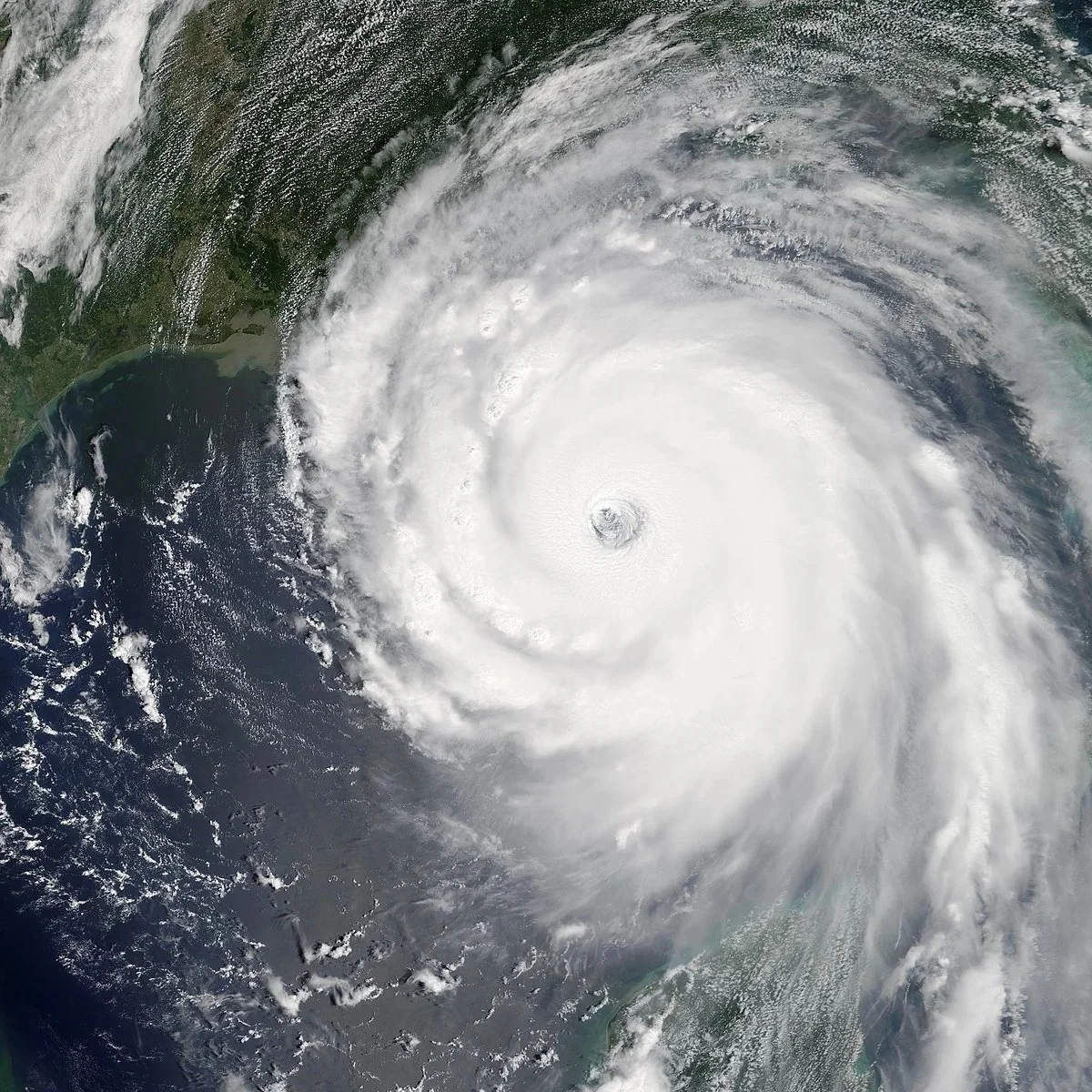
Hurricane season is once again upon us, and the LSU AgCenter has recommendations to mitigate potential danger and losses to yards, homes and animals, tips for keeping food and cleaning supplies on hand and information for farmers and ranchers.
Read More
Louisiana Braces for Storms and Heavy Rain
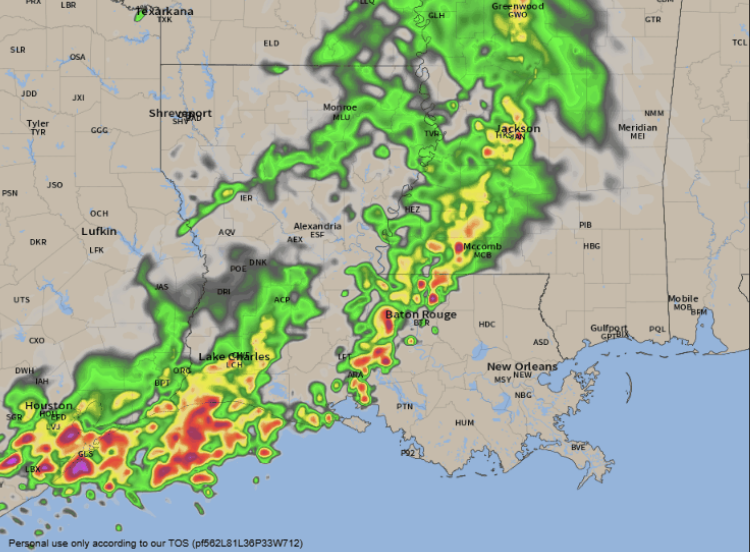
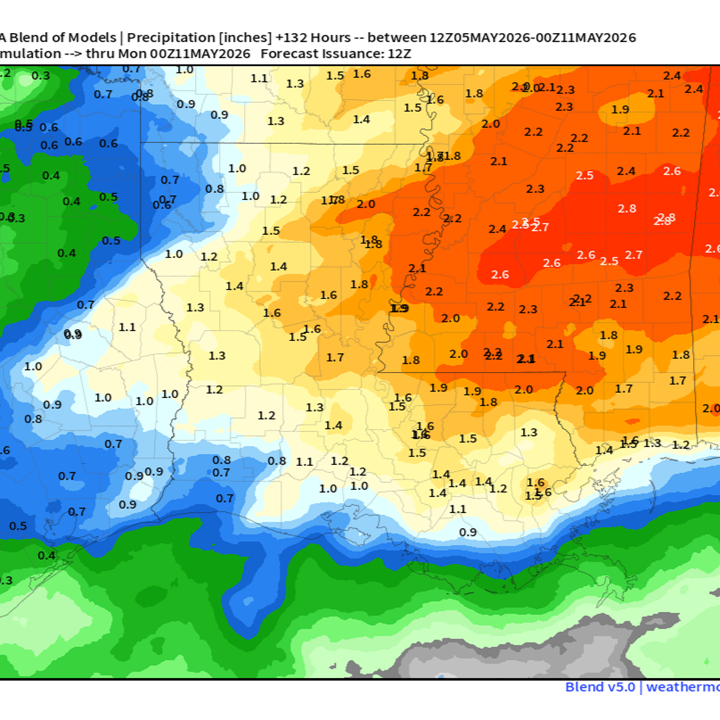
Much of Louisiana is now under a Slight Risk for damaging winds Tuesday, along with a Marginal Risk for flash flooding. While severe weather chances decrease later this week, several rounds of rain could bring much-needed drought relief — along with some isolated flooding concerns in northern Louisiana through Saturday.
Read More
The Farmer's Forecast -- The Rain Train Is Pulling In
Big rains are headed to Louisiana — and this looks like a long-duration event. Rain ramps up later today, and I don’t see a true dry stretch over the next 10 days.
Read More
The Farmer's Forecast -- Feast or Famine Rainfall Across Louisiana
Rainfall has been feast or famine across Louisiana, with some areas seeing major drought improvement after 5 to 10 inches of rain while nearby locations received very little. More rain is expected next week, and an unsettled pattern could bring periodic showers for the next couple of weeks, though severe weather threats currently appear limited.
Read More
More Rain Still to Come...
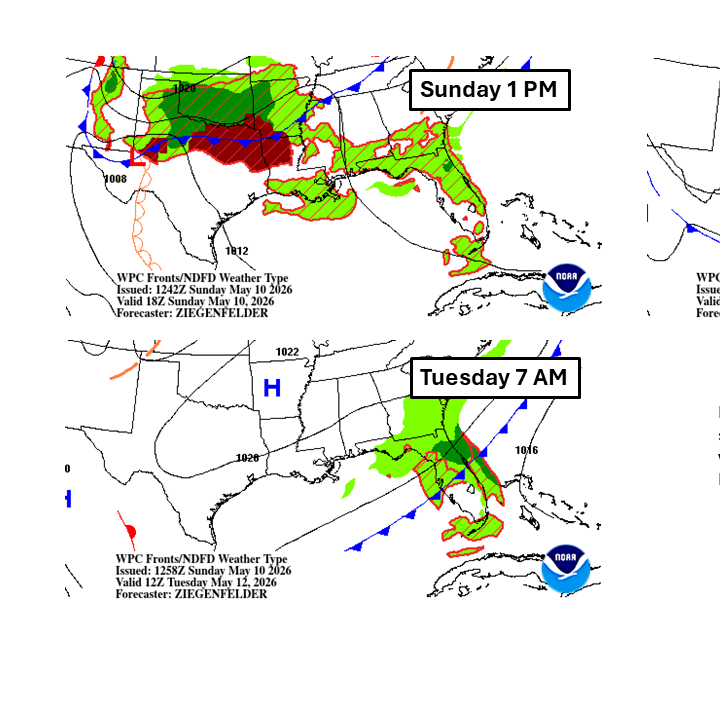
A forecast model shows storm activity from Sunday morning through Tuesday morning. The Storm Prediction Center has placed northern Louisiana under a Slight Risk for severe weather Sunday, while much of southern Louisiana is under a Marginal Risk. Strong to severe thunderstorms are possible, especially in the north, with damaging winds and large hail as the main threats. Tornadoes are not currently expected in Louisiana.
Read More
Louisiana Farmers Eligible for Emergency Loans Due to Drought
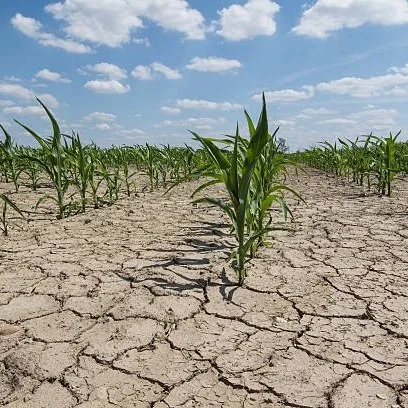
A Secretarial disaster designation was issued for Louisiana due to drought, making farm operators in primary and contiguous parishes across Louisiana, Arkansas and Mississippi eligible for Farm Service Agency emergency loan assistance.
The drought, classified as a Fast-Track disaster, began on April 14. Farmers have until Jan. 4, 2027, to apply for these emergency loans.
Read More
Weekly Weather Outlook 5/5/26
Scattered strong-to-severe storms will return to the northern half of the state on Wednesday with a "SLIGHT Risk" for severe storms.
Read More
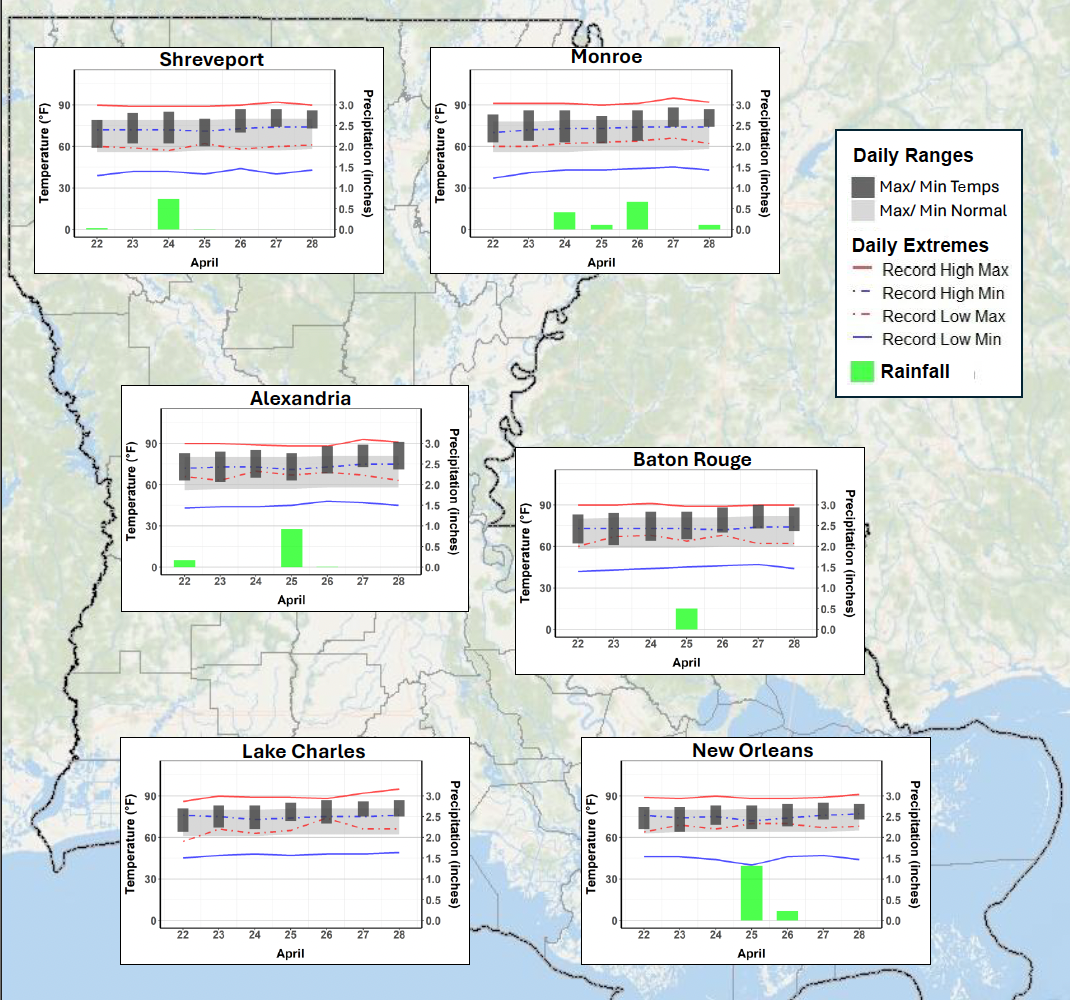
Louisiana Weekly Climate Summary - April 22–28, 2026
Louisiana experienced a warm and humid week with multiple rounds of rain, driven by a stalled front and Gulf moisture, but rainfall was uneven and not enough to significantly improve drought conditions. Temperatures were well above normal statewide, especially overnight lows, which stayed unusually warm due to high humidity.
Read More
Weekly Weather Outlook
Scattered strong-to-severe storms will return to the northern half of the state on Wednesday with a "SLIGHT Risk" for severe storms.
Read More
Louisiana Weekly Climate Summary - April 15–21, 2026
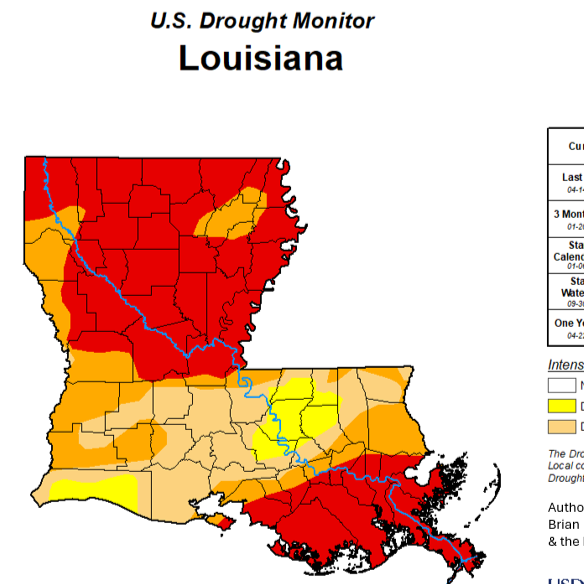
Louisiana saw very little rainfall this week, with most areas getting under half an inch, worsening already dry conditions. As a result, drought expanded significantly, with about 94% of the state now in drought and over half in Extreme Drought.
Read More
Louisiana Drought: Already Bad and Only Getting Worse
The Louisiana Drought Team, in collective partnership with the USDM national authors, the NWS, and the LDAF, has continued to downgrade conditions across the Bayou State with this week's USDM update ... as 'normal' spring rains fail to develop.
Read More
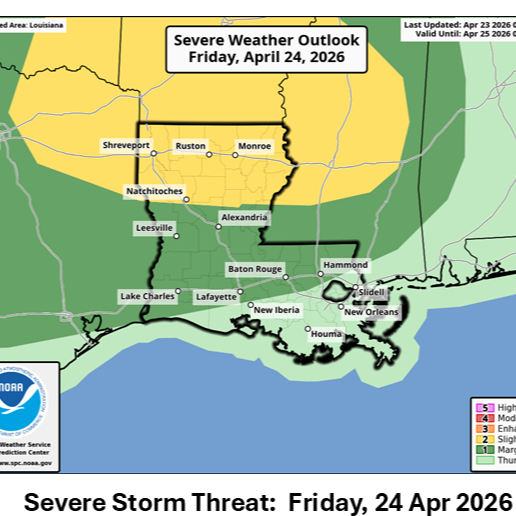
Louisiana Severe Weather Threat for Friday
Northern Louisiana should prepare for occasional strong-to-severe t-storms on Friday evening ... but do note that the NWS timeline has the threat potentially arriving as early as the mid-afternoon. A severe weather Watch may be issued for the region.
Read More
Record Drought, Disappearing Water Tighten the Screws on Farmers
The warning signs for U.S. agriculture in 2026 are stacking up fast. From record-setting drought coverage to historically low snowpack and new research explaining why water supplies aren’t adding up, experts say the challenges facing farmers and ranchers this year aren’t just seasonal. They’re structural, compounding, and increasingly difficult to predict.
Read More
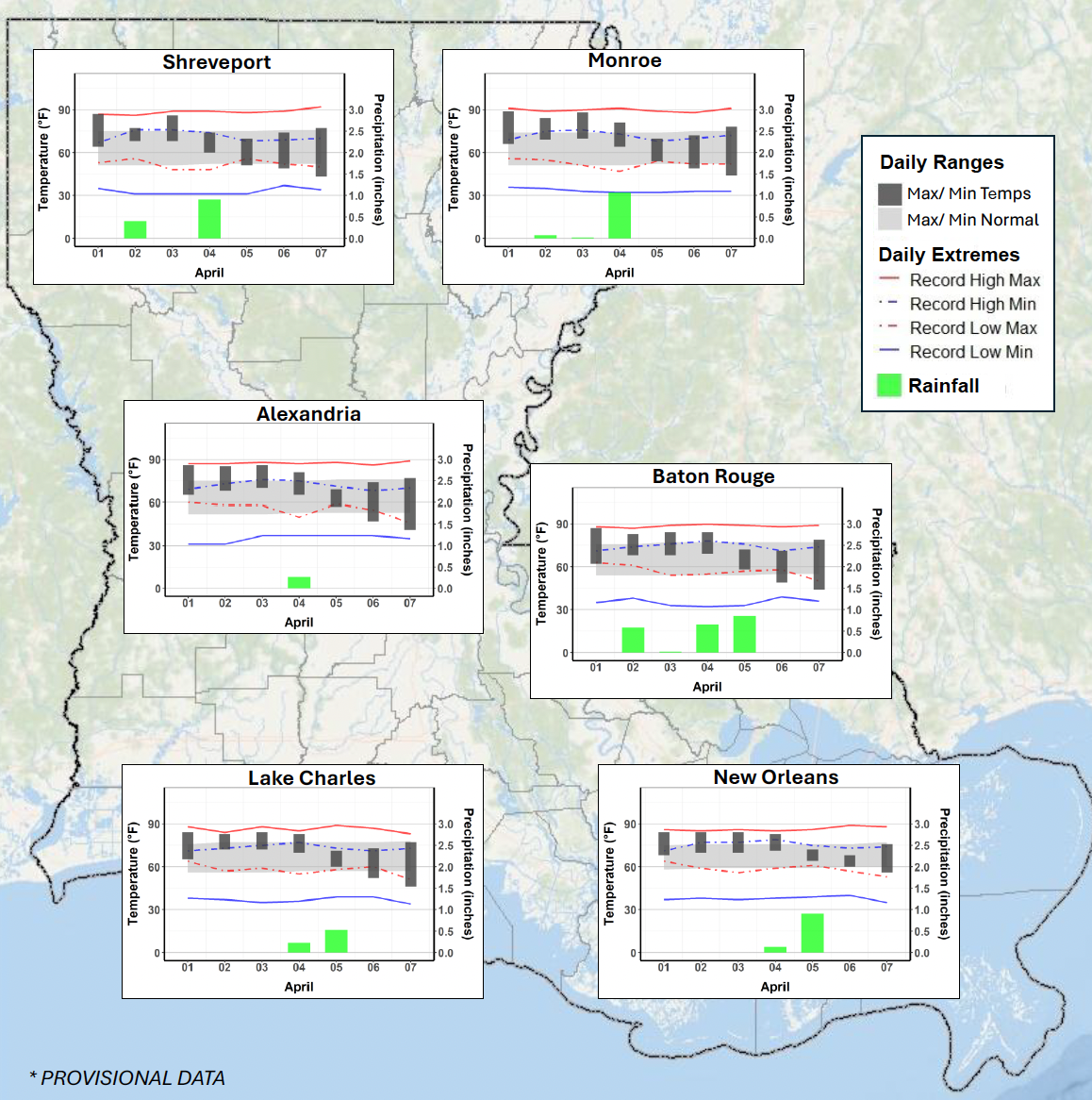
Louisiana Weekly Climate Summary - April 1 – April 7, 2026
During the first week of April 2026, Louisiana saw a return of rain after a dry stretch, with showers and storms bringing some much-needed moisture—especially in northwestern and southeastern parts of the state. However, rainfall was still below normal in many areas and only led to minor drought improvement.
Read More
25 Parishes Declared Disaster Areas Due To Drought
The Secreary of Agricuture has designated 25 Parishes here in Louisiana as Natural Disaster Areas due to the recent drought.
Read More