If you farm through an LLC or an S corporation, USDA just handed you a bigger payment limit and a September deadline to lock it in.
Read More
If you farm through an LLC or an S corporation, USDA just handed you a bigger payment limit and a September deadline to lock it in.
Read MoreLast week, Tyson Foods CEO Donnie King offered investors a sobering report on beef prices: "Beef hasn't performed the way we expected," King said during an earnings presentation, "and we're not pretending otherwise."
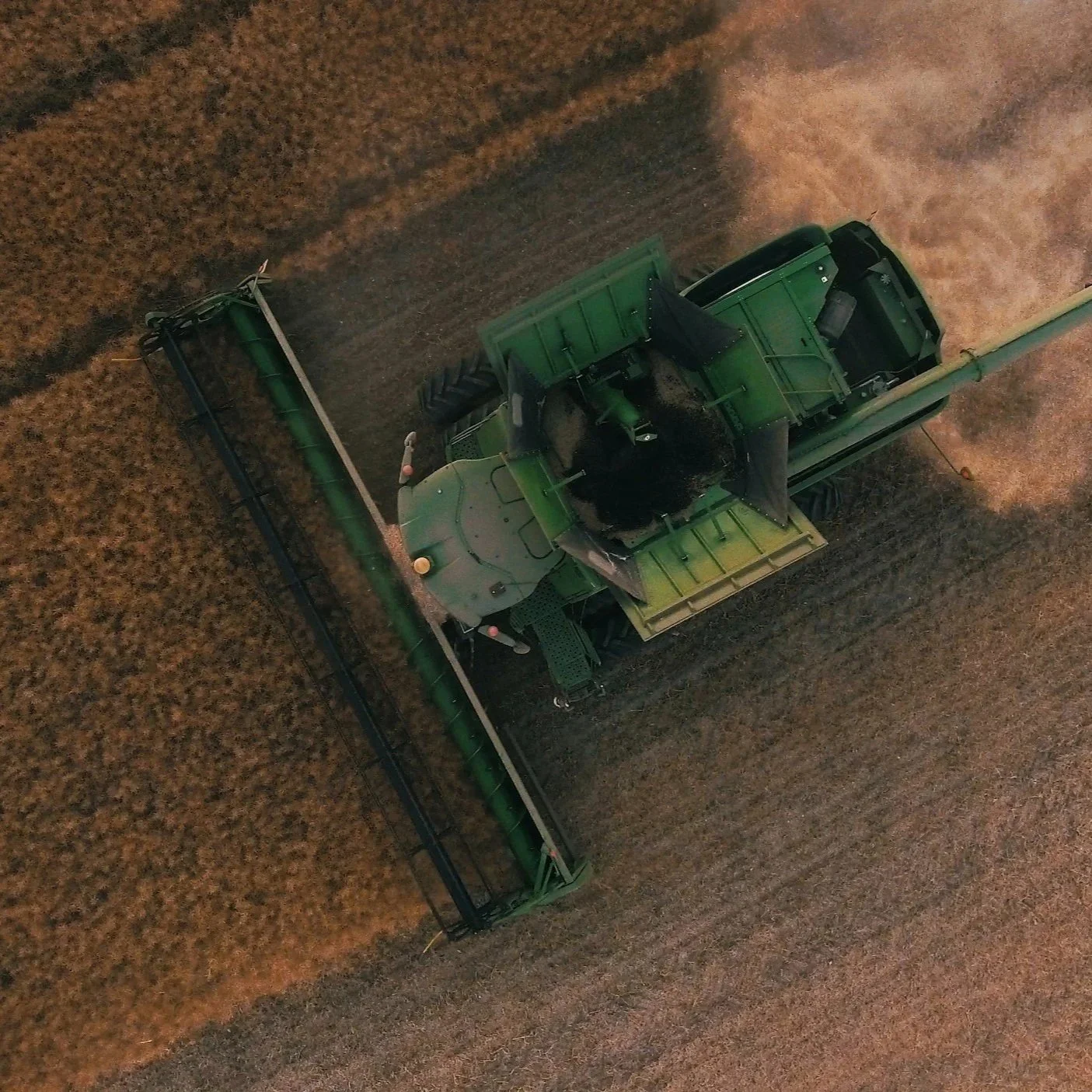
Read MoreCorn harvest is rolling across Louisiana, but for Kam Harper, getting a combine into the field this year took two plantings and months of uncertainty.
Read MoreThe 89th International Rice Festival proudly recognizes Jarrod Breaux as the 2026 Farmer of the Year. His 17-year-old son, Bryce Breaux, is recognized as the 2026 Junior Farmer of the Year.
Read MoreThe U.S. Department of Agriculture (USDA) is extending the deadline for farmers to apply for Stages 1 and 2 of the Supplemental Disaster Relief Program (SDRP) to Sept. 30, 2026. Additionally, USDA’s Farm Service Agency (FSA) is providing greater flexibility for farmers who experienced quality losses on eligible crops.
Read MoreDry conditions remain the biggest dividing line across U.S. agriculture, affecting not only row crops but grazing, hay supplies, livestock water and late-summer fieldwork.
Read MoreH-2A Adverse Effect Wage Rates (AEWRs) for 2026-2027 are set to increase across the country, with a handful of exceptions. Released by the U.S. Department of Labor’s (DOL) Office of Foreign Labor Certification, AEWRs represent the federally mandated minimum wage for H-2A guestworkers in each state. Notably, this set of AEWRs is the first full-year iteration of wages based on DOL’s new Occupational Employment and Wage Statistics (OEWS) survey, as stipulated by the department’s Interim Final Rule (IFR) issued in October 2025. While these wage rates are a significant improvement from the previous wage structure, congressional action is still needed to ensure farm and ranchers can continue to grow the nutritious food our country depends on for our health and well-being.
Read MoreEarly last year, the Trump administration ended two Biden-era programs that gave state and tribal governments federal funding to purchase food for food banks and schools from local farmers.
Read MoreNational Farmers Market Week is being observed this week as the U.S. Department of Agriculture recognizes the impact local growers have on their regional food systems. The West Monroe Farmers Market at Seventh Square is highlighting its role in supporting the Northeast Louisiana economy through its network of farmers and small businesses.
Read MoreAmerican Farm Bureau Federation President Zippy Duvall today expressed deep disappointment in the failure of the Senate Committee on Agriculture, Nutrition, and Forestry to advance a farm bill. He called on senators to return to the negotiating table for the sake of rural communities across America.
Read MoreThe Senate Committee on Agriculture, Nutrition, and Forestry met on Thursday to consider the Agricultural Act of 2026. While the committee failed to report the bill out of committee by a vote of 10-11, they may reconvene after the August recess if an agreement can be reached.
Read MoreThe LSU AgCenter recently co-hosted the second Louisiana Food Is Medicine Convening in Baton Rouge in partnership with the Louisiana Department of Health’s Bureau of Chronic Disease Prevention and Healthcare Access, also known as Well-Ahead Louisiana.
Read MoreThe U.S. Department of Agriculture is reminding farmers that deadlines to purchase or make changes to crop insurance coverage for fall-planted crops are approaching. The next major sales closing dates are September 1 and September 30, although deadlines vary by crop and location.
Read MoreA broad cross-section of farm, labor, maritime, and government officials met at the Port of New Orleans to celebrate the latest U.S. donation of rice and wheat through the Food for Peace Program.
For more than 72 years, the Food for Peace program has delivered American-grown commodities like rice, wheat, and sorghum to people facing hunger across the globe for humanitarian reasons and as part of the United States’ exercising of soft power.
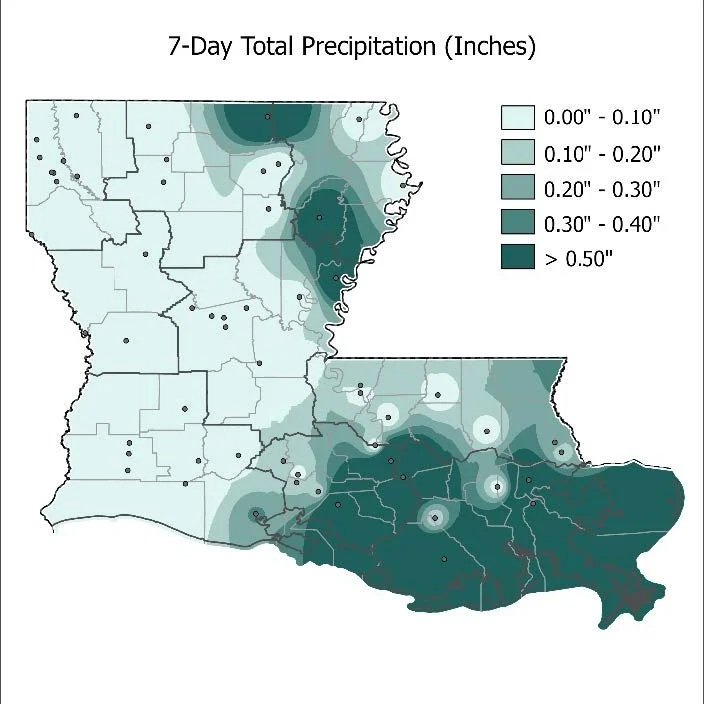
Read MoreIt was another dry 7-day monitoring period across the Bayou State continuing a recent string of dry periods; a frontal passage on August 1-2 did more harm than good by providing only localized areas of precipitation while reducing humidities and inducing breezy conditions thereafter, exacerbating the drying-out process.
Read More