The Farmer's Forecast: Finally Feeling Like Fall
We've had a large range of rainfall totals over the last week, with some areas along the I-20 corridor seeing less than an inch, and some parts of central and south Louisiana seeing 4+ inches of rain. This has knocked the moderate drought from 31% of the state to 18% of the state, but it looks like organized rain is about to shut back off for a bit.
Read More
Burn Bans Tighten Across Acadiana
Even with a little rain in the forecast, conditions across Acadiana remain dangerously dry.
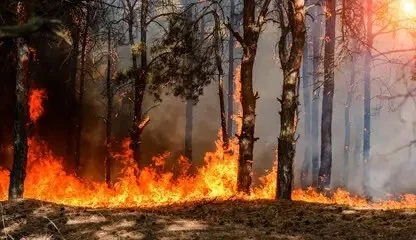
St. Landry, Acadia, and Evangeline Parishes are all under active burn bans as drought conditions persist across the region. Fire officials say gusty winds and low humidity are creating the perfect setup for fires to spread quickly, even from something as small as a spark.
Read More
The Next Rainmaker For Louisiana
A low pressure system will send warm and cold fronts across the Lower Mississippi Valley on Tuesday. While thunderstorms are in the forecast, latest projections from the NWS’s Storm Prediction Center (SPC) and Weather Prediction Center (WPC) indicate no significant concerns with regard to severe storms or excessively-heavy rainfall.
Most of the state can expect less than 1/4" of rain, with isolated larger totals where slower-moving t-storms have an impact.
Read More
Louisiana Weekly Climate Summary - October 15 - October 21, 2025
The Louisiana Drought Team, in coordination with national USDM authors, increased the coverage of D1 (‘Moderate Drought’) across central and southwestern Louisiana and introduced a new area of D1 across far northwestern Louisiana. D0 (‘Abnormally Dry’) coverage was reduced across northeastern Louisiana and increased across southeastern Louisiana.
Read More
Louisiana Farms Lose $44.1M per Year to Natural Hazards
High grocery prices have been a defining economic story in recent years, driven by a combination of factors including pandemic-related supply chain breakdowns and labor shortages. However, an increasingly critical driver of food price inflation has been the impact of natural disasters—such as droughts, floods, and hurricanes—on the nation’s agricultural output.
Read More
How Current Weather Trends Are Shaping Global Grain Production
Kevin Marcus of Marcus Weather Consulting gives the areas to watch as harvest goes into the home stretch in the northern hemisphere and the growing season is shaping up in the southern hemisphere.
Read More
A 'Dent' In Louisiana's Developing Drought?
The latest NWS forecast calls for a storm system to move through the Lower Mississippi Valley this weekend ... and unlike some of our recent frontal passages, this one looks to deliver significant rains across most of the Bayou State.
Read More
The Farmer's Forecast: Parade of Cold Fronts on the Way
A parade of cold fronts is set to march across Louisiana. I don't see any frosty pumpkins in sight, but I do see some rain chances, some cooler nights, and some areas possibly getting a few inches of rain. Here's how I see things going.
Read More
Louisiana Weekly Drought Monitor Update: 16 Oct 2025
Thursday’s update of the U.S. Drought Monitor (USDM) for Louisiana shows a modest increase in areas of D0 ('Abnormally Dry') and D1 ('Moderate Drought') between last week and the current week.
Read More
Weekend Rain Won’t End Louisiana’s Growing Drought Problem
Louisiana needs rain. We’re getting some this weekend, but not enough to fix the problem.
A cold front will cross the state starting Saturday morning, bringing the first decent rain we’ve seen in weeks.
Read More
State Climatologist Brings Local Focus To Weather Updates
When Jay Grymes was named the Louisiana state climatologist for a second time in 2024, it was a different job compared to the one he held more than 20 years before.
Read More
Drought Conditions On The Mississippi River Threatens Farm Delivery
Once again, we are hearing rumblings about transportation along the Lower Mississippi River. Anyone south of the confluence of the Ohio and Mississippi rivers will tell you we haven’t had much rainfall in the region since the start of July.
Read More
No Tropical Threats For Louisiana Or The Entire Gulf Coast Through The Next 7+ Days
Hurricane Gabrielle is still a 'major' hurricane (Category 3), tracking from west-to-east across the subtropicval Atlantic. While Gabrielle is expected to weaken over the coming days, the NHC forecast has Gabrielle reaching the Azores late Thursday or Friday as a hurricane.
Read More
Eyes On Mississippi River Levels: A Developing Situation
Year-over-year Mississippi River levels at St. Louis and Memphis are currently measuring above last year. But, without significant rain in the forecast and concerns for the volume of water coming from the Ohio River valley into the lower Mississippi, this could elevate levels of concern, particularly in the next few weeks.
Read More
LaHouse Director Speaks At Hurricane Katrina Anniversary About What Has Changed
After Hurricanes Katrina and Rita devastated Louisiana and brought billions of dollars of damage to the state, lawmakers worked with researchers, engineers and others to create and implement new codes and laws in an attempt to prevent such serious damage happening again.
Read More