Louisiana Weekly Climate Summary - March 11-17, 2026
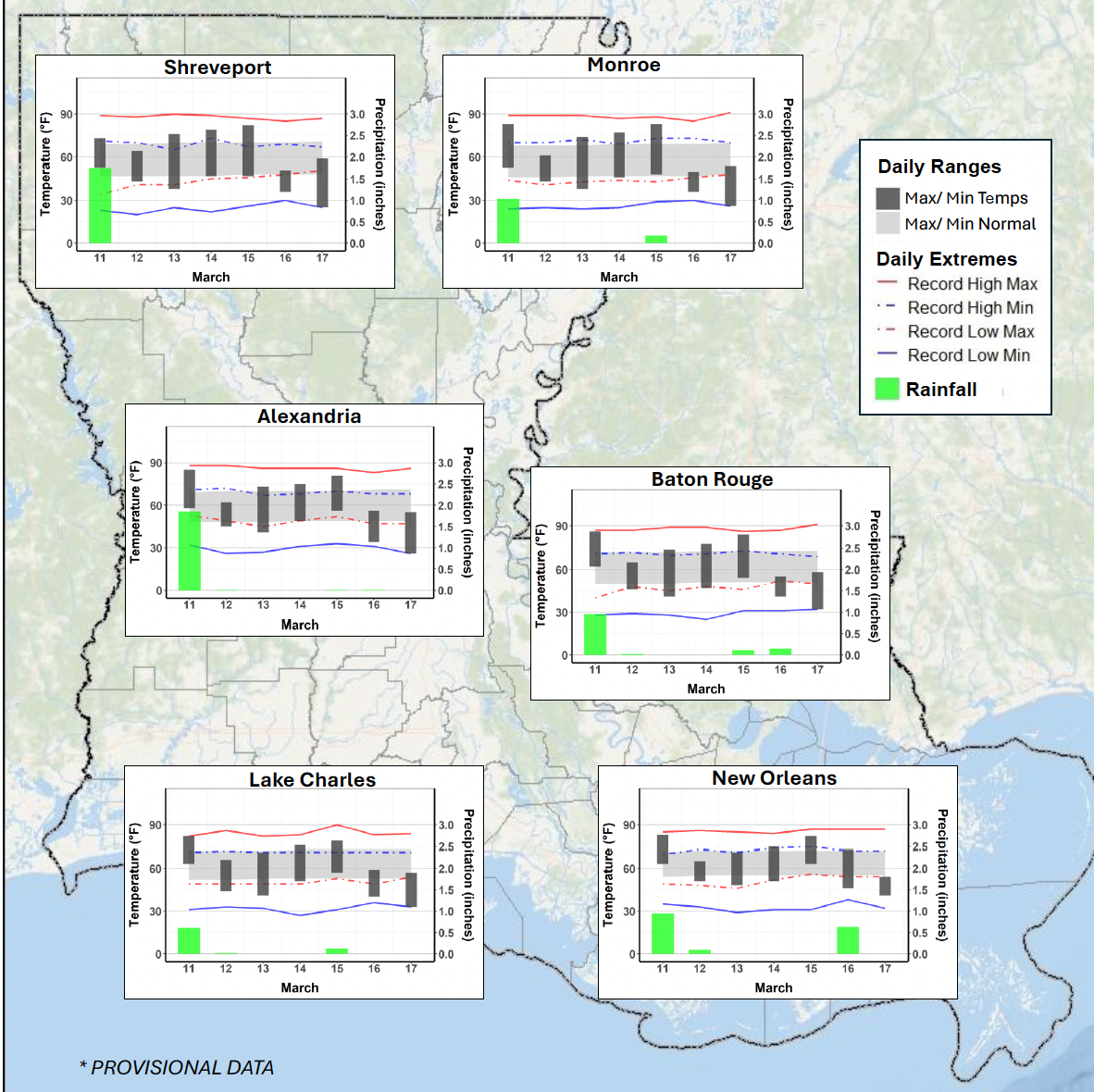
Louisiana saw its second tornado outbreak in less than a month on March 11, with eight tornadoes touching down in the Florida Parishes in just 90 minutes and six more in southwest Mississippi. Despite the fast-moving storms and numerous warnings, damage was limited and no casualties were reported. Recent rainfall has improved drought conditions slightly, but nearly three-quarters of the state remains in some level of drought, with continued dry conditions and elevated fire risks in several parishes.
Read More
Legislation to Create Recreational Alligator Hunting Season Approved by Louisiana Senate, Heads to House for Review
Legislation continues to move through the state capitol that would allow for the Louisiana Wildlife Commission to establish rules and regulations for a recreational alligator hunting season. The Louisiana Senate unanimously approved the bill by Franklin Senator Robert Allain, who says the alligator population has become too large.
Read More
Groups Urge Action On Phosphate Duties
Over 50 state grower groups and eight national ag groups filed a letter with the Department of Commerce on Friday asking it to revoke countervailing duties on imports of phosphate fertilizer as the sunset review begins.
Read More
High Profile Pesticides Labels Coming Under Scrutiny
Chances are low, but not zero, that a lawsuit to vacate 2026 registrations allowing use of over-the-top dicamba products in cotton and soybeans might keep farmers from using the herbicide, said Brigit Rollins, staff attorney for the National Agricultural Law Center (NALC).
Read More
US Cattle Placements Increase Despite Tight Supplies
An ag economist says cattle placed into feedlots were up 4 percent from last year. Charley Martinez is with the University of Tennessee. “Part of the reason why we see that and kind of going against the trend that we saw last year,” he says. “I think drought’s really putting some pressure on folks throughout the country that we just can’t hold on to some of these animals.”
Read More
Cleveland: Cotton’s Bulls Pause For A Rest
Cotton’s three-week rally gave us the 68 cents suggested last week, and then some. Yet, the market has now posted three consecutive down days. That should not be viewed as evidence that the rally is over. To the contrary, the same factors that sent prices higher are still in the market
Read More
Effects Of The March 17, 2026 Freeze On Soybean Plants And Their Recovery
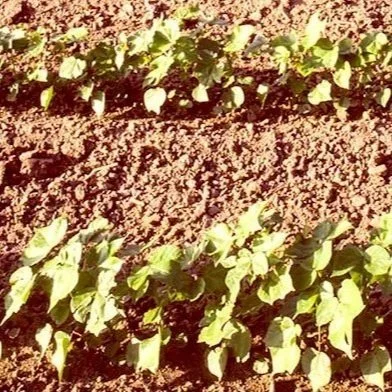
The initial planting for a soybean date of planting by population trial at the Dean Lee Research and Extension Center occurred on March 3, 2026. On March 17, 2026, a freeze event resulted in damage to the unifoliate leaves and apical meristem (the primary growing point) of the main stem. However, by March 23, 2026, most plants exhibited axillary branch development originating from the cotyledon node.
Read More
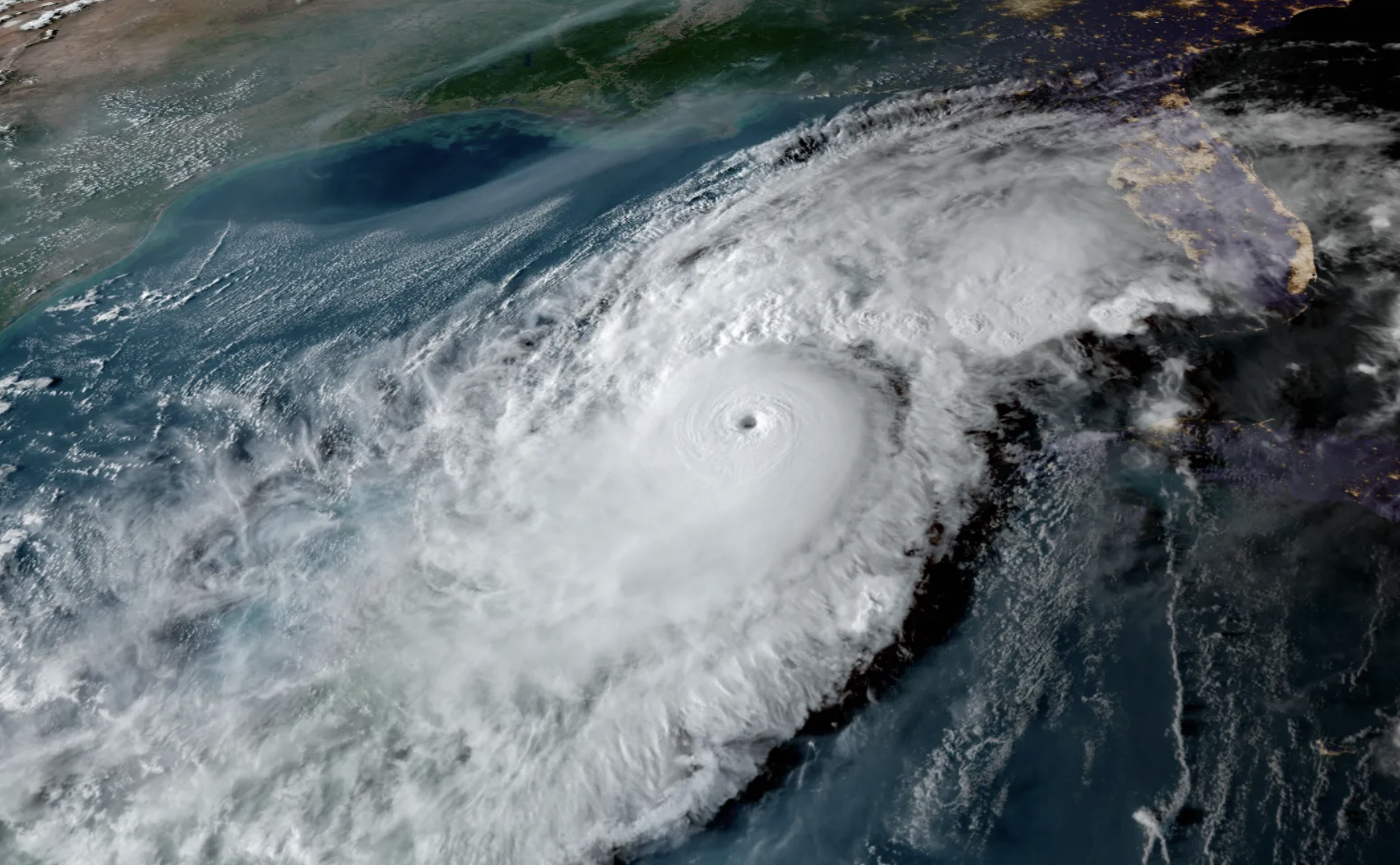
National Hurricane Center to Issue New Forecast Cone Graphics for 2026 Hurricane Season
As part of a suite of product improvements for the 2026 hurricane season [PDF], NOAA’s National Hurricane Center (NHC) is implementing two new tropical products and services: a new operational hurricane track cone map, and new storm surge alerts for Hawaii.
Read More
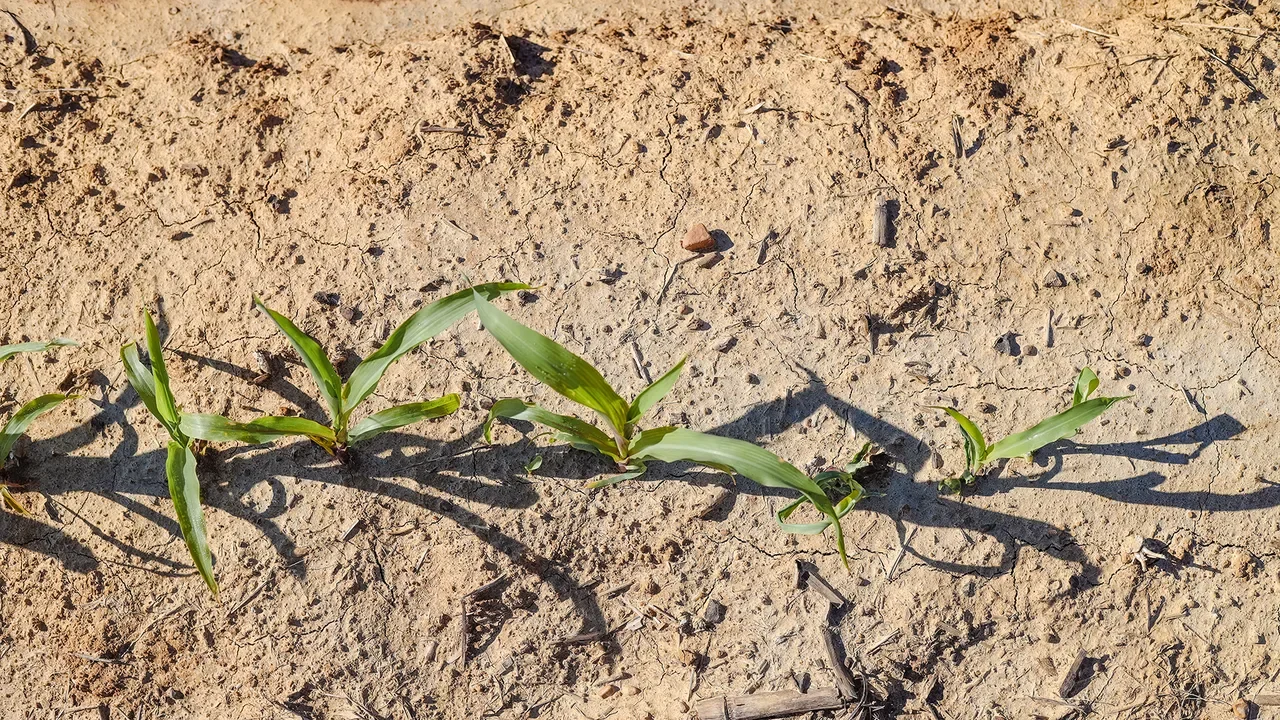
Louisiana Corn Farmers Brace for Replant Decisions After March Freeze
With freezing temperatures hitting early-planted corn, farmers are weighing the costs and benefits of replanting. An LSU Extension specialist urges most of them to wait and see.
Read More
USDA Accelerating Wildfire Assistance, Expanding Grazing Options
USDA’s Undersecretary for Farm Production and Conservation says the agency is working to fast-track disaster assistance for producers impacted by recent wildfires.
Read More
U.S. Soybean Shipments To China Rise As Summit Delay Clouds Trade Outlook
A surge of U.S. soybean shipments to China is providing a boost to export demand, even as uncertainty grows over the future of trade talks between the two countries. Recent export activity shows increased volumes of U.S. soybeans moving to China, the world’s largest buyer, as previously arranged purchases are fulfilled. Bloomberg reports the shipments come amid shifting global competition, particularly from Brazil, and reflect continued reliance on the Chinese market for U.S. growers. However, market sentiment has been tempered by delays surrounding a potential summit between U.S. and Chinese leaders, raising questions about future trade policy and demand stability. Analysts say uncertainty over negotiations could weigh on soybean prices and influence farmer marketing decisions. China remains the top destination for U.S. soy exports, making trade relations a key factor for the farm economy. Any disruption or delay in talks could have ripple effects across commodity markets.
Read More
Stock Show Spotlight: Showing Season Brings Together Communities Across the Southeast
From barns to show rings, producers and students say that livestock events offer economic opportunity and life lessons. Let’s take a look at some shows across the southeast in Georgia, Virginia, and Louisiana, showcasing the hard work and talents of rural youth in 4-H and FFA.
Read More
Farm Groups Call On Trump and Congress to Include Farmer Aid in Military Funding Package
As Congress considers a military funding package, relief for farmers might become a key component of the legislative equation. More than 50 farmer groups are asking President Trump and Congress to include aid in the package. The letter sites severe weather conditions, the effective closure of the Strait of Hormuz and sustained market pressure as their reasons for additional funding.
Read More
Farmer Share of Food Dollar Shrinks
In another sobering reminder of the economic challenges facing America’s farmers and ranchers, new data show that farmers’ share of the money consumers spend on food continues to shrink, even as expenses rise. The latest Market Intel from American Farm Bureau Federation economists shows that in 2024 farmers and ranchers received a combined 5.8 cents of every food dollar after accounting for expenses, down from 5.9 cents in 2023. 2024 is the latest available data from USDA.
Read More
Lawmakers Seek Fertilizer Price Transparency Amid Rising Costs
A bipartisan group of U.S. Senators introduced a bill that would require mandatory price reporting of fertilizer — a bid for more market information after the war in Iran prompted the biggest surge in crop nutrient costs in years.
Read More