What If We Don't Get A Farm Bill In 2023?

One of the questions we have been getting the most as agricultural policy economists is whether we are going to get a 2023 Farm Bill on time.  While there are dedicated teams of ag committee members and staff in the House of Representatives and Senate who are going to do their best to get a farm bill done on time, history is not on their side.  

This article isn’t going to focus on the probability or odds of getting a bill in 2023 but rather – how much would it matter if it doesn’t get done? 

Read More
don molino
The Tech World Had The Chance To Meet Real Farmers At CES, And The Reaction Was Surprisingly Good

The global tech industry gathered at the Consumer Electronics Show (CES) in Las Vegas this past week to see the latest and greatest in technology and this year, agriculture took center stage. What’s traditionally been a show geared to consumers is one agriculture is playing a bigger role, and as Farm Journal discovered, the interest in agriculture’s story became a resounding theme.

Read More
kristen oaks
Climate Continues to Challenge Agriculture

The average annual temperature of the contiguous United States was 53.4 degrees F, which is 1.4 degrees F warmer than average, ranking in the warmest third of the record.

Annual precipitation for the contiguous United States was 28.35 inches, 1.59 inches less than average, ranking in the driest third of the historical record.

Read More
Weatherkristen oaks
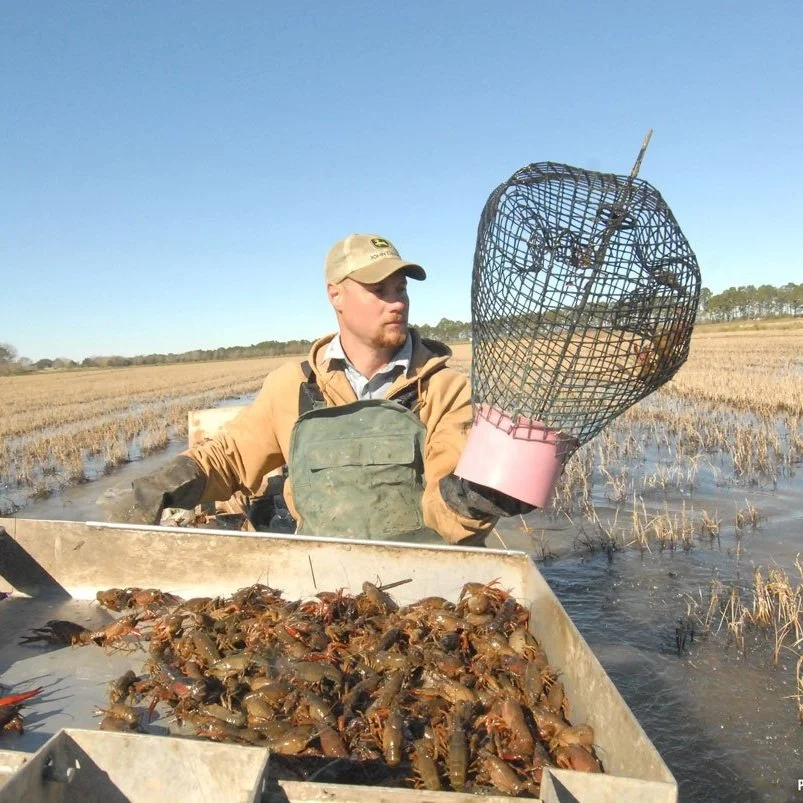
Freeze Spurs Rush To Harvest Sugar Cane

Patrick Frischhertz, a farmer in Plaquemine, finished harvesting his sugar cane on Thursday and breathed a huge sigh of relief.

''I feel very blessed to be able to cut all the cane out of our fields,'' he said. ''It was looking really bleak.''

In late December, an arctic blast sent temperatures below freezing for three days across Louisiana. The freeze killed all of Frischhertz's sugar cane above ground and decimated the amount of recoverable sugar per ton. When temperatures rose again, the cane started to ferment.

''It was a real serious issue for all sugar cane farmers. We were sending cane that was almost sour to the mill,'' Frischhertz said.

The major number for a sugar cane farmer is ''recoverable sucrose,'' calculated by multiplying the recoverable sugar per ton by the tons of raw sugar per acre.

''The recoverable sugar per ton stayed about the same for four to five days, then the temperature started warming up and the sugar cane started to deteriorate. The amount of recoverable sugar per ton started to drop significantly,'' Frischhertz said.

Bobby Morris, a West Baton Rouge Parish farmer, said the area had about 240 pounds of recoverable sucrose per ton of sugar cane.

''Now we're doing 120-150 in sugar content. We lost 100 points in three weeks,'' he said.

Morris surveyed his fields and said he had about $200,000 to $300,000 worth of sugar cane left to harvest.

''It's not something you personally want to leave,'' he said. ''But it's hard to say whether we're going to lose any at this point.''

Sam Irwin, public relations director at the American Sugar Cane League, said out of the 11 sugar mills in Louisiana, five are continuing to grind, which is a good sign.

''As long as they're grinding, farmers are going to keep harvesting,'' he said.

A bigger concern was whether the freeze hurt the next crop - but early indicators seemed to alleviate those fears.

Sugar cane farmers typically begin harvesting in mid-September and finish in mid-January. It's always a race to beat the first freeze, and this season's crop was particularly large. By December, about 83% of the sugar cane crop statewide was harvested. Now, the harvest is about 96% complete.

On the bright side, sugar cane had been thriving before the freeze.

''We've already exceeded last year's sugar production, and last year was a state record,'' said Kenneth Gravois, a sugar cane specialist at the LSU AgCenter. ''So this takes us from an extremely good crop to slightly less than our expectation.''

Morris, despite his current worries, said sugar cane is generally doing well. ''It's very seldom we have a disaster. It's a tough crop to lose,'' he said.

The losses for individual farms are real, but Gravois said good yields in the majority of the harvest, plus a decent price for sugar and molasses, will hopefully bode well for growers.

''Sugar has better margins, better profit. It's more lucrative than other farming,'' Gravois said.

He noted that sugar cane is the No. 1 crop in Louisiana by value and an important economic driver for rural communities. This has attracted new farming operations into the industry, particularly in northern and western Louisiana. It's also attracting young people, whether in farming or in ancillary industries that support farming.

''There are a lot of good young people in this industry,'' Gravois said. ''It's been a real bright spot in the ag economy.''

Read More

Sugarcanedon molino
LSU Research Discovers New Option For cleaning Spray Tanks

Herbicide-tolerant soybeans expand weed control options to include dicamba, 2,4-D and more. Yet many soybean varieties are still sensitive to herbicides that other varieties have been bred to tolerate. That means herbicide residue left in spray tanks and booms from a previous application can damage crops much like herbicide drift.

A new potential cleaning solution may be available from an unlikely source.

“While researching medicinal plants, I discovered natural ingredients that can solubilize a wide range of substances, or force oil and water to mix,” says Zhijun Liu, professor in the School of Renewable Natural Resources at Louisiana State University. 

Read More
LSU AgCenter, Soybeansdon molino
Are Landlocked Soybean Crush Facilities Destined To Survive?

Pressure on the Federal Reserve is easing prices in the start of 2023, especially in the fuel corridor, according to Jordan Fife, President of BioUrja Trading.

With planting season around the corner, Fife says diesel in particular looks to be more reasonable for producers this year, as it’s trading 10% off from its peak a few weeks ago, and it’s given back almost all the gains it’s had over the year. 

Read More
Soybeansdon molino
Highly Pathogenic Avian Influenza Hurting Birds, Wallets

Mississippi has over 155 positive detections of Highly Pathogenic Avian Influenza in wild birds from teal, wood ducks, Canada gees, Ross’s geese, snow and blue geese, vultures and bald eagles. Louisiana saw a jump in 40 cases over the past week with the majority of positives in LaSalle Parish in Green-Winged Teal according to figures on the US Department of Agriculture’s Animal Plant Health Inspection Service

Read More
Poultrykristen oaks
LSU Vet Med Plays Major Role in Detecting Toxin Affecting Louisiana Horses

The Louisiana State University (LSU) School of Veterinary Medicine played a significant role in diagnosing and treating several horses in Louisiana infected with Clostridium botulinum type C, which causes botulism. They discovered that alfalfa cubes were infected with the toxin that originated from one source and were sold in various states, with horses in Louisiana, Texas, Colorado, and New Mexico reportedly falling ill and many even dying from the toxin.

Read More
Equinekristen oaks