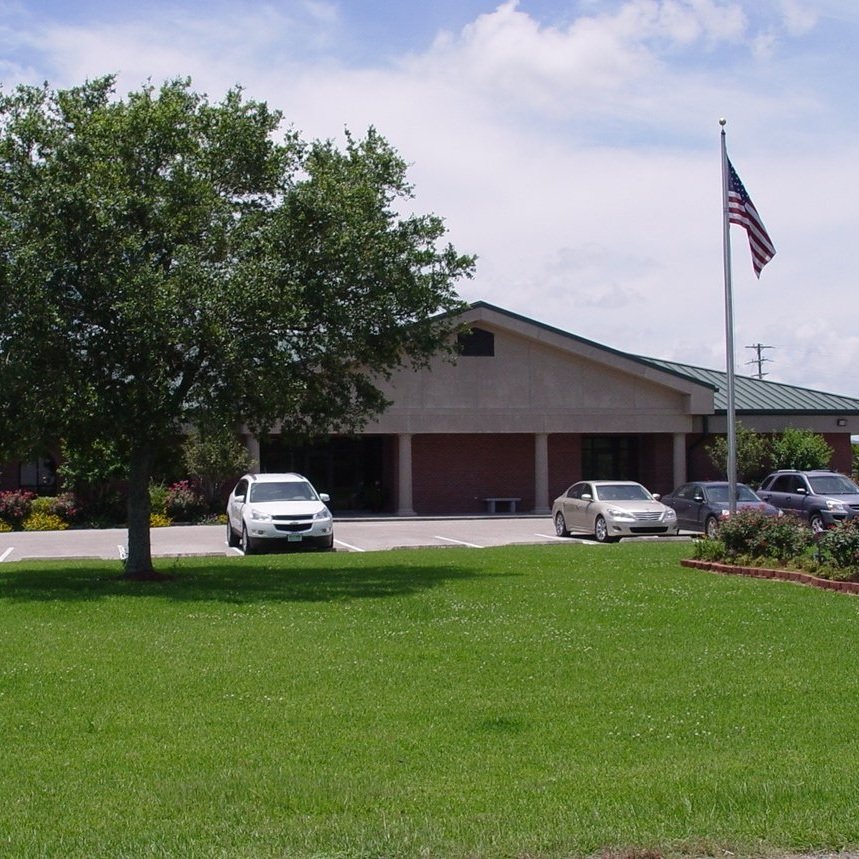
H. Rouse Caffey Rice Station Newsletter: June 2025
Rice remains an extremely important crop in Louisiana agriculture, ranking among the top four in acreage and value. Approximately 470,000 acres were planted in 2025. Louisiana per acre rice yields continue to show steady increases due at least in part to research activities funded by the Louisiana Rice Research Board. Implementation of new technology developed through research efforts continues wide scale use in Louisiana rice production. This is critical in maintaining yield and quality increases, as well as increasing the economic viability of Louisiana rice production.
Read More
Nominations Now Open For Farm Service Agency Committees
Nominations are now being accepted for farmers and ranchers to serve on local U.S. Department of Agriculture (USDA) Farm Service Agency (FSA) county committees. These committees make important decisions about how federal farm programs are administered locally. All nomination forms for the 2025 election must be postmarked or received in the local FSA office by Aug. 1, 2025.
Read More
Crop Market Report: May, 2025
The 2025/26 U.S. corn outlook is for record supplies and total use, and higher ending stocks. The corn crop is projected at 15.8 billion bushels, up 6 percent from a year ago on increases to both area and yield. Planted area of 95.3 million acres if realized would be the highest in over a decade. The yield projection of 181.0 bushels per acre is based on a weather-adjusted trend assuming normal planting progress and summer growing season weather.
Read More
Meet Anna Timmerman, The AgCenter Louisiana Citrus Expert
As the LSU AgCenter Extension agent for St. Bernard and Plaquemines parishes, Anna Timmerman has become a trusted source of information for the citrus industry, home fruit and vegetable growers and small producers who sell at the more than 30 farmers markets in the Greater New Orleans area. Timmerman’s expertise was so well respected that she was named the state point of contact for citrus earlier this year.
Read More
McNeese Rodeo Team Going to the 2025 CNFR
The McNeese State University men’s rodeo team has claimed its fourth straight championship title in the National Intercollegiate Rodeo Association’s (NIRA) Southern Region. Six members of the team, and one member of the women’s team, are traveling to the 2025 College National Finals Rodeo (CNFR) June 15-21 in Casper, Wyoming.
Read More
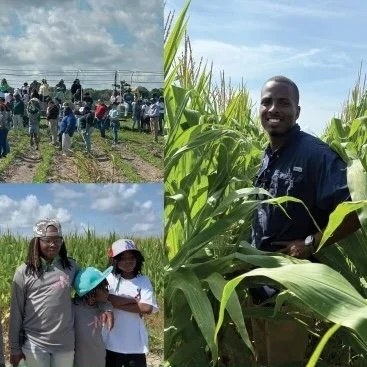
How to Grow the Next Generation of Agriculture: Start Small
Growing up in the Mississippi River Delta, Willis Nelson says his family’s 800 acres was the biggest farm he’d ever seen. When he and his brothers took over the operation, he dreamed of growing the operation to 1,000 acres, but he didn’t know how to start.
“I went to a field day hosted by Harper Armstrong and he had 2,500 acres and he was a black guy,” Nelson says. “Then I got involved with the National Black Growers Council and saw all the big growers and I thought 1,000 was not enough. It gave us a role model we hadn’t seen before.”
Read More
LSU Faculty Leadership Expresses Confidence in the University’s Interim Appointments
In an email to faculty Monday, LSU Faculty Senate President Daniel Tirone expressed confidence in the interim leadership that’s taken over at the university in the face of several high-profile departures, including former President William Tate IV.
Tirone said he’d met with Interim President Matt Lee for over an hour on Friday discussing priorities.
Read More
Crawfish Season Lasts Longer Than Usual After Record-breaking Year
While it’s the time of year when many crawfish lovers would mourn, as the season usually comes to an end, this year is different. After an epic season, a plentiful one that has been unusually extended, the season is still ongoing.
“We’ve had a record-breaking season this year,” stated Louisiana Crawfish Company, adding that record production has been achieved across the board. To add to the abundance, the company states that fishermen are reporting that weather conditions are pointing toward an extended season.
Read More
Dylan and Shelby Laster: Farming with Purpose, Passion and Pride
Dylan and Shelby Laster’s farm in Marion is a place where tradition meets innovation, where technology works hand-in-hand with hard work, and where family roots run deep. As finalists for the Louisiana Farm Bureau’s Young Farmers and Ranchers Achievement Award, the Lasters are not just raising chickens and cattle — they’re raising a future.
Read More
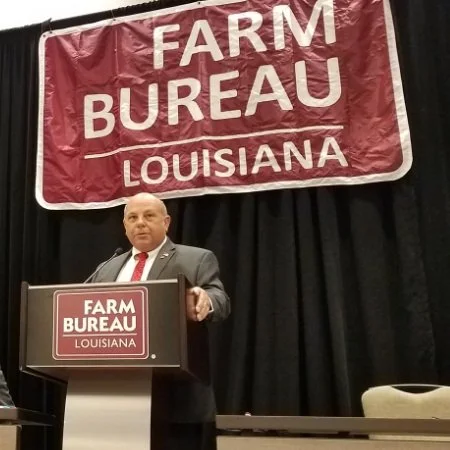
Farm Bureau Applauds Proposed Renewable Fuel Standards
American Farm Bureau Federation President Zippy Duvall commented today on EPA’s proposed Renewable Fuel Standard requirements for 2026 and 2027.
“Farm Bureau applauds the Environmental Protection Agency and Administrator Lee Zeldin for recognizing the importance of biofuels for farmers and America’s families. EPA’s proposed Renewable Fuel Standard for 2026 and 2027 would increase domestic biofuel production, prioritize home-grown crops, and enable producers to meet the demands of emerging international markets. America’s families who choose to use biofuels could see much-needed relief at the gas pump, with savings of 10 to 30 cents per gallon.”
Read More
Louisiana Soybean June Update: Early Flowering In April Planting Dates
The 2025 soybean planting season in Louisiana began rapidly, with 70%-80% of the projected acres planted by May 1, significantly exceeding the average of 40%-50%. Although most of the crop was planted within the optimal window, heavy rainfall and strong winds have led to issues such as failed stands and delayed weed control applications.
Read More
Acadiana Rice Mill Launches $6M Renovation
Falcon Rice Mill in Crowley has launched a $6 million renovation that will increase efficiency and add 16 jobs.
The project, much of which is will launch next month, will include purchasing and installing new equipment that will improve workflow, increase energy efficiency and double its production capabilities, according to its application with Louisiana Economic Development.
Read More
Three Northeast Louisiana Parishes Declared Contiguous Natural Disaster Areas
This Presidential disaster declaration allows the United States Department of Agriculture (USDA) Farm Service Agency (FSA) to extend much-needed emergency credit to producers recovering from natural disasters through emergency loans. Emergency loans can be used to meet various recovery needs including the replacement of essential items such as equipment or livestock, reorganization of a farming operation, or to refinance certain debts. FSA will review the loans based on the extent of losses, security available, and repayment ability.
Read More
Farm Bureau Welcomes President Trump’s Commitment to Farmworkers
American Farm Bureau Federation President Zippy Duvall commented today on President Trump’s commitment to preventing labor disruptions in the food supply.
“We appreciate President Trump’s comments this afternoon recognizing the contributions of farmworkers who play a vital role in growing food across America, and committing to preserve the ability of farms to provide a safe and secure food supply.”
Read More
AgriCapture Issued Third Round Of Carbon Credits From Nation’s Largest Rice Methane Project
AgriCapture recently announced the third issuance of carbon credits from the largest rice methane reduction project in U.S. history. This newest issuance of 33,996 carbon credits includes the first of any agricultural credits to market from the 2024 growing season. These credits reward farmers for cutting methane emissions and conserving water through improved irrigation practices.
Read More