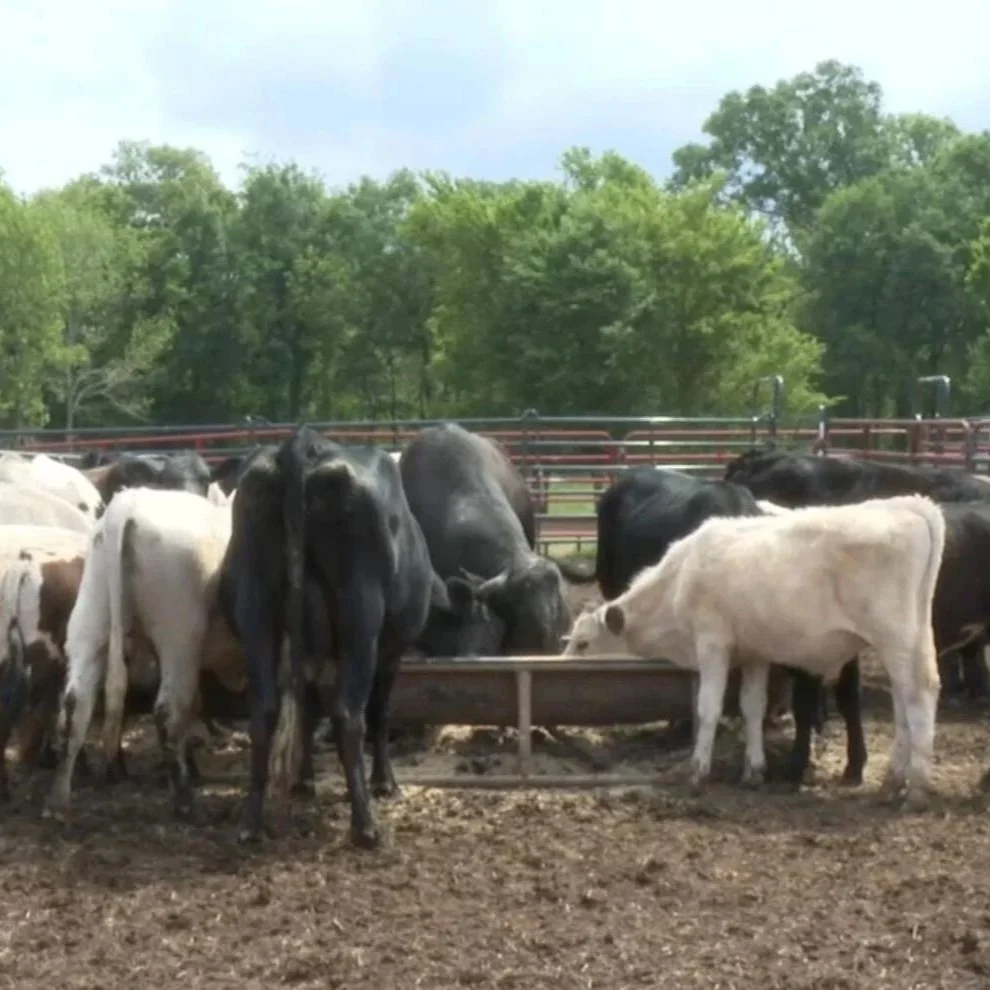
House Seeking Farm Bill Feedback
The House Committee on Agriculture wants your input on the next farm bill. It has created an online portal to solicit public feedback. Committee leaders believe this tool will allow members to better share the experiences and priorities of agriculture producers and consumers.
Read More
Beginner Organic Farming Workshop & Sustainable Farm Tour, May 23 & 24
Two training courses will be held near Lafayette on May 23 and 24 — a Beginning Organic Farming Workshop and Acadiana Sustainable Farm Tour.
Both courses are sponsored by the LSU AgCenter’s Louisiana Sustainable Agriculture Research and Education (SARE) professional development program.
Read More
The Endangered Species Act
Figuring out how the Endangered Species Act affects the agricultural industry can be both complex and frustrating. The ESA of 1973 was enacted by Congress under President Nixon and has since drawn much attention to species across the United States that had/have the potential to be threatened or completely wiped from the map.
Read More
2022 US Ag Exports Highest On Record
Last week, the USDA's Foreign Agricultural Service (FAS) released its 2022 U.S. Agricultural Export Yearbook, a statistical summary of U.S. agricultural commodity exports. Today's update includes highlights from the report, with a focus on corn, soybeans and wheat.
Read More
AFBF Ag Innovation Challenge Deadline Extended to May 26
The American Farm Bureau Federation, in partnership with Farm Credit, has extended the deadline to May 26 for entrepreneurs to apply online for the 2024 Farm Bureau Ag Innovation Challenge. Now in its 10th year, this national business competition showcases U.S. startup companies developing innovative solutions to challenges faced by America’s farmers, ranchers and rural communities.
Read More
It’s Been a Rainy Week, but Drought Persists in Parts of Louisiana. Here’s Why
Louisiana's months-long drought could be coming to an end soon.
The U.S. Drought Monitor, a collaboration between the National Oceanic and Atmospheric Administration, National Drought Mitigation Center and U.S. Department of Agriculture, has designated most of southeast Louisiana as abnormally dry, with some areas experiencing moderate drought.
Read More
Beef Field Day Shows Glimpse Into the Future
The skies, though gloomy, did not deter a large crowd of beef cattle and hay producers from attending the LSU AgCenter’s beef and forage field day on April 27.
Read More
Biden Invites Lawmakers to White House to Discuss Farm Bill Amid Looming Debt Limit Crisis
President Joe Biden is wading into the high-stakes negotiations over the farm bill, amid growing concerns the debt limit stand-off could knock that must-pass piece of legislation off track.
Read More
Supply Chain, Labor Shortages Still Limitations to Manufacturers in 2023
The pandemic may no longer be an imminent issue facing machinery manufacturers, but the supply chain is still a ways off from a full recovery.
Read More
USDA Announces New Steps To Enhance Organic Markets & Support Producers
Agriculture Secretary Tom Vilsack today announced that the U.S. Department of Agriculture (USDA) is taking additional steps as part of its commitment to strengthen the market for domestically grown organic goods, and to support producers seeking organic certification. These funding opportunities are part of the U.S. Department of Agriculture’s (USDA) Organic Transition Initiative, launched in fall 2022, which is a suite of offerings to help existing organic farmers and those transitioning to organic production and processing.
Read More
LSU AgCenter Scientist To Study Climate-Smart Conservation Practices
LSU AgCenter agronomist Syam Dodla has received a U.S. Department of Agriculture grant of more than $1 million to look at climate-smart ways to produce sugarcane and rice.
Dodla, who works at the AgCenter Red River Research Station in Bossier City, said there are many climate-smart conservation practices that have not been widely adopted in the southern region of the United States.
Read More
Revisiting Planted Acres Versus Base Acres
Published reports indicate renewed interest by some in Washington, D.C., in tying commodity program payments to planted acres rather than base acres.
Since the mid-1980s, commodity programs in the U.S. have used base acres of each program crop on a farm to determine a producers’ payment for each crop, with two notable exceptions: (1) the period covered by the 1996 Farm Bill (1996 to 2001) and (2) the Average Crop Revenue Election (ACRE) program in the 2008 Farm Bill which paid on planted acres (not to exceed total base acres on the farm).
Read More
LDAF Urges Vigilance During Termite Season
The Louisiana Department of Agriculture and Forestry (LDAF) Commissioner Mike Strain, D.V.M., reminds property owners to remain vigilant for termites during late spring and into the coming summer months.
With Louisiana’s warm and wet climate this time of year, termites can get especially active as they constantly seek out new food sources.
“Turning off outside lights at night or using yellow bulbs can help you avoid attracting swarming termites,” says Commissioner Strain. “However, there are also other proactive measures you can take on a regular basis to protect your property from the destruction of termites.”
Fix any leaks in the roof, pipes, and outside faucets on your home.
Repair rotting wood on the fascia, soffit, and exterior wood surfaces.
Remove any wood lying under or around your home, and store firewood away from your home.
Examine your home’s slab line and the base of piers for signs of termites.
Clean the gutters on your home and repair sections that may be damaged.
Trim tree limbs and vines that may be growing on your home.
Drain water away from the slab or under your home; do not let it pool.
Treatments and annual inspections by a licensed, insured, and bonded pest control company are a good termite preventative. Between professional inspections, property owners can also look for mud tubes on slabs, piers, or walls; pinholes in wallboards; softness in flooring; or blisters in paint or wallpaper.
To find out which companies are certified and licensed to perform termite-related services, consumers can contact the LDAF at 225-925-4578, visit the LDAF website at www.ldaf.la.gov, or download the LDAF Business Search App (available in the Apple and Google Play store).
Read More
New FDA Guideline will Affect Local Livestock Farmers
Livestock farmers will soon have a new obstacle.
After June 11, the Federal Drug Administration will remove over-the-counter livestock antibiotics and no longer make them available except through veterinary prescription. The decision is the result of the FDA's update to its antimicrobial medication guidelines.
Read More