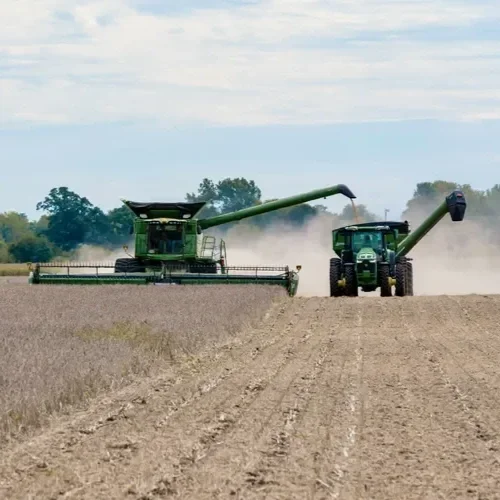
China Imports No US Soybeans In September..First Time Since 2018
Reuters' Ella Cao and Lewis Jackson reported that "China imported no soybeans from the U.S. in September, the first time since November 2018 that shipments fell to zero, while South American shipments surged from a year earlier, as buyers shunned American cargoes during the ongoing trade dispute between the world's two largest economies."
Read More
LSU AgCenter Conducts Soybean Variety Trials At Research Stations And Farms
The LSU AgCenter evaluates soybean varieties through both replicated research station trials and on-farm demonstrations to provide regionally relevant performance data.
Farmers are encouraged to select varieties that perform consistently across multiple environments and years to improve yield stability.
In 2025, variety testing included evaluations for yield and abiotic/biotic stress resistance across diverse Louisiana environments and soil types.
Read More
A New Road for Soybeans: Building New Domestic Demand
The loss of China as a dominant buyer has left a hole in U.S. soybean demand that hasn’t been easy to fill. While export sales have held up better than expected elsewhere in the world, farmers and industry leaders are still asking the same question: Where will the next big wave of demand come from?
Read More
American Soybean Association Issues Statement On Cancelled US/China Meeting
The American Soybean Association today expressed concern following reports that President Trump has canceled his planned meeting with Chinese President Xi amid escalating trade tensions over rare earth mineral restrictions.
Read More
China Thrives Without US Soybeans
Of all the grand beliefs held by American farmers, this one has always stood out: The world, and China in particular, needs American grain.
That may no longer be the case.
Read More
Soybean Harvest Nearly Complete
Concordia Parish’s soybean harvest is nearing completion, according to Kylie Miller, LSU AgCenter extension agent.
“Right now, farmers are just trying to get the later beans in,” Miller said. “Here in the next week or so, we should be fully wrapping up.”
Read More
US Corn Ending Stocks Down 13% from Last Year, Soybean Ending Stocks Down 8%
Old crop corn stocks on hand as of Sept. 1, 2025, totaled 1.53 billion bushels, down 13% from Sept. 1, 2024, according to the U.S. Department of Agriculture’s National Agricultural Statistics Service (NASS) Grain Stocks report released today. Old crop soybeans stored in all positions were down 8% from Sept. 1, 2024, and all wheat stocks were up 6% from a year earlier.
Read More
September 28 Louisiana Crop Report
According to USDA, as of last Sunday, 96 percent of the Louisiana soybean crop was coloring, 93 percent dropping leaves, 88 percent mature and 78 percent has now been harvested. The bean crop is reported at two percent excellent, 20 percent fair and 78 percent good.
Read More
China Expands Argentina Soybean Buying to 20 Cargoes, Traders Say
Chinese importers kept up a hectic pace of Argentine soybean purchases after the South American supplier's move to abolish export taxes temporarily made its prices competitive, traders said on Wednesday.
Read More
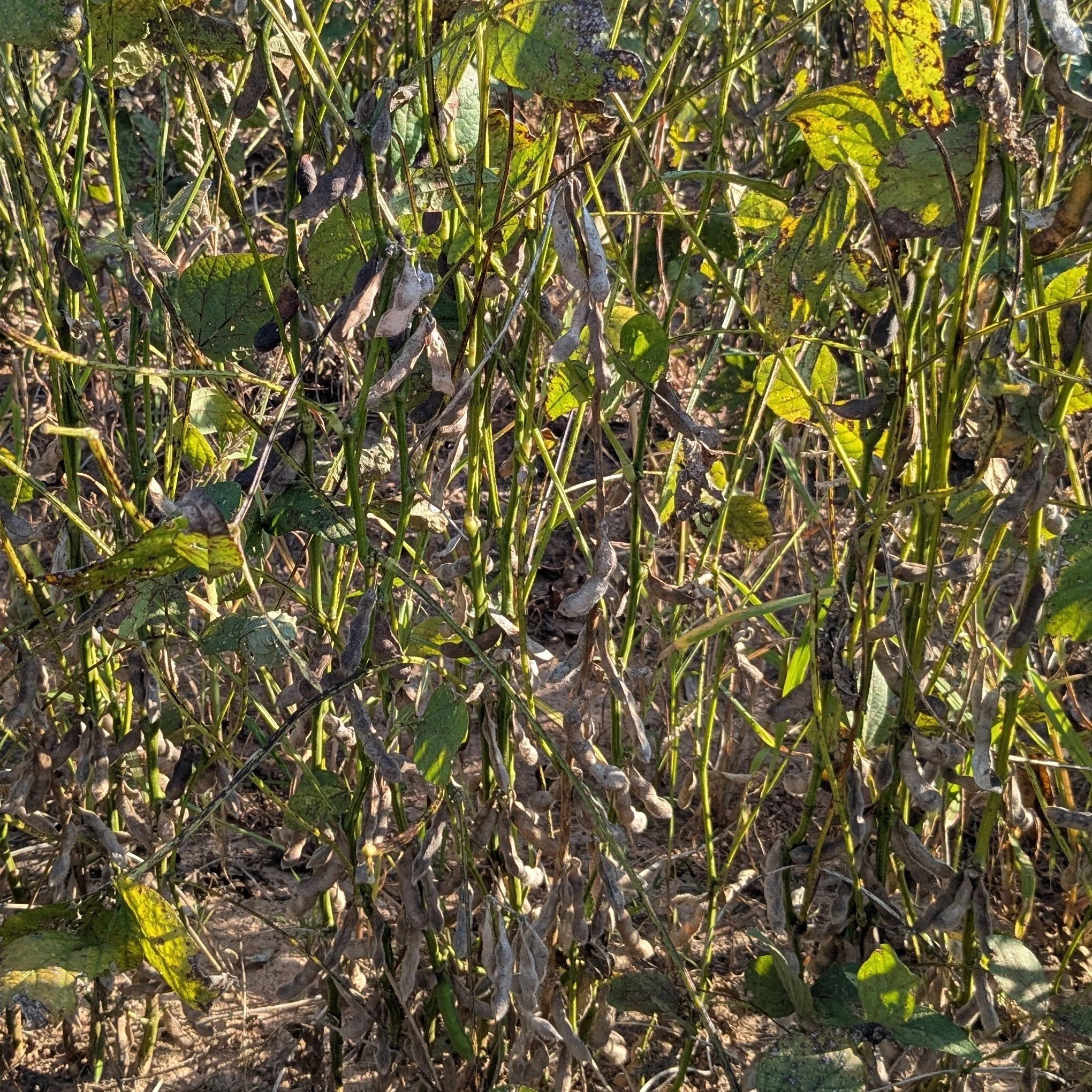
Green Stem In Soybean
There have been several cases of green stem reported in mature (R8) soybean fields. A Science for Success factsheet (Understanding Green Stem in Soybeans) explains that green stem is a disorder where the stems of a soybean plant stay green after the pods have fully matured. The exact cause of green stem is unknown. However, it is generally associated with any factor that reduces pod and seed development. This is because the developing seeds are the "sinks" that draw nutrients from the plant's "sources" like the leaves and stems.
Read More
Louisiana Surges Ahead in Soybean Harvest, Reaching 63% as 11 States Report Progress
In the USDA Crop Progress report released on Sept. 15, 11 states reported soybean harvest. Harvest progress across those states was 5%, which is 2 percentage points ahead of the five-year average. Here’s a closer look at the states reporting soybean harvest.
Read More
China Seeks Trade Edge, Shunning US Soy IS First Since 1990's
For the first time since at least the 1990s, China hasn’t bought any U.S. soybeans at the start of the export season, a sign that Beijing is once again using agriculture as leverage in its trade fight with Washington.
Read More
Soybean Harvest Progresses in 11 States, Led by Louisiana at 63%
Louisiana has the most soybeans harvested, with the USDA reporting 63% completed. That’s 13 percentage points ahead of the prior week. At this time last year, 45% of soybeans were harvested. The five-year average is 47%.
The USDA reported that Louisiana soybean condition was rated 0% very poor, 0% poor, 20% fair, 78% good, and 2% excellent.
Read More
USDA Forecasts US Corn Production Up, Soybean and Cotton Production Down from 2024
Corn production is up, while soybean and cotton production is down from 2024, according to the Crop Production report issued by USDA’s National Agricultural Statistics Service (NASS). Corn production is up 13% from last year, forecast at 16.8 billion bushels; soybean growers are expected to decrease their production 2% from 2024, forecast at 4.30 billion bushels; cotton production is down 8% from 2024 at 13.2 million 480-pound bales.
Read More
Market Update for Corn, Soybeans, Rice, and Cotton: September 2025
This month’s 2025/26 U.S. corn outlook indicates greater supplies, larger exports, and a slight reduction in ending stocks. Projected beginning stocks for 2025/26 are 20 million bushels higher based on a lower use forecast for 2024/25, with reductions in imports and corn used for ethanol partially offset by an increase in exports. Corn production for 2025/26 is forecast at 16.8 billion bushels, up 72 million from last month as a 2.1-bushel reduction in yield to 186.7 bushels per acre is more than offset by a 1.3 million acre increase in harvested area to 90.0 million acres.
Read More