Soybean Harvest Nearly Complete
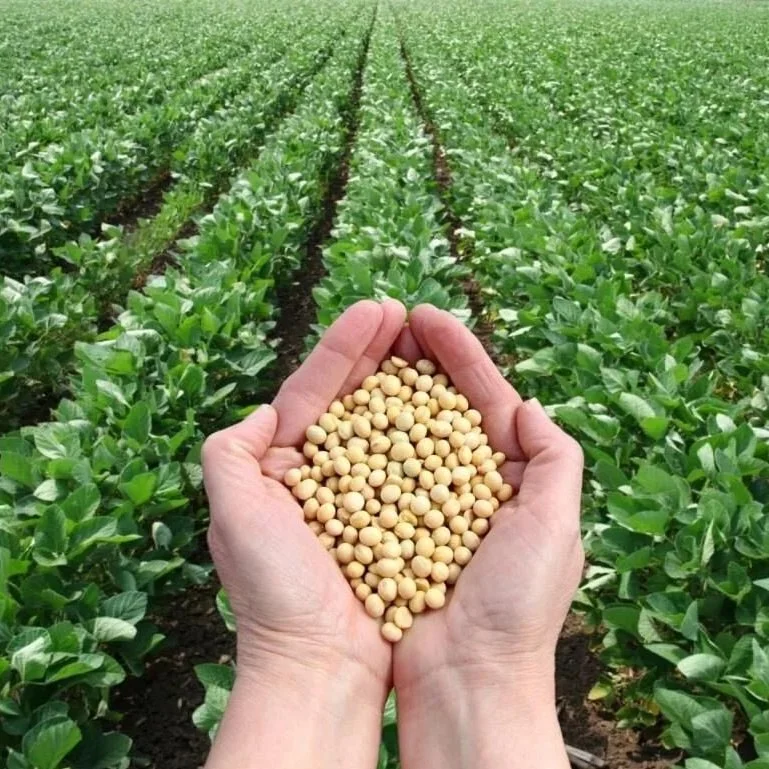
Concordia Parish’s soybean harvest is nearing completion, according to Kylie Miller, LSU AgCenter extension agent.
“Right now, farmers are just trying to get the later beans in,” Miller said. “Here in the next week or so, we should be fully wrapping up.”
Read More
FFAR Fellowship Empowers LSU Ph.D. Student to Bridge Science, Policy
Diana Amaya, a Ph.D. student in agricultural economics at LSU, is breaking new ground as the university’s first recipient of the prestigious FFAR Fellowship. The program from the Foundation for Food and Agriculture Research offers participants professional development and career guidance.
Amaya is part of a national cohort of 33 scholars selected for their potential to drive innovation in agriculture through interdisciplinary research and professional development.
Read More
Fall Field Prep Boosts Early Rice Planting Success
Timing is the most important element in a maximally efficient rice crop. Planting early is the key element to producing top yield, and it all begins with fall field prep.
Ron Levy, Louisiana State University Extension rice specialist, is a firm believer in preparing a fall foundation for infallible spring rice planting.
Read More
Breeding Better Beef: LSU’s Research Works to Transform Louisiana’s Cattle Industry
In Louisiana, where heat and humidity dominate much of the year, raising high-quality beef that tolerates the weather is challenging. Traditional cattle breeds that thrive in cooler climates often don’t adapt well to the Gulf South. Brahman cattle, a breed known for its resilience but not necessarily for premium beef, are typically found throughout the state.
Read More
Louisiana Crops Newsletter: September 2025
The September 2025 issue of the Louisiana Crops Newsletter by the LSU AgCenter is now available online.
Read More
How One Important Sugarcane Variety Continues To Make An Impact
Growers can optimize nearly everything in the production process, including cultural practices, herbicide and insecticide treatments, and fertilization regimes, said Brayden Blanchard, who grew up on a sugarcane farm before becoming a geneticist working on plant breeding at the LSU AgCenter Sugar Research Station in St. Gabriel.
Read More
Learn Best Techniques, Practices At Beef, Forage & Wildlife Field Day
Local farmers and hunters who want to improve their knowledge of cattle management and hunting techniques should check out the upcoming beef, forage and wildlife field day at the LSU AgCenter Bob R. Jones-Idlewild Research Station.
The field day will be held Nov. 1 at the station, which is located at 4419 Idlewild Road in Clinton. Registration for the event will begin at 7:30 a.m.
Read More
Dry/Drought Development for Louisiana
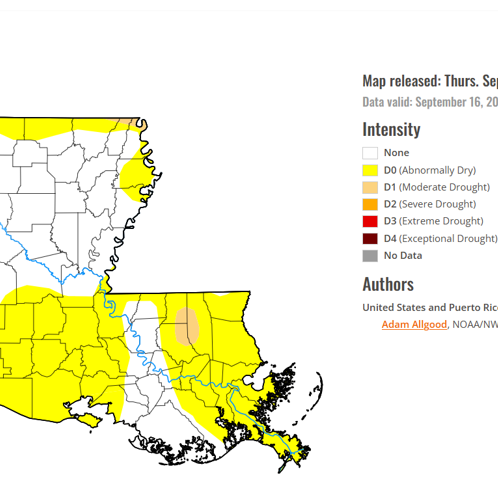
The Louisiana Drought Team continues to expand areas suffering from rainfall deficits in recent weeks, with the first signs of drought developing in the Florida Parishes.
Read More
LSU, FUEL, Syngenta Partner to Develop Low-cost Digital Twins for Chemical Processing Facilities
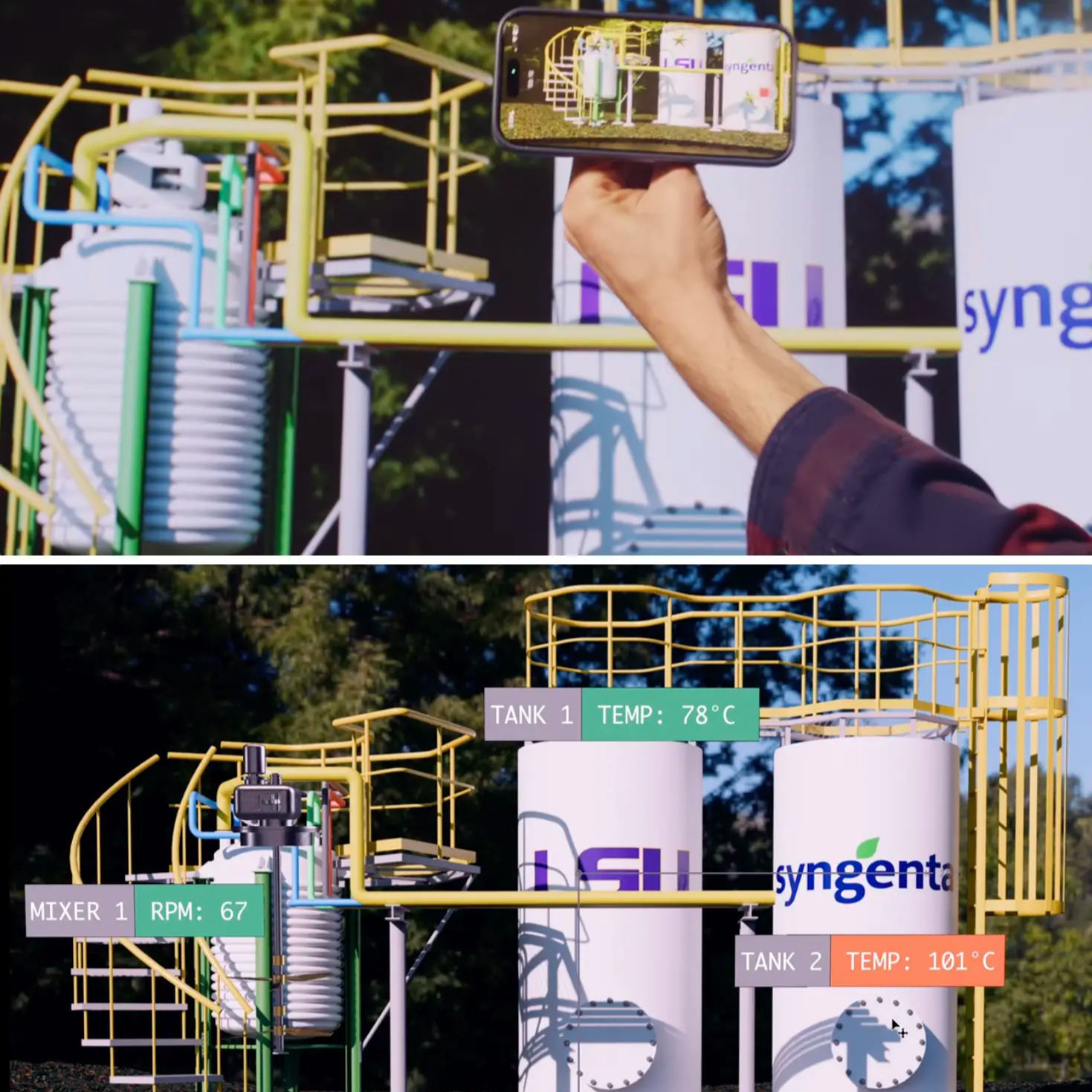
Derick Ostrenko and Jason Jamerson, faculty in the LSU College of Art & Design, along with engineering advisor David Ben Spry, are pioneering a new approach to industrial innovation using digital twins. The effort is supported by a $217,403 use-inspired research and development (UIRD) award from Future Use of Energy in Louisiana (FUEL).
Read More
LSU AgCenter Furthers Rice Research with New Grant
The U.S. rice industry has made impressive gains in sustainability over the last 40 years. Yet the crop is still at risk due to climate change, disease outbreaks, pests and human activity that can cause disturbances in production. The LSU AgCenter is continuing its research on rice sustainability, in large part thanks to a $10 million grant from the U.S. Department of Agriculture.
Read More
LSU Ag Center Seafood Specialist Urges Caution Prior to Consuming Raw Louisiana Oysters
After four people have died and several others became sick after eating raw Gulf oysters contaminated with the flesh-eating bacteria Vibrio vulnificus, the LSU Ag Center is urging you to use caution before eating raw oysters. Seafood extension specialist Evelyn Watts says the risk is especially high during the summer.
“Oysters are affected by Vibrio vulnificus. That is a pathogen that mostly grows in brackish or salt water. Mostly, it’s going to be in the warm months,” Watts explained.
Read More
Market Update for Corn, Soybeans, Rice, and Cotton: September 2025
This month’s 2025/26 U.S. corn outlook indicates greater supplies, larger exports, and a slight reduction in ending stocks. Projected beginning stocks for 2025/26 are 20 million bushels higher based on a lower use forecast for 2024/25, with reductions in imports and corn used for ethanol partially offset by an increase in exports. Corn production for 2025/26 is forecast at 16.8 billion bushels, up 72 million from last month as a 2.1-bushel reduction in yield to 186.7 bushels per acre is more than offset by a 1.3 million acre increase in harvested area to 90.0 million acres.
Read More
Are Raw Oysters Safe To Eat? A Seafood Expert Has Answers
Two people recently died in Louisiana after eating raw Gulf oysters contaminated with the flesh-eating bacteria Vibrio vulnificus. Now that we have returned to the “r” months of autumn, a period historically considered safer to consume the mollusks on the half shell, seafood lovers are rightfully on edge about enjoying what many consider a saltwater delicacy.
Read More
Advanced Organic Farming Workshop Will Dive Into Best Practices & Techniques
Small- and medium-scale farmers looking to deepen their skills in organic production are invited to attend the Advanced Organic Farming Workshop on Sept. 27 at LSU.
Read More
LaHouse Director Speaks At Hurricane Katrina Anniversary About What Has Changed
After Hurricanes Katrina and Rita devastated Louisiana and brought billions of dollars of damage to the state, lawmakers worked with researchers, engineers and others to create and implement new codes and laws in an attempt to prevent such serious damage happening again.
Read More