Tangi Volunteers Attend State Convention
On April 16, nine members from Tangipahoa Volunteers for Family and Community (TVFC) attended this year’s annual convention for Louisiana Volunteers for Family and Community (LVFC).
Tangipahoa Volunteers for Family and Community is an all-volunteer arm of LSU Agriculture Extension Service.
Read More
Sprayer Drone Use And Utilization In Louisiana Agriculture
The Louisiana sugarcane industry has persevered for more than 225 years, even though it is a tropical crop is growing in a temperate environment. Growers regularly face a challenging climate, which includes the threat of early winter freezes before the crop is harvested. An early freeze can kill the sugarcane plant and cause the sugar (sucrose) inside of the stalk to deteriorate. Another challenge is the short seven-to-10-month growing season.
Read More
Fighting Hunger and Disease, One Strain of Rice at a Time
The LSU AgCenter is Louisiana rice farmers’ MVP, or most valued partner, in research and crop variety development. From creating a new market for jasmine rice, to producing varieties of rice that are better for diabetics and more sustainable and resilient to changes in the environment, LSU has been critical to the Louisiana rice industry for more than 100 years. The research also has world-wide impact since one-fifth of the global population’s calories comes from rice.
More than 60 percent of the rice Louisiana farmers plant was developed by the LSU AgCenter, with a direct economic impact of $580 million.
Read More
LSU AgCenter Intellectual Property Program Champions Innovative Solutions
Before harvested soybeans are sold, they must be graded for quality. These inspections can be inconsistent. LSU AgCenter engineer Kevin Hoffseth is working on methods to use cameras and computers to generate a more accurate analysis of soybeans.
Read More
Soil Health Improvement From a Soil Physics Perspective
The southern United States, which includes Louisiana, is one of the nation’s leading commodity crop planting regions due to its intensive crop production systems. Soil is a complex and dynamic living system that is critical to agricultural ecosystem functions and crop productivity.
Read More
The 2024 Sugar Market Domestic Supply and Outlook
The domestic production of sugar in the U.S. originates from sugarcane harvested in Florida, Louisiana, and Texas and sugarbeets harvested across the Upper Midwest, Central Plains, Mountain states, Pacific Northwest, and California.
Sugarcane is harvested from October to March and sugarbeets are harvested in the late summer through fall, except for California where sugarbeets are harvested in the spring through the summer.
Read More
Better Berries, Cold Tolerant Sugarcane, Precision Breeding Is Making It Possible
In a pocket of central Louisiana, a surprising crop for that area is taking root — sugarcane.
Sugarcane, a tropical crop, has traditionally been limited to south Louisiana. But by using precision breeding techniques, LSU AgCenter researchers are developing sugarcane varieties that can withstand colder temperatures.
Read More
Crop Market Report: April, 2024
The April WASDE report was neutral with no major surprises. Perhaps the most noteworthy piece of information was the estimate of U.S. ending stocks for the 2023/24 crop year. Prior to the release of the April report, the trade’s attention focused on the USDA’s estimates of the South American corn and soybean crops. Specifically, the difference between the USDA and CONAB estimates of the Brazil soybean crop (USDA’s 155 MMT versus CONAB’s 146.5 MMT).
Read More
Agricultural Policy & Market Situation: April, 2024
The Congressional Budget Office’s February 2024 baseline for USDA Mandatory Farm Programs and the Supplemental Nutrition Assistance Program revealed projected outlays for Farm Bill-related programs at $1.46 trillion over the 10-year window from fiscal years 2025 to 2034 – this latest baseline projection is 3.5% lower than the previous 10-year baseline of $1.5 trillion.
May 2023’s baseline remains the Farm Bill scoring baseline until directed otherwise by the budget committees. In addition to this February baseline, CBO will release a new spring baseline following the release of the President’s fiscal year 2025 budget request.
Read More
Sprayer Drone Use & Utilization In Louisiana Agriculture
The Louisiana sugarcane industry has persevered for more than 225 years, even though it is a tropical crop is growing in a temperate environment. Growers regularly face a challenging climate, which includes the threat of early winter freezes before the crop is harvested.
Read More
FRST Fertilizer Recommendation Support Tool Launches Nationwide to Digitize Crop Nutrient Management
A national group of scientists — including two from the LSU AgCenter — has released the Fertilizer Recommendation Support Tool, or FRST, a decision aid providing an unbiased, science-based interpretation of soil test phosphorus and potassium values for crop fertilization.
The FRST project is a collaboration of more than 100 soil science and agronomic professionals representing nearly 50 universities, four divisions of the U.S. Department of Agriculture, several nonprofit organizations and one private sector partner. This diverse partnership underscores the collective effort and expertise invested in the development of FRST.
Read More
Wheat & Oat Field Day Set For April 23
The LSU AgCenter will hold its annual wheat and oat field day April 23 at the Tom H. Scott Research, Extension and Education Center in Winnsboro.
The event will be from 8 a.m. to noon, and a sponsored lunch will be provided.
Read More
Local Food Companies are Reaching New Heights With the Help of the LSU AgCenter’s Food Innovation Institute
LSU’s best kept secret might not be the underground tunnels, the abandoned Huey P. Long pool or the Dairy Store, but rather the AgCenter’s Food Innovation Institute.
This game-changing resource center, also known as FOODii, is where food businesses and entrepreneurs can learn the essential steps to start and grow a legitimate food business. The institute educates and supports business owners in areas like product development, food testing, labeling, marketing products, food safety, security and storage.
Read More
Economist Michael Diliberto: A Trust Source For Louisiana Producers
Michael Deliberto hates public speaking.
The agricultural economist is most at home in his office at LSU in Baton Rouge surrounded by stacks of file folders and note pads, his base for writing newsletters and articles about the ways weather, global forces and policy decisions affect Louisiana agriculture.
Read More
Fighting Fire Ants
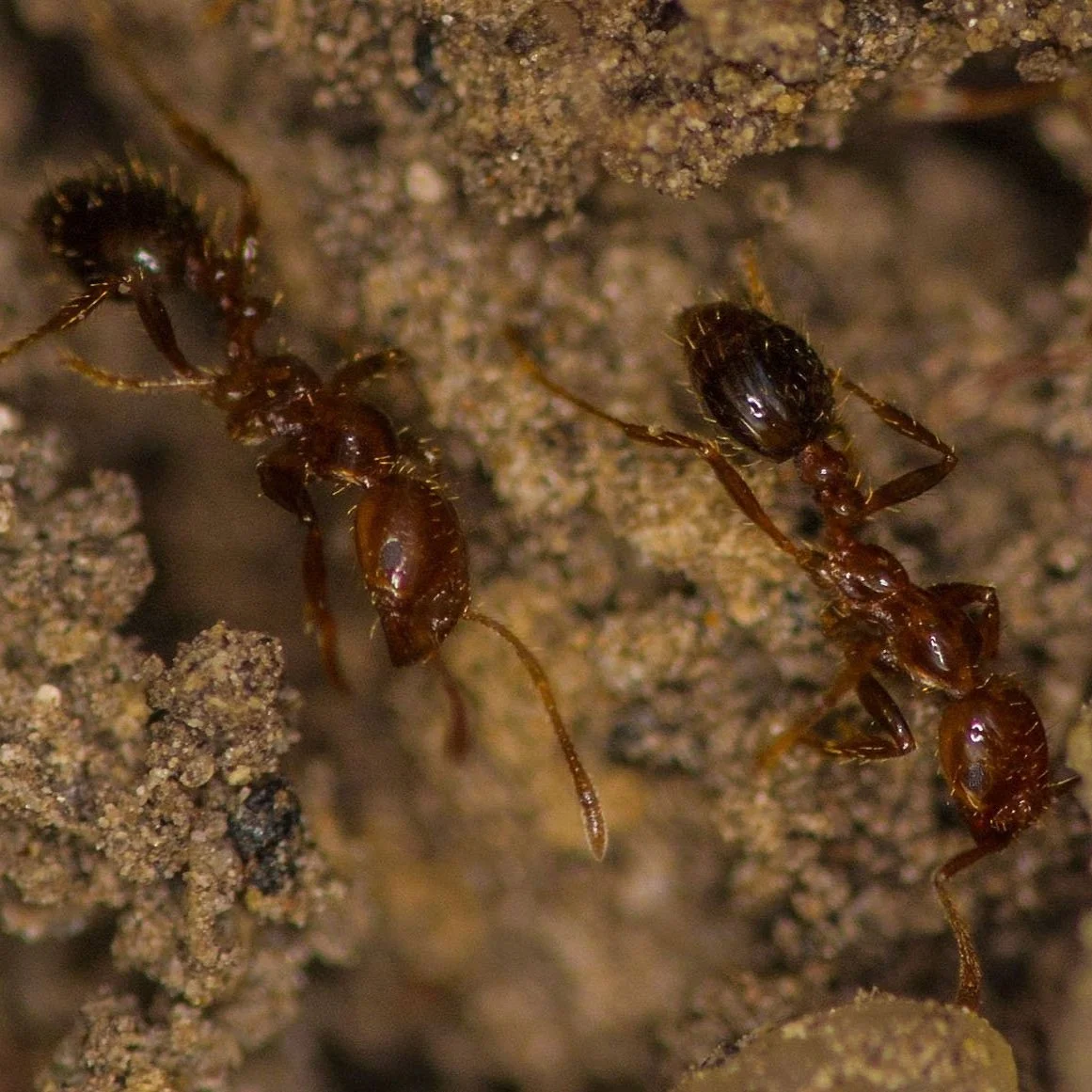
Fire ants are formidable pests in gardens and landscapes. They’re known for their painful bites and stings due to venom. When disturbed, fire ant mounds can unleash swarms of sterile female worker ants that sting and inject venom within seconds, potentially causing severe allergic reactions or dangerous medical issues in some individuals.
Read More