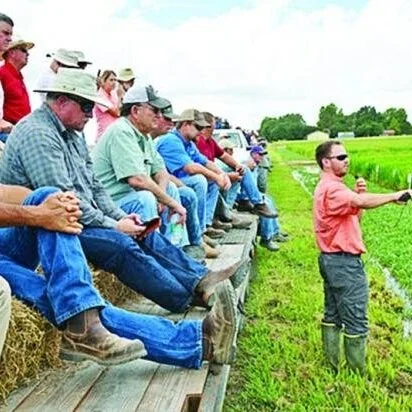
The LSU AgCenter Northeast Research Station is planning two field days for July: one about row rice production on July 15, and another focused on cotton, corn and soybeans on July 27.
Read More
The LSU AgCenter Northeast Research Station is planning two field days for July: one about row rice production on July 15, and another focused on cotton, corn and soybeans on July 27.
Read MoreIt all begins with a seed! Louisiana agriculture is deeply rooted in the history and development of the signature plant commodities featured in this issue. Higher yielding varieties with superior performance and quality attributes are foundational to successful farming operations. Regardless of crop, there exists a continuous need to increase yield and quality. This goes back more than 225 years to the birth of Louisiana’s oldest commodity — sugarcane. LSU AgCenter scientists have worked in concert with producers and industry leaders to address production and pest management constraints, with an overarching goal of increasing profitability and sustainability.
Read MoreThe online workshop will be held virtually June 23 at 4 pm.
These mini-workshops are designed to provide entrepreneurial farmers with the essential skills and training needed to manage a sustainable farming business.
Read MoreAfter only being allowed to meet virtually last year, rice farmers will be able to put boots on the ground at this year’s rice field day, which will be held at the LSU AgCenter H. Rouse Caffey Rice Research Station.
As in past years, the program will begin with field tours from 7:15 to 9 a.m., with a poster session and a trade show running concurrently.
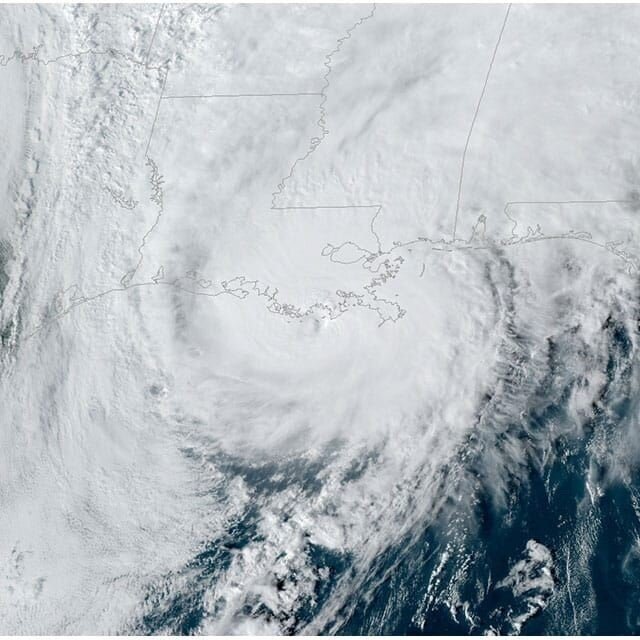
A resilient home is one that can be quickly restored at minimal expense to a safe, healthy and comfortable home after a natural disaster. The following hurricane and flood-resistant home improvements can ramp up your home’s resilience.
Roof and Attic
The most common type of storm damage to a home is roof damage, which often results in water damage. Hurricane-resistant shingle roofing is readily available and cost effective. Claudette Hanks Reichel, LSU AgCenter housing specialist and director of the LaHouse Home and Landscape Resource Center, said to check roofing for signs of wear, and when it is time to reroof, upgrade to a wind-resistant system.
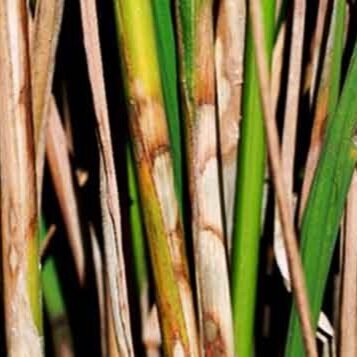
Read MoreWith rice fields finally growing and fields at permanent flood, rice farmers need to be on the lookout for diseases. There are many critical areas in rice production and disease management happens to be the one that farmers face at this point in the season.
Whether it is sheath blight, blast, smuts, or cercospora, scouting needs to start now to ensure that the rice fields stay healthy and yields can be maximized. It is also important to know what diseases the rice variety is susceptible to.
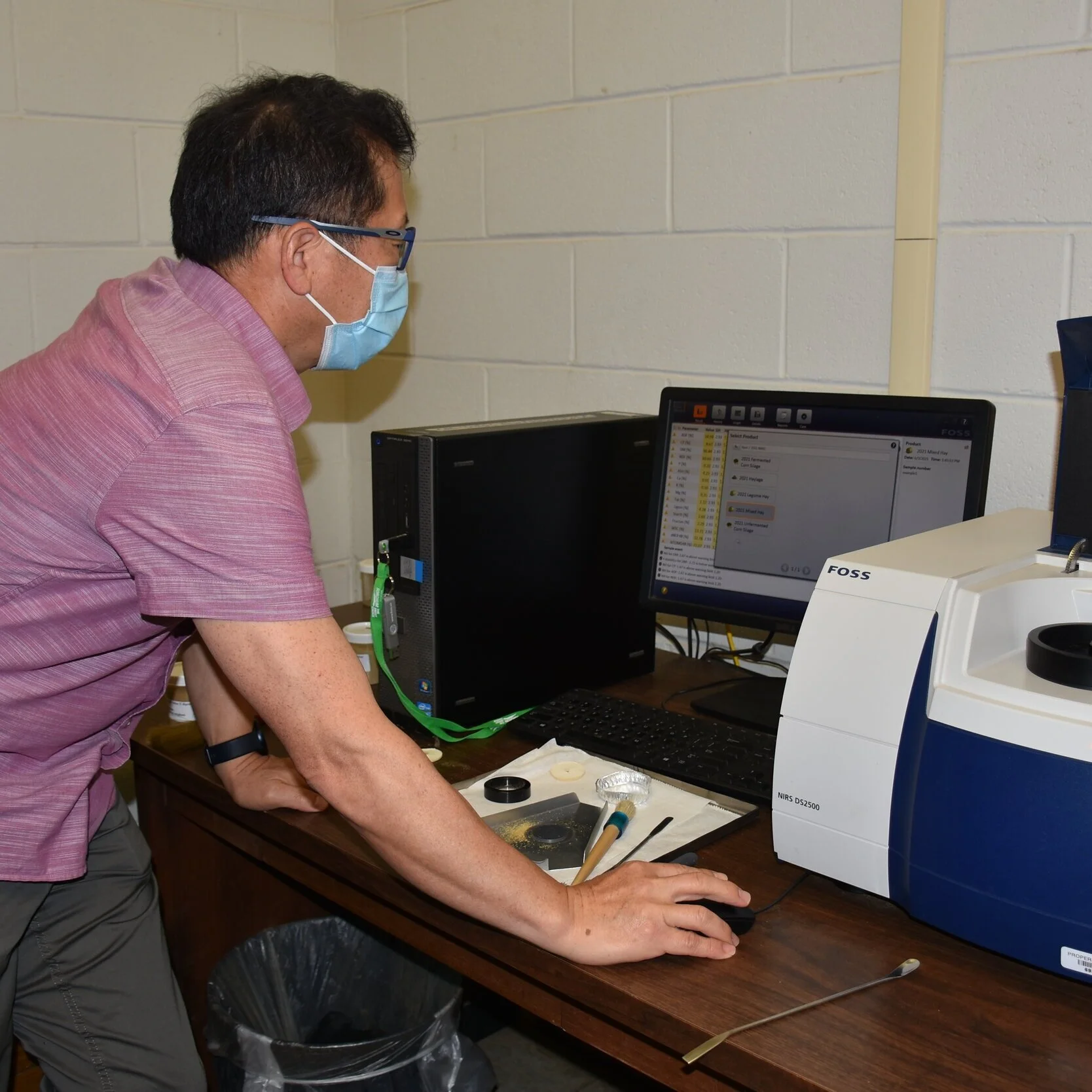
Read MoreThe LSU AgCenter will soon reopen a forage testing lab on the LSU campus in Baton Rouge.
The lab, located in 104 M.B. Sturgis Hall, will begin taking samples July 1.
“We will provide service to any grower, whether it’s a beef or dairy producer, and from any location,” said LSU AgCenter forage quality specialist Kun-Jun Han. “The lab is open to everyone.”
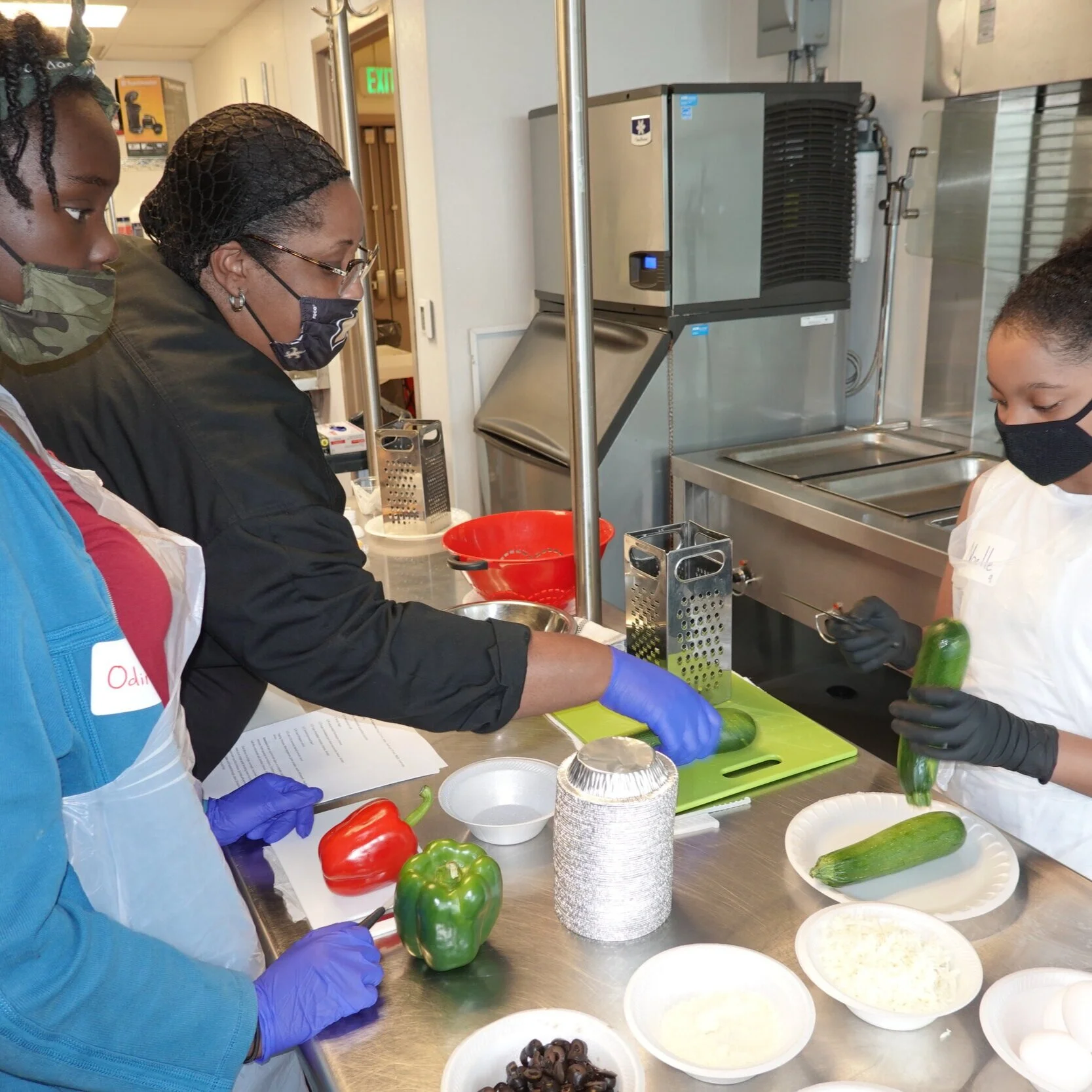
Read MoreA group of 10 teenagers from throughout the city spent all day June 2 learning valuable life skills at the Orleans Parish 4-H Healthy Living Workshop.
LSU AgCenter 4-H youth development agent Alisha Okoro, who conducted the workshop, said the 13 to 18 age group is sometimes overlooked, and she wanted to do something about that.
Read MoreThe H. Rouse Caffey Rice Research Station invites everyone to their annual field day on Wednesday, June 30. Field tours will begin at 7:15 am with the last tour departing no later than 9:00 am. Tour stops will cover new rice varieties, weed, insect, and disease control, hybrid rice development, and agronomic practices. An extensive group of organizations and individuals will present information at the scientific poster session and trade show from 7:15 am to 10:15 am. The indoor program will begin at 10:30 am and update guests on an array of rice related topics. Lunch will be served after the program.
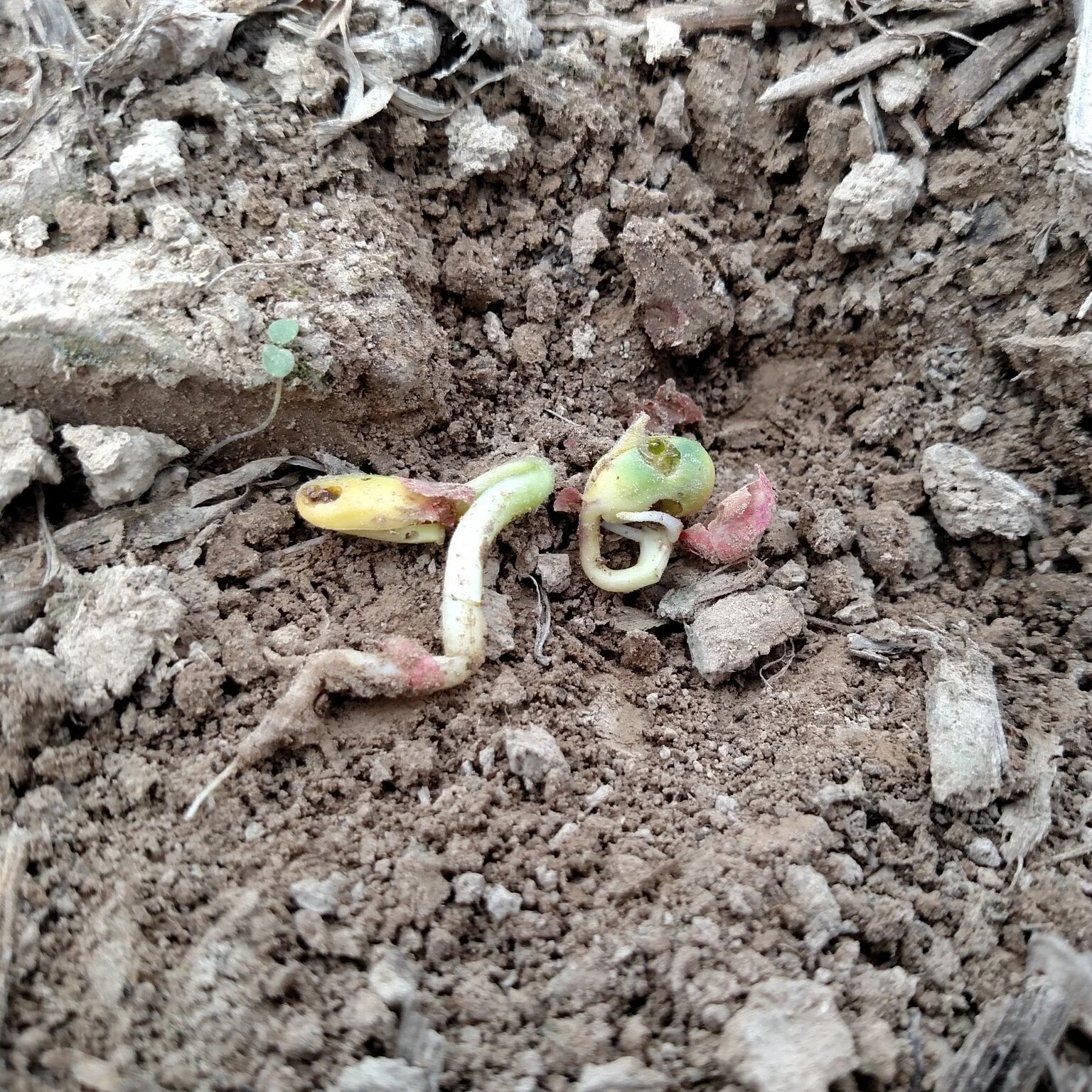
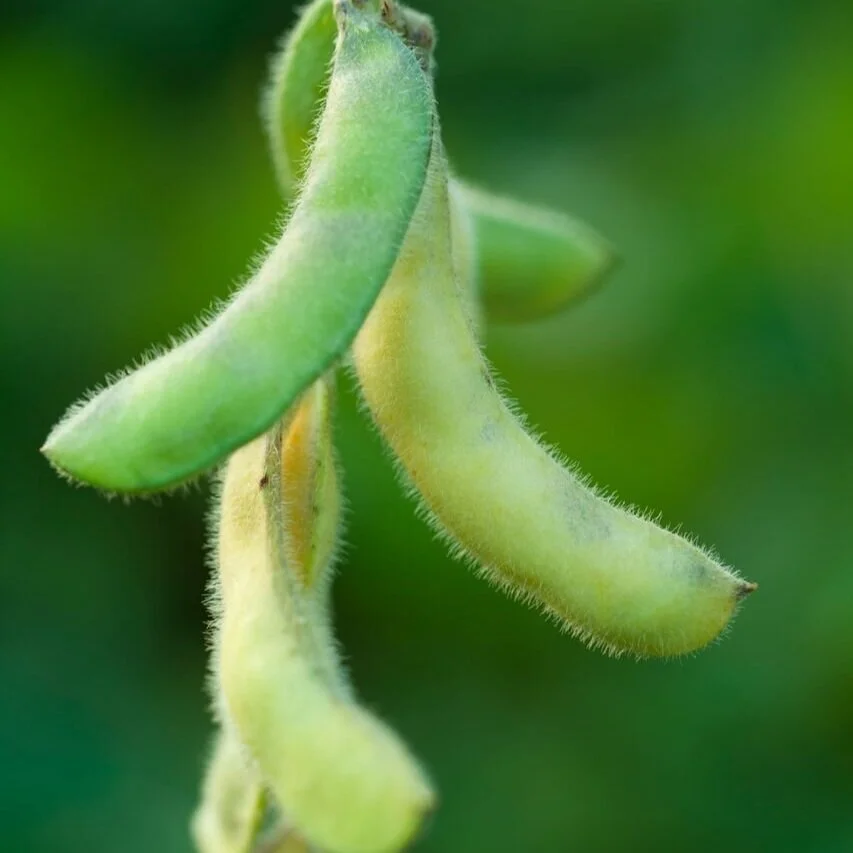
Read MoreThe progress of 2021 soybean planting season has been behind the five-year average from the beginning due to weekly heavy rains throughout the state. The optimum soybean planting window is suggested to be from mid-April to mid-May. According to the USDA-NASS report, 45% of the crop was planted by May 16, compared to the five-year average of 77%. During the three weeks from May 16 to June 6, soybean producers were able to plant an additional 41% of the projected acres, slightly past the optimum window. Soybean planting date research has indicated yield potential will decrease when planting late. However, the final yield from previous years with comparable slow planting progress indicate good soybean yield is still achievable this year. The planting progress in 2013 and 2019 was comparable to this year. The yields were 48.5 and 48 bushels per acre in 2013 and 2019, respectively: approximately 95% of the average yield from 2016-2020 (51 bushels per acre).
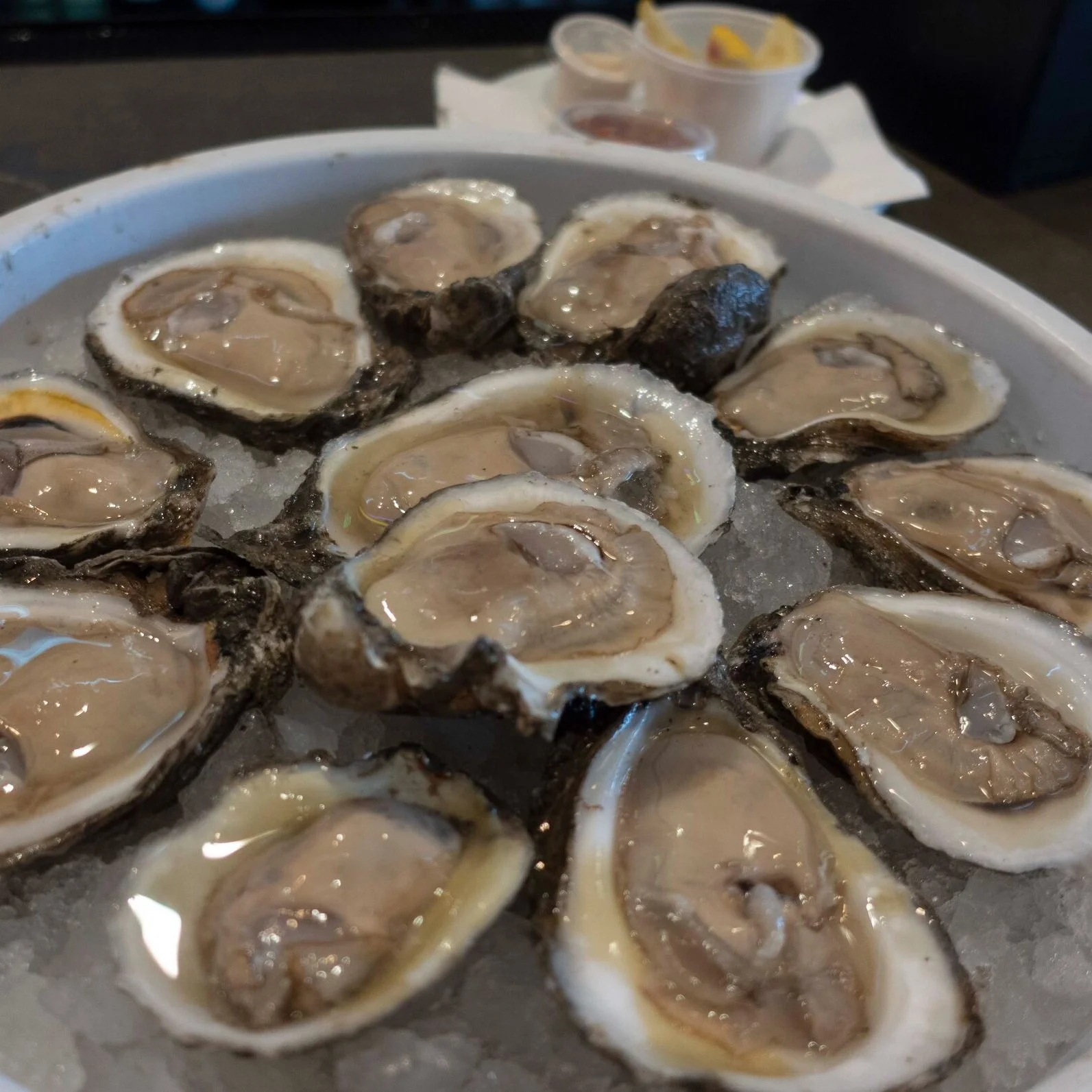
Read More“He was a bold man that first ate an oyster,” said 18th-century Irish satirist Jonathan Swift. Whether enjoyed fried, grilled, in a seafood gumbo or, perhaps most opinion dividing, raw, there is no denying the oyster’s impact on both Louisiana’s culture and seafood industry.
Read MoreChanging health behaviors in a population is no small task, but the LSU AgCenter has been working diligently in communities across the state to lower obesity rates and improve quality of life by increasing access to healthy foods.
In 2018, the LSU AgCenter entered a five-year agreement with the Centers for Disease Control and Prevention for a High Obesity Program to address the nutrition and physical activity environments of six rural Louisiana parishes with an adult obesity rate over 40%.
Read MoreLSU AgCenter Soybean Specialist Dr. David Mosely reports planting progress has been slow since the start of the season this year.
“We started off wet,” says Mosely, “mostly from the winter storms in February. We probably had some left over moisture from those storms, but they prevented producers from getting out and doing some field preparations.”
Heavy, persistent rainfall started up in March across Louisiana “and that hasn’t really stopped. We’re still seeing a pattern of persistent rain and really most of the state stayed wet.”
“We might have had a couple of dry days but before we cold get planted, we would have another heavy rain. And that pattern has pretty much lasted the entire planting season.”
(This report a service of the Louisiana Soybean, Grain Research and Promotion Board)
Read MoreThe LSU AgCenter and LSU College of Agriculture have named P. Lynn Kennedy head of the Department of Agricultural Economics and Agribusiness.
Kennedy has served on the faculty of the department for 27 years and is the Crescent City Tigers Alumni Professor for Agricultural Economics.
He replaces Michael Salassi, who is now the AgCenter associate vice president and program leader of animal and plant sciences.
Read More