Ruppenicker Saw Many Changes in 43 Years of Cotton
Dave Ruppenicker has held three jobs since beginning his career in 1980 at the Louisiana Farm Bureau Federation. In all of his roles, Ruppenicker has maintained the same mission: being an advocate for farmers.
Ruppenicker will retire as CEO of Southern Cotton Growers on December 31, after more than 23 years of service to the largest cotton farmer association in the country.
Read More
The Top 6 Most Valuable Crops Harvested in Louisiana
Step into the lush landscapes of Louisiana, where agriculture is the backbone of the community. This state is teeming with a variety of crops, from towering sugarcane to sprawling rice fields. This article focuses on the top crops that add serious value to Louisiana’s economy and fill our dinner plates with Southern goodness.
Read More
Cotton Research & Promotion Program Hall Of Fame Names 3 New Honorees For '23
Three influential leaders in the cotton industry have been announced today as the 2023 class of the Cotton Research and Promotion Hall of Fame. The program, now in its tenth year, recognizes individuals who have made significant contributions to the Program or to the cotton industry in general. The honorees will be formally inducted into the Cotton Research and Promotion Program Hall of Fame at Cotton Incorporated’s Board Annual Meeting this December in St. Petersburg, Florida.
Read More
USDA Refining Of Forecasted US Cotton Production
The current U.S. cotton production forecast is 13.13 million bales. The forecast is expressed in standard 480-pound bale equivalents (or statistical bales). Actual physical bales (or running bales) tend to weigh closer to 500 pounds, so analysts typically use conversion factors following USDA, e.g., 1.0275 statistical bales for every running bale.
Read More
Market Update for Corn, Soybeans, Rice and Cotton: September 2023
This month’s 2023/24 U.S. corn outlook projects slightly larger supplies and ending stocks. Projected beginning stocks for 2023/24 have been lowered by 5 million bushels mostly due to offsetting trade and corn used for ethanol changes for 2022/23. Corn production for 2023/24 is forecast at 15.1 billion bushels, this a 23-million-bushel increase from last month’s estimates as greater harvested area more than offsets reductions in yield.
Read More
NCC Urges Members To Use Industry Approved Module Wrap Products
The American Society of Agricultural and Biological Engineers (ASABE) developed a rectangular wrap standard about the time the round module wrap was gaining fast acceptance. In 2019, led by Dr. John Wanjura with USDA’s Agricultural Research Service, a subcommittee was formed to begin the round module wrap standard development.
Read More
Louisiana Crop Production Report: September 2023
Louisiana corn for grain production is forecast at 119 million bushels, up 25 percent from the August 1 forecast and up 61 percent from 2022. Based on conditions as of September 1, yield is expected to average 175 bushels per acre, up 6 bushels from last month and up 5 bushels from last year. Planted acreage is revised to 700,000 acres, up 120,000 acres from June 2023. Harvested acreage for grain is revised from 565,000 to 680,000 acres.
Read More
Thompson on Cotton: Music to the Market’s Ears
Last week was a case of bad news for some was good news to others. Hurricane Idalia was expected to take her Category 3 winds east of all but a small portion of the Georgia crop. Instead, upon landfall it veered slightly northward damaging a much larger expanse of the state’s crop.
Read More
Cotton Trust Protocol Appoints Averum For Third-Party Verification
The U.S. Cotton Trust Protocol is pleased to appoint Averum to provide additional Third-Party verification support after seeing the highest number of grower enrollment to date. With a 120% increase in grower enrollment since launch three years ago, the program now requires a significantly higher number of independent verifications.
Read More
The Cotton Board Holds Annual Meeting & Approves Cotton Incorporated's 2024 $89M Budget
The Cotton Board recently held its 2023 Annual Meeting in Durham, North Carolina, along with Cotton Incorporated’s Board of Directors. During this meeting, board members serving the Cotton Research and Promotion Program reviewed, analyzed, and voted to recommend Cotton Incorporated’s 2024 budget of $89 million to the Secretary of Agriculture. This budget recommendation reflects a $2 million increase from 2023.
Read More
Crop Market Report for Corn, Soybeans, Rice, and Cotton: August 2023
This month’s 2023/24 U.S. corn outlook is for reduced supplies, lower domestic use, smaller exports, and tighter ending stocks. Projected beginning stocks for 2023/24 this month have been raised 55 million bushels higher based on a lower use forecast for 2022/23, reflecting reductions in corn used for exports, glucose and dextrose, and starch.
Read More
Nominate A Cotton Consultant For the 2023 CCOY Award
If you want to honor a cotton consultant, nominate him or her for the prestigious 2023 Cotton Consultant of the Year (CCOY) Award.
The 2023 CCOY recipient will be named at a special celebration Friday, March 1, 2024, at the Peabody Hotel in Memphis, Tennessee.
Read More
Moving Cotton Harvest Equipment Into Louisiana Is Restricted Without Proper Inspection
As Louisiana cotton producers move into cotton harvest season, Louisianians will see an influx of used and custom cotton harvest equipment moving into and through the state. To protect our cotton producers from the reintroduction of boll weevils, the Louisiana Department of Agriculture and Forestry (LDAF) implements restrictions for all cotton harvest equipment entering the state.
Read More
Fall Armyworm Control on Turf And Grass Pastures
Fall armyworms, Spodoptera frugiperda, are chronic insect pests in the state, with more than 60 plants reported as hosts, including various pasture grasses (and lawns) and agronomic crops including corn, alfalfa, cotton, soybeans, grain sorghum, and rice. They migrate to Louisiana from neighboring regions like Florida, Texas, Caribbean islands, and Central-South America, with infestations most common from late July to early August.
Read More
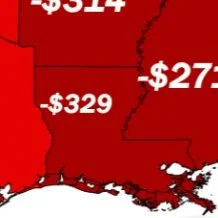
Farm Bill Base Acre Debate Heats Up, Mandated Update Would Mean Big Loss for Louisiana
For more than two decades, and over the course of the last four farm bills, farm program payments have been based on a farm’s historical planted acreage, i.e., base acres, and not on actual plantings each year. Decoupling Agriculture Risk Coverage and Price Loss Coverage farm program payments prevents farmers from making planting decisions based on expected program payments. Instead, the current system ensures farmers evaluate only market supply and demand signals and expected returns per acre when determining which crops to plant each year.
Read More