
The Farmers Behind the Rice on Your Table
By Karl Wiggers
Louisiana Farm Bureau News
Before rice makes it onto a dinner plate, it spends months growing beneath a Louisiana sky, dependent on weather, water, markets and the people who work the fields.
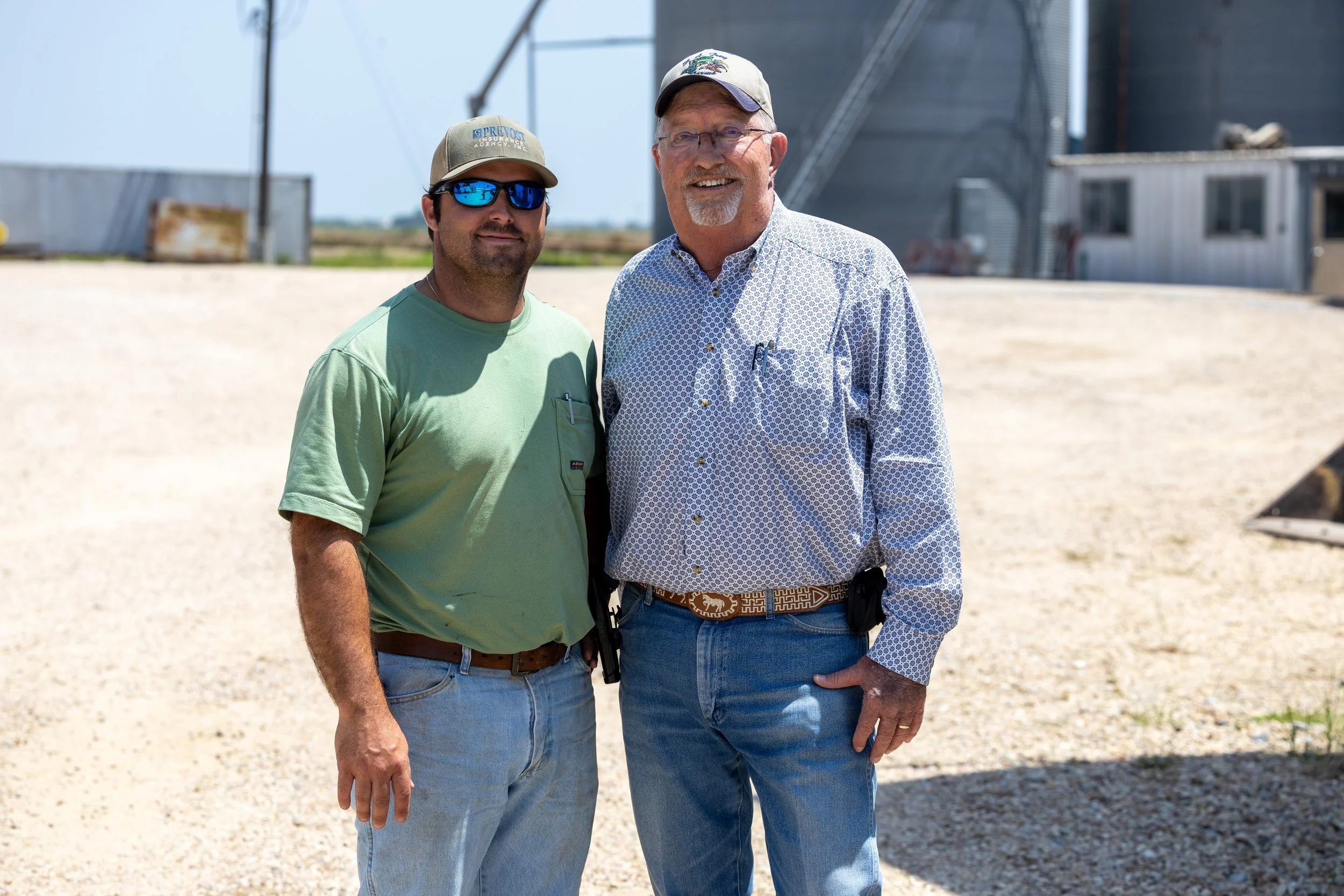
Garrett Cormier (left) with farming partner and mentor, Gerard Frey, (right) at their farm in Iota, La.
For Gerard Frey and Garrett Cormier, it is also the center of a life they have chosen to build around family, hard work and the land.
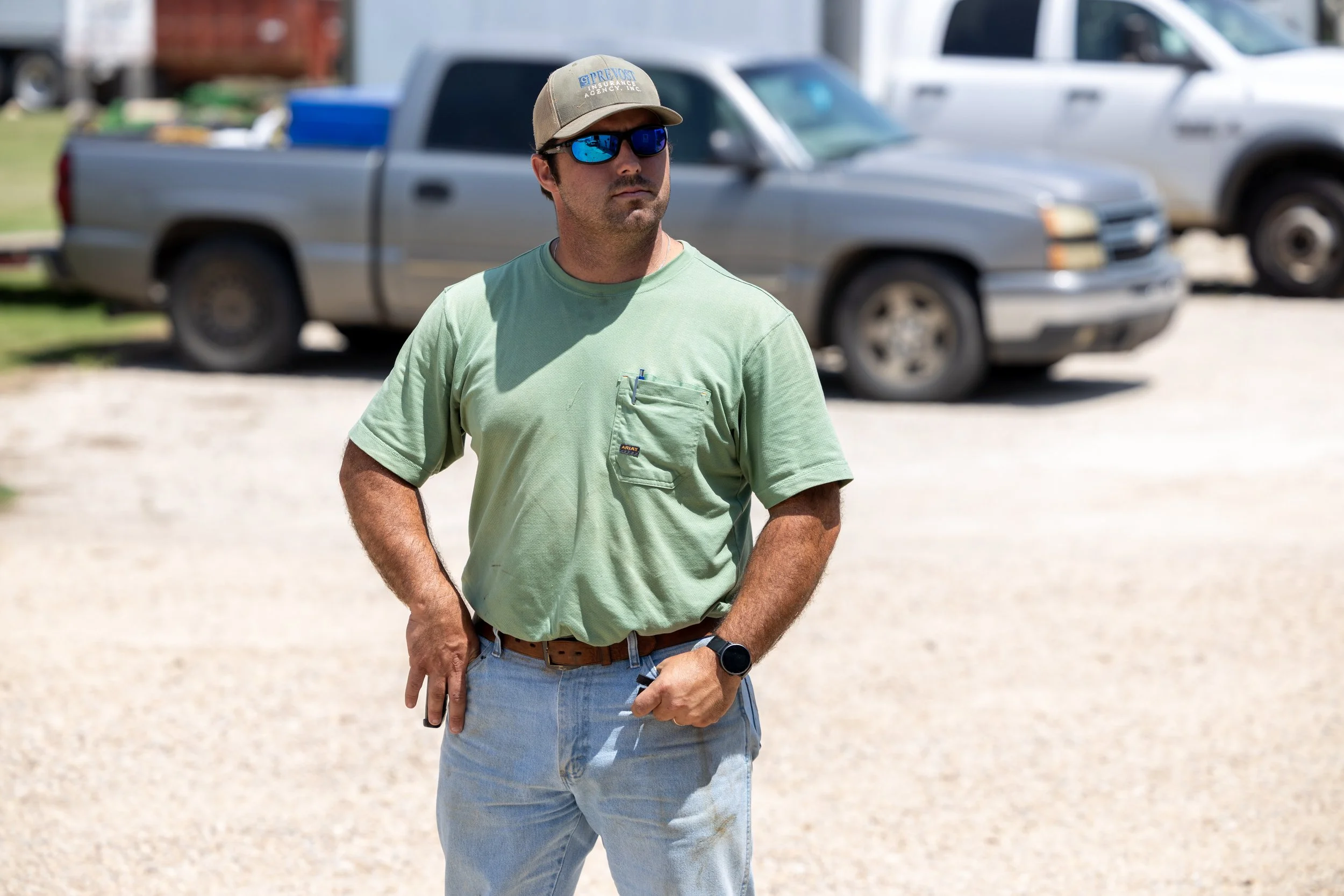
Frey is in his 48th year of growing rice. Cormier, who became Frey’s partner this year after working alongside him for six years, represents the next chapter of the operation.
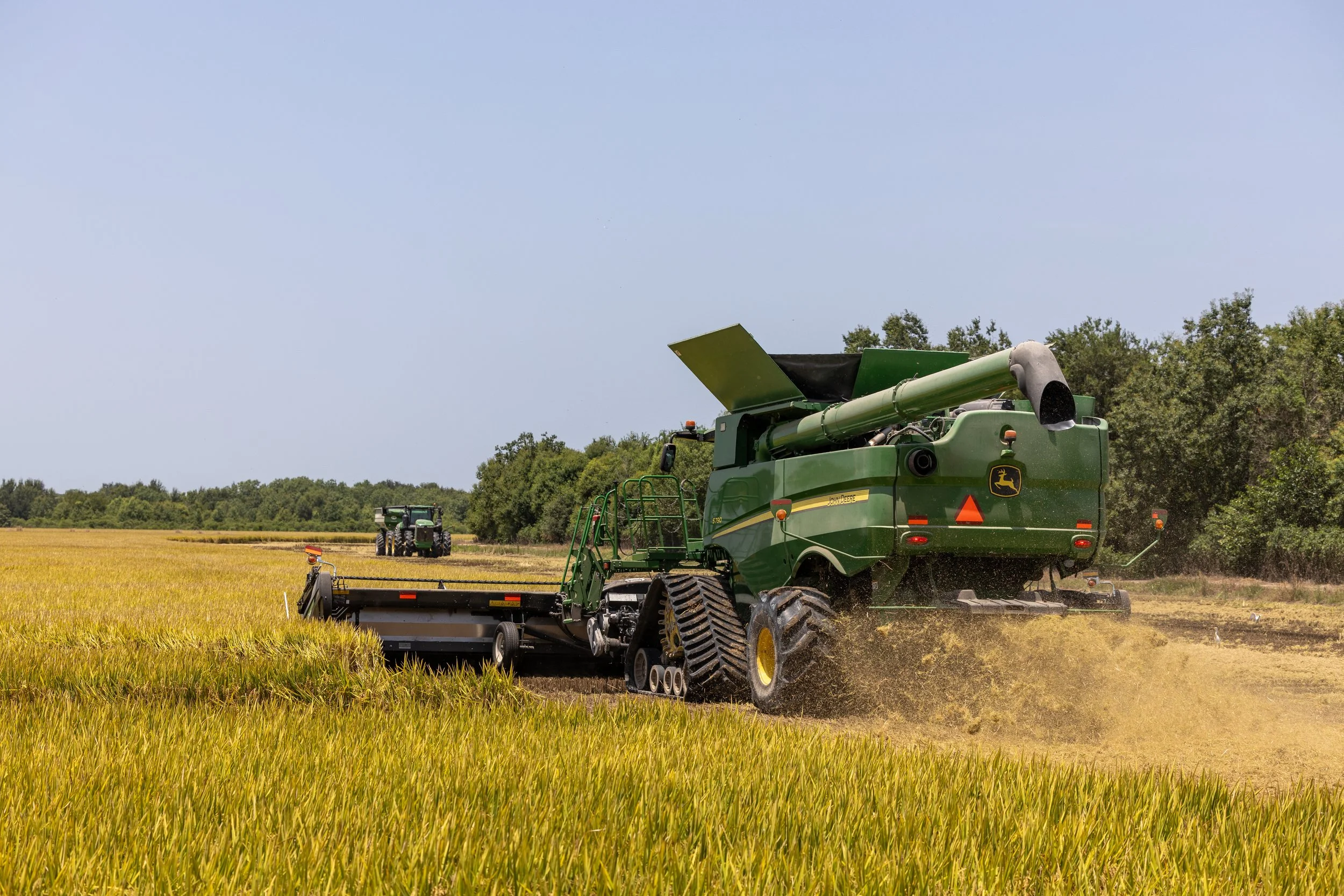
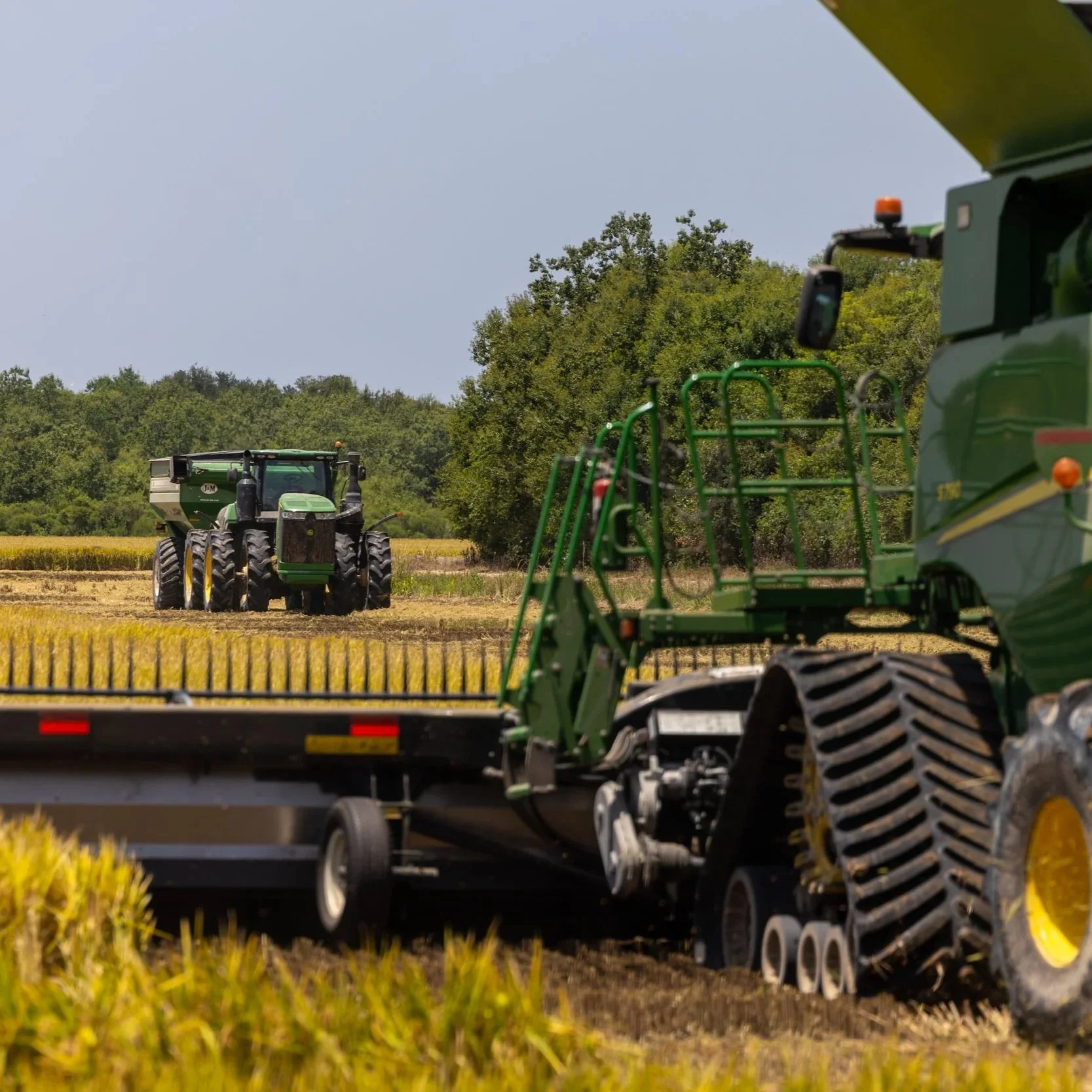
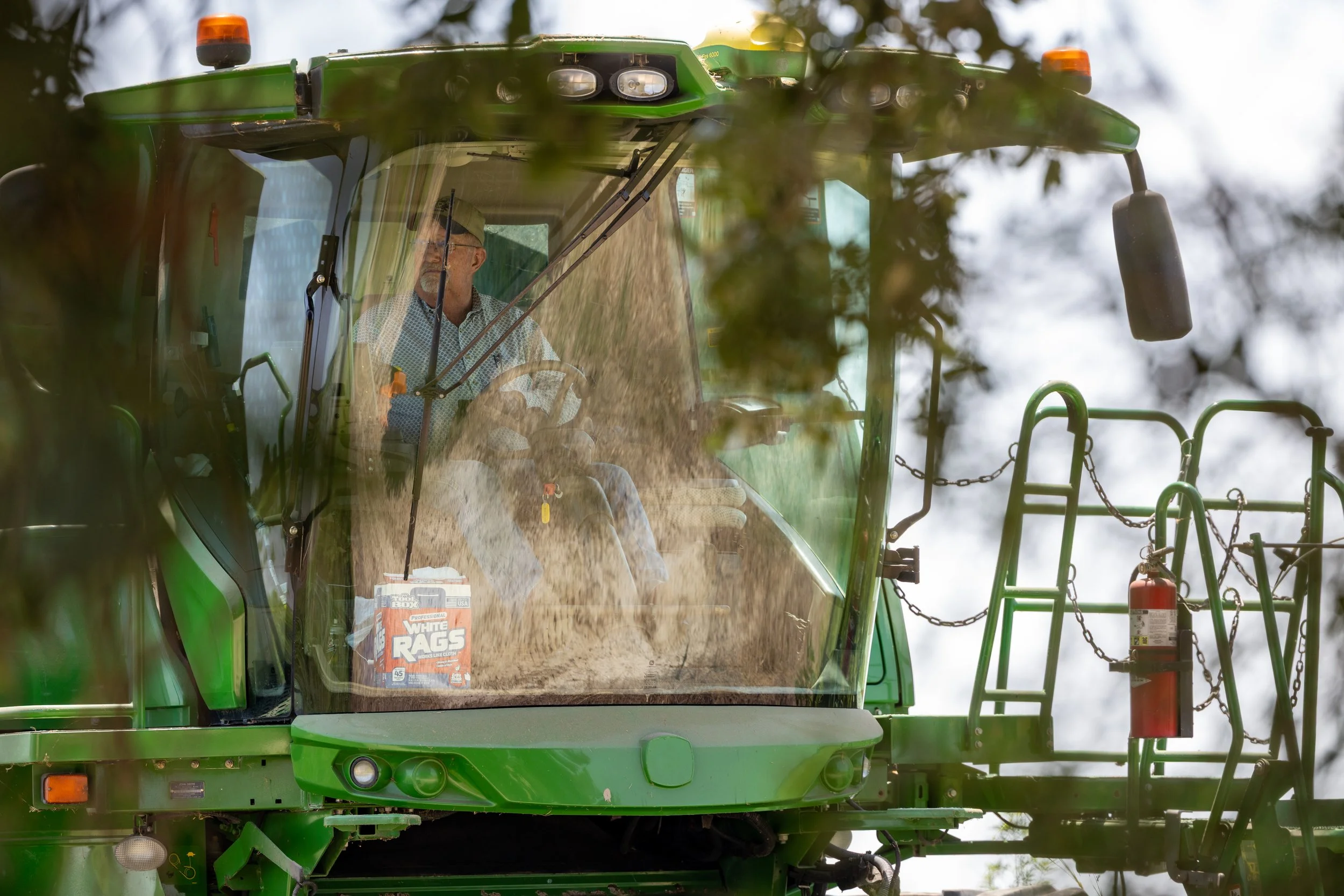
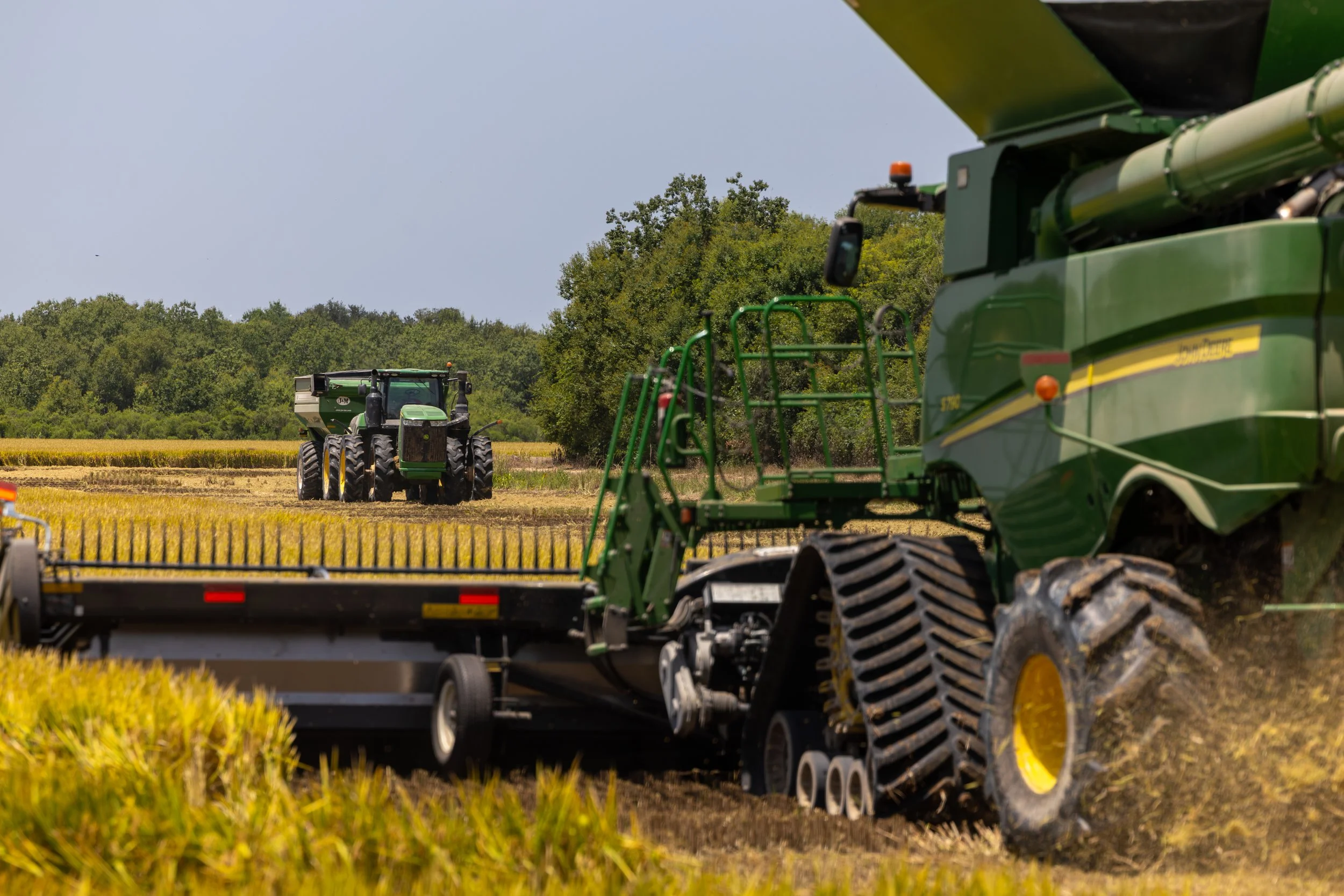
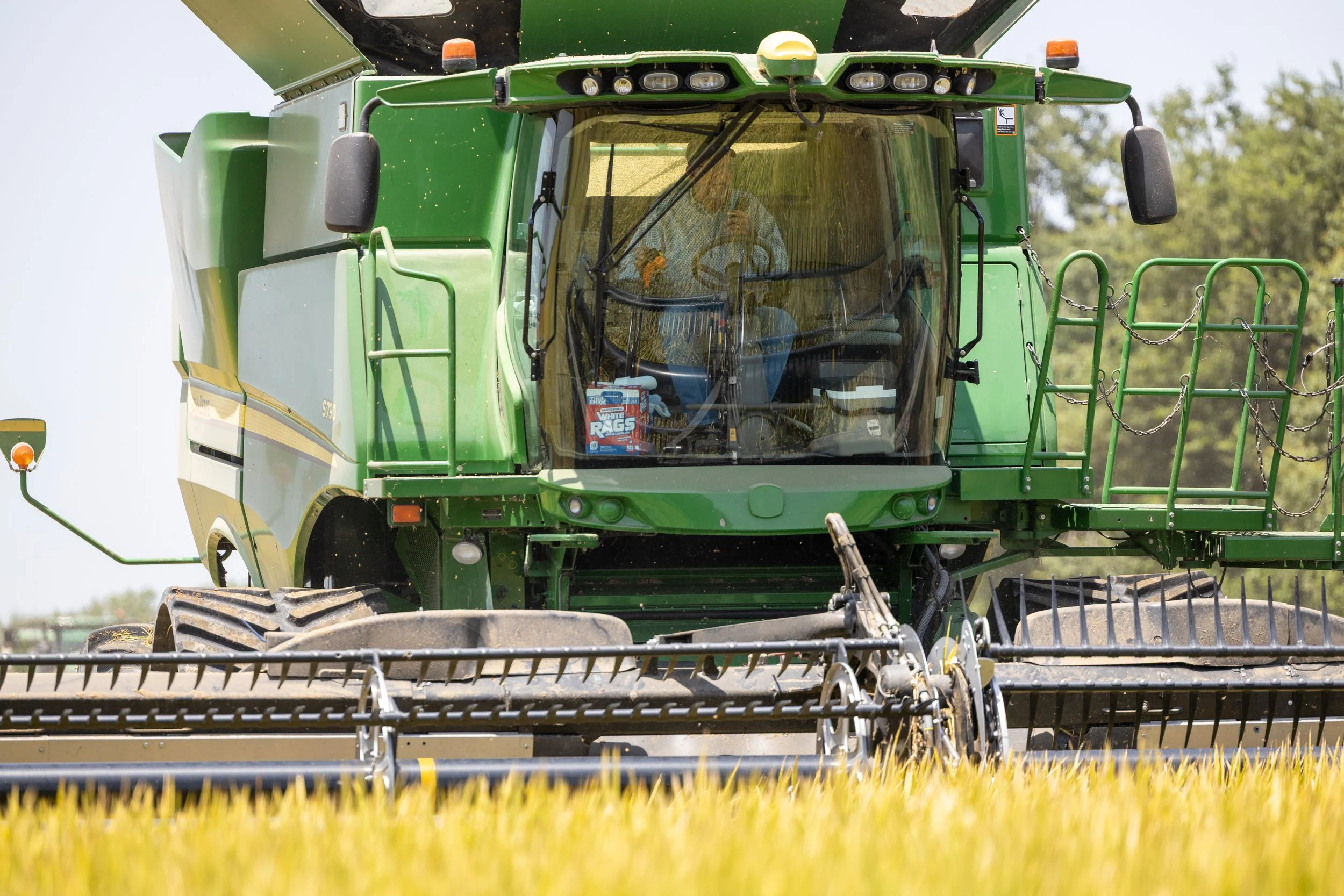
Together, they are harvesting this year's crop at GX2 Farms in Acadia Parish.
The work is demanding. Harvest can mean long days in the combine, checking fields and moving between equipment. Weather can change the course of a season in a matter of hours.
But for Cormier, there is something about the work that makes it worth it.
“Just everything about the farm, the family life,” Cormier said. “It takes a lot of time and energy running the farm, but at the same time, you do it with your family.”
That family connection is visible during harvest.
Cormier's wife and two children can spend time with him in the field. His 3-year-old son is already fascinated by the machinery and excited to see his dad harvesting rice.
While Cormier is working, his children can ride with him in the equipment, and he can occasionally make the short trip home between checking water and moving between fields.
“You can’t put a dollar figure on that,” Cormier said. “Just a great farm life and family life.”
For Frey, the feeling goes back nearly five decades.
He started farming in 1979 as a 17-year-old high school senior. A local banker gave him the opportunity to borrow money for a tractor, plow and other equipment. The total cost was about $28,000.
Nearly five decades later, Frey is still farming — but the scale of the business has changed dramatically.
He remembers when his father and brother each paid about $48,000 for combines. Today, Frey said, a new combine can cost around $1 million, with another $150,000 to $200,000 for a header.
Input costs have also climbed while rice prices remain under pressure.
Frey said those economics make it increasingly difficult for young people to enter production agriculture.
Yet Cormier found a way in.
His connection to Frey began when he was a child. Cormier's grandfather farmed and worked closely with Frey before retiring. As a boy, Cormier would ride with his grandfather as he checked water and made his rounds through the fields.
He wanted to be part of the farm himself.
“I wanted to be in the tractor. I wanted to be in the field. I wanted to be driving the combine,” Cormier said. “I wanted to do it. I wanted to be here. I wanted to be on the farm.”
By the time he was 7 or 8 years old, Cormier was helping Frey haul rice with a grain cart. Over the years, he took on more responsibility.
He eventually left college after two years and returned to the farm full time.
Six years later, he is no longer simply working for Frey. He is helping run the operation.
For most, the story of rice can be easy to overlook. A bag on a grocery store shelf is a finished product, removed from the fields, machinery and people responsible for producing it.
Frey believes consumers often do not see how little control farmers actually have over the final outcome.
“The farmer has one-third of the interest in the farm,” Frey said. “We put in the crops, we manage them, we take care of them all. The good Lord controls the weather and the mills control the market.”
Farmers can work to produce the best crop possible, but they cannot control the weather or determine what the market will pay when harvest arrives.
This year, Frey said the rice crop has been good. The farm was about 60% to 70% through first-crop harvest when he was interviewed, with yields generally in the high 40s to low 50s in barrels per acre.
The operation also plans for a second crop from the same rice plants — another harvest that Frey says has become important to making the economics of rice production work.
“The stalks and the plants look healthy,” Frey said. “We think we’re going to get into a healthy second crop, which is so important. We have to have that second crop to cash flow today.”
For all the challenges, Frey has no regrets about the life he chose.
He has watched agriculture change from smaller equipment and simpler technology to machines capable of covering enormous amounts of ground. He has endured difficult markets and weather. He has worked long days and nights.
But when he considers what those years have given him, he does not measure them solely in dollars.
“It’s something that’s bigger than money,” Frey said. “It’s the smell of the soil in the spring. It’s the smell of the straw in the harvest season. It’s just the way of life.”
That way of life is now being shared with another generation.
Frey said he probably would have sold the operation and retired several years ago if Cormier had not come aboard. Instead, he is helping his younger partner establish himself while remaining involved in the farm.
For Cormier, the opportunity is something he knows would be difficult to recreate from scratch.
“If Gerard hadn’t offered me this opportunity, it would be very tough to start on my own,” Cormier said. “With everything in the economy right now, I wouldn’t be able to do it if I didn’t have somebody like him helping me get started.”
So when Cormier climbs into a combine to harvest rice, he is doing more than bringing in a crop.
He is continuing something he decided he wanted as a child — and building something his own children can grow up around.
“There’s just nothing else I’ve ever wanted to do,” Cormier said. “I’ve always wanted to be around it. I’ve always enjoyed the equipment. Just everything about the farm lifestyle is what I’ve always wanted to do.”
And somewhere between the rice fields of Acadia Parish and the dinner tables where that rice eventually lands, there are people like Frey and Cormier making it possible — one crop, one long day and one generation at a time.