Freezing Temperatures Take Toll on South Louisiana Crops
By Neil Melancon
Louisiana Farm Bureau News
South Louisiana may not have gotten the ice and snow seen further north, but parts were blanketed in white.
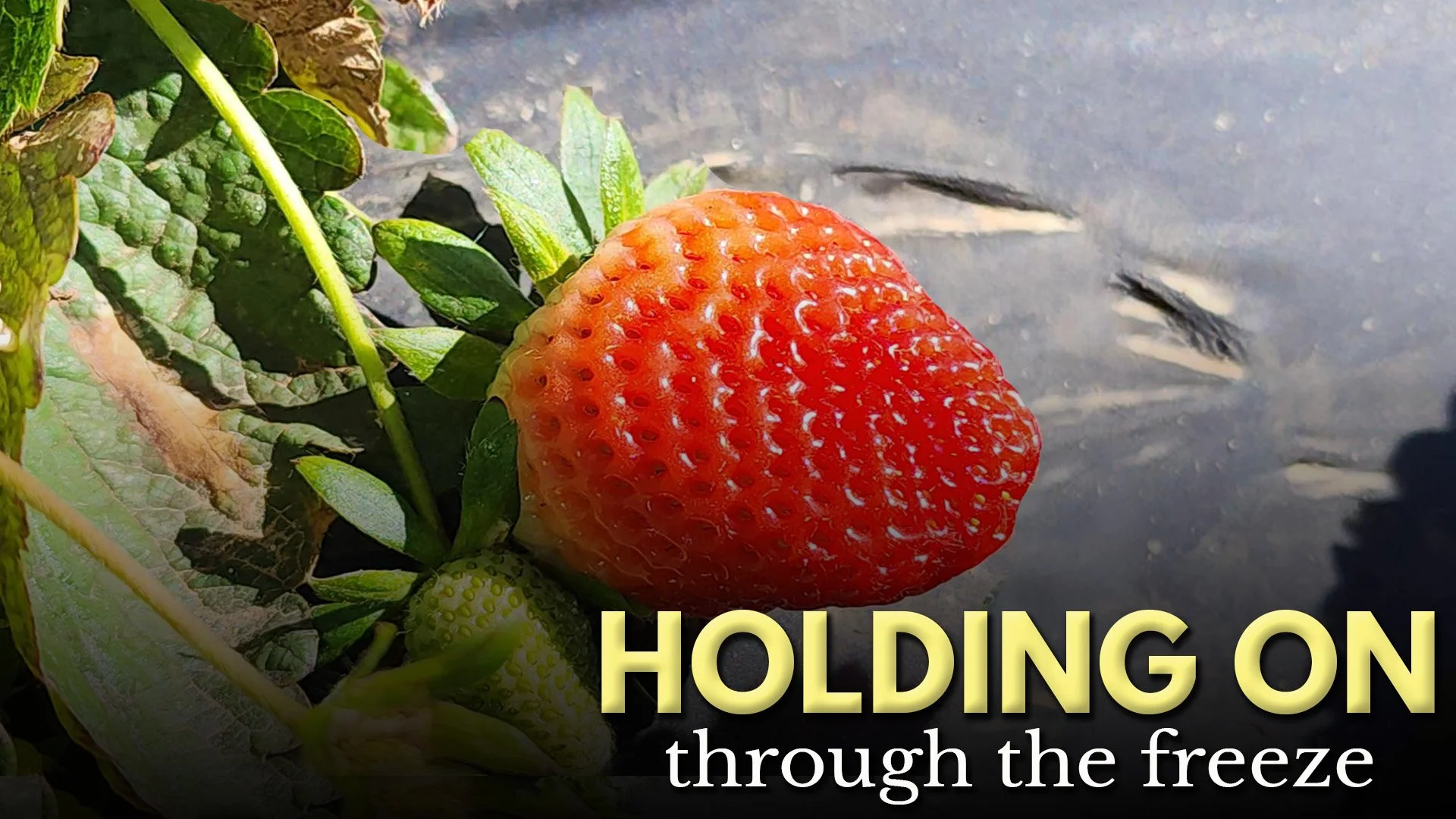
In Tangipahoa Parish, strawberry grower Joey Liuzza has been working to protect his crop while continuing to harvest. White fields dotted with frost cover aren’t snowdrifts—they’re protective row covers used to shield strawberry plants from freezing temperatures.
While Liuzza says the plants themselves should recover, the cold has already taken a toll on production.
“We probably lost about 35 to 40 percent of the blooms,” Liuzza said, adding that fruit damage has been minimal, estimated at about five percent and limited to areas where protective netting was thinner. Even so, the loss of blooms is expected to delay plant growth.
Protecting strawberries during a hard freeze often requires multiple layers of covering. Liuzza said his fields were double-covered to provide extra insulation during the coldest nights.
“Double-cover kind of works to the mid-teens,” he said.
That extra protection comes at a cost. Liuzza estimates it costs roughly $150 per acre each time workers handle the netting. Further because the covers must be put on, removed when temperatures rise, and then reapplied as conditions change, that adds to the cost.
Farther north in Tangipahoa Parish, Bracy’s Nursery has also been bracing for the cold. While many plants are protected inside greenhouses, that protection relies heavily on propane. Nursery operators say most of their greenhouses are heated with propane systems, while smaller structures use crawfish burners paired with large drums of water, which is also powered by propane. During this cold stretch, the nursery expects to use between 20,000 and 30,000 gallons of propane, if not more, with the threat of additional freezing conditions.
For Louisiana’s citrus growers, however, this winter’s cold is only part of a longer struggle. In Plaquemines Parish, citrus producer Patrick Becnel says much of the region’s citrus industry never recovered from last year’s snowstorm. He now grows his remaining trees inside greenhouses, where they can be protected from extreme weather.
“After this last snowstorm we had, I think that was the nail in the coffin for a lot of us here,” Becnel said, adding that many orchards were abandoned or poorly maintained before the freeze finished them off. His uncle and nephew recently annouced they would be closing their roadside stand business, further reducing the remaining citrus industry shattered after Hurricane Katrina.
Back in Tangipahoa Parish, the Liuzzas said the timing stings. Farms would normally be preparing for strong Valentine’s Day demand. Now, they’re hoping the season can still peak in spring.
“Hopefully we don’t have a delay for the peak season, which is going to be March and April,” Nichole Liuzza said. “We just ask for your patience.”
Even after weathering freezing temperatures and rising input costs, farmers face no guarantee that markets or prices will reflect their efforts—making consumer support for local agriculture more important than ever.