After Decades of Rule, Cotton is Dethroned by Soybeans as Louisiana’s Top Crop
For decades cotton was king. But this year the Louisiana cotton crop is expected to be the smallest in history. State Agriculture Commissioner Mike Strain says input costs to produce cotton has gone up and the price farmers can get for cotton has gone down from two dollars a pound in the mid-1800s.
Read More
King Cotton Faces 'Bleak' Future in Louisiana After Centuries as Backbone Crop
Cotton, once king in Louisiana, has become little more than an afterthought for farmers whose fertile fields once looked like snow covered ground with fluffy white bolls during the late summer as harvest approached.
But this summer Louisiana producers will plant the fewest acres of cotton in the history of the state as the crop's decline accelerates.
Read More
Trump Administration Announces Expedited Congressionally Mandated Disaster Assistance for Farmers
U.S. Secretary of Agriculture Brooke L. Rollins announced that agricultural producers who suffered eligible crop losses due to natural disasters in 2023 and 2024 can now apply for $16 billion in assistance through the Supplemental Disaster Relief Program (SDRP).
To expedite the implementation of SDRP, USDA’s Farm Service Agency (FSA) is delivering assistance in two stages. This first stage is open to producers with eligible crop losses that received assistance under crop insurance or the Noninsured Crop Disaster Assistance Program during 2023 and 2024.
Read More
Invasive Asian Needle Ant, Native to Japan and China, Detected in East Baton Rouge Parish
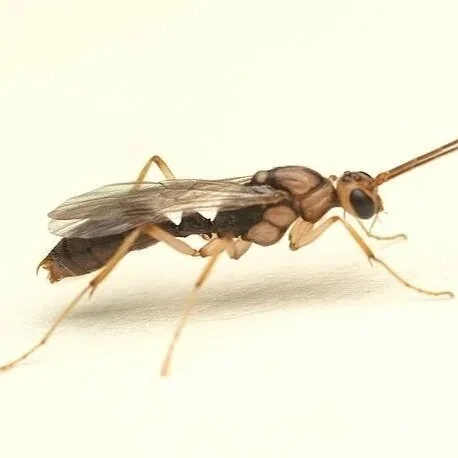
An invasive species of ants not native to the U.S. has been detected in Louisiana. A colony of the Asian needle ant was detected in East Baton Rouge Parish last month. Aaron Ashbrook, an entomology professor at LSU, says as the name implies, the species is native to Japan and China, although it’s been in the U.S. since the 1930s; and it was recently found in the South.
Read More
Where Are the Best Soybeans in the Country Right Now?
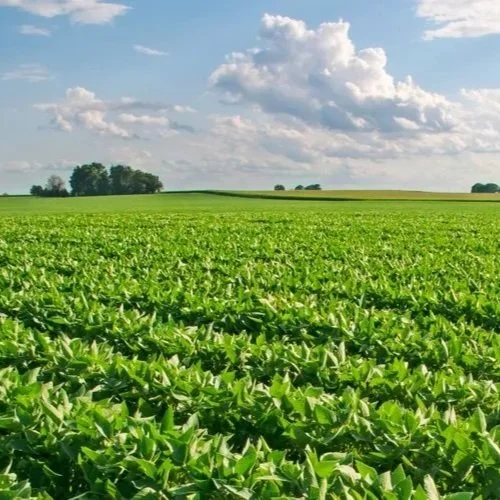
In its latest Crop Progress report, the USDA rated 75% or more of the soybean crop in four of the top 18 soybean-growing states good/excellent.
USDA rated 87% of Louisiana’s crop good/excellent, the highest percentage of all top soybean-growing states. What’s more: Just 13% of the state’s crop were rated fair, and none were rated poor or very poor.
Read More
Could Off-bottom Oyster Production Solve Louisiana’s Oyster Woes?
Not all jewels shine deep-green like emeralds or have the sparkle of diamonds. Some tumble from algae-coated cages in a rush of rock and shell, briny water splashing alongside them onto the boat deck.
These fine commodities are oysters, grown and harvested just off Louisiana’s coastline. Traditionally, they’ve been farmed on seafloor beds, but some producers are now cultivating oysters in a string of floating cages.
Read More
Several Attractions Planned for Upcoming Iowa Farmer’s Market
The Town of Iowa will hold a Farmer’s Market on Saturday, July 19, with several attractions for the public to enjoy.
New this year is the “Rib Throwdown.” Entry is free, and participants can win cash prizes.
There will also be a performance by Brandon Ledet & Creole Touch from 5 p.m. to 8 p.m.
Read More
Teal Jones Mill Officially Acquired by Sumitomo Forestry
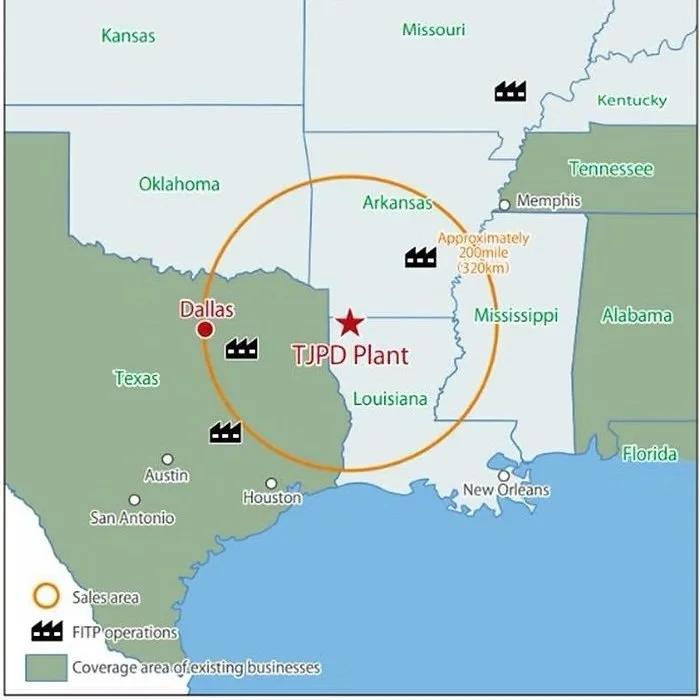
Sumitomo Forestry Co. officially announced it has acquired 100 percent of interests in the Teal Jones Louisiana Holdings through its Sumitomo Forestry America Inc., a wholly owned subsidiary.
"With these acquisitions, we will begin the launch of our first timber industrial complex*1 in the US. In addition to dimension lumber*2 and other materials to build houses and multi-family residential buildings in Louisiana, this complex will consider manufacturing mass timber*3 to maximize the value of wood through the cascading utilization of logs where nothing goes to waste. Harnessing the synergy effect with our existing US operations in residential property development, real estate development and FITP,*4 we are aiming to further grow our businesses in the US," according to a press release.
Read More
One Big Beautiful Bill: Notable Changes for Agriculture
President Trump signed H.R. 1 also known as the “One Big Beautiful Bill (OBBB) Act” on July 4, 2025. The OBBB Act contains a much-needed update to commodity and crop insurance programs- with some of those improvements beginning with the 2025 crop year. However, the agricultural-related provisions of the OBBB Act extend beyond the farm safety net to include several tax-related benefits for farm operations. This report highlights selected provisions of the OBBB Act.
Read More
Record-Breaking Turnout at 19th Annual Watermelon Classic Livestock Show in DeRidder
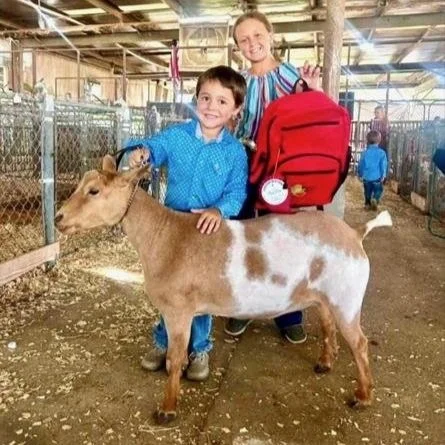
Youth livestock exhibitors from not only Beauregard Parish but across Louisiana and Mississippi gathered in at the Beauregard Parish Fairgrounds in DeRidder recently for the 19th Annual Watermelon Classic Livestock Show, a cherished tradition in Beauregard Parish. This year’s event reached a milestone with an impressive 638 junior entries, making it the largest turnouts in the show’s history. This year we added Adult Showmanship with an additional 44 entries. Making our total entries 682!
Read More
Farm Security is National Security: The Trump Administration Takes Bold Action to Elevate American Agriculture in National Security
U.S. Secretary of Agriculture Brooke L. Rollins alongside U.S. Secretary of Defense Pete Hegseth, U.S. Attorney General Pam Bondi, and U.S. Secretary of Homeland Security Kristi Noem announced the next pillar of her Make Agriculture Great Again initiative: USDA’s National Farm Security Action Plan. This historic plan elevates American agriculture as a key element of our nation’s national security, addressing urgent threats from foreign adversaries and strengthening the resilience of our nation’s food and agricultural systems.
Read More
Rice Wins with Enactment of the One Big Beautiful Bill Act
On Friday, the Fourth of July holiday, President Trump signed into law the One Big Beautiful Bill Act (OBBB Act, officially known as H.R. 1), which concluded a frenzied two weeks of legislating, lobbying, and advocacy aimed at getting the bill across the finish line. For rice farmers, there have been several key policy wins that USA Rice has been advocating for since the farm bill reauthorization process began in 2022.
Read More
2025 Sugarcane Variety Performance
Sugarcane varieties are the lifeblood of the Louisiana sugar industry. Therefore, variety selection is one of the most important decisions on the farm — a decision with long-term consequences. The goal is to maximize profitability on every acre of the farm for each year of a long crop cycle.
Sugarcane variety choices for planting in 2025 are many. L 01-299 and HoCP 14-885 will continue to be widely planted by producers across the Louisiana sugar industry. L 15-306 and HoL 15-508, new variety releases from 2022, should occupy a moderate portion of your planting acreage because of excellent stubbling ability and yield potential.
Read More
Why Louisiana Is Seeing More Black Bear Sightings Than Ever Before
Louisiana’s woods and bayous are buzzing with excitement as black bear sightings reach record numbers across the state.
Once teetering on the brink of extinction, these magnificent creatures are making a remarkable comeback in their native range. Wildlife officials and residents alike are adjusting to this new reality where encountering a Louisiana black bear is becoming increasingly common.
Read More
Louisiana Forage Farmer: Summer 2025
Winter annual forages are adapted for grazing, green chop, hay, and silage production in Louisiana. Each year, scientists at the Louisiana State University Agricultural Center conduct performance trials to evaluate the forage production of annual ryegrass, small grain forage, and legume forage varieties. Trials are conducted at various Louisiana State University Agricultural Center research stations throughout the state to provide information on the performance of varieties under varying soil and climatic conditions.
Read More