USDA Forest Service Announces $25M Funding Opportunity to Reduce Wildfire Risk, Support Local Businesses
The U.S. Department of Agriculture’s Forest Service is announcing a funding opportunity through the hazardous fuels transportation assistance program to reduce wildfire risk, expand and create market opportunities, and support local jobs. This program is available to local businesses and partners that remove hazardous fuels from national forests and transport the material to be processed for wood products or services.
Read More
Learn the Facts about the Emergency Forest Restoration Program
The Emergency Forest Restoration Program (EFRP) provides technical and financial assistance to owners of nonindustrial private forestland whose forestland was damaged by a qualifying natural disaster event.
Read More
Hurricane Preparation and Recovery Guides for Louisiana Producers
Louisiana agriculture generates approximately $3 billion in sales each year, but in most years agricultural productivity is negatively affected by hurricane damage. Louisianans are familiar with the devastation and loss of life and property that can accompany a hurricane event as the state experiences, on average, one hurricane every three years. The total economic losses from a single hurricane can reach tens of billions of dollars, while agricultural losses can exceed one billion dollars. Louisiana is a major agricultural producer for the United States, but the structures, livestock, and crops are highly exposed to extreme wind and flooding during hurricane events.
Read More
LSU AgCenter Researcher Helps to Secure $300,000 Matching Grant for Mass Timber Supply Chains
LSU AgCenter researcher Richard Vlosky has helped secure $300,000 in funding for a project to support a regional mass timber supply chain connecting underrepresented populations and communities in the South with consumers and developers along the Eastern Seaboard and Mid-Atlantic.
Vlosky, professor and director of the Louisiana Forest Products Development Center in the LSU School of Renewable Natural Resources, is part of a team that brought in the 2024 U.S. Forest Service Wood Innovations Program Grant.
Read More
USDA Announces $190M Grant Opportunity To Help Private Forest Landowners
Friday, Agriculture Secretary Tom Vilsack announced that the U.S. Department of Agriculture’s Forest Service is making $190 million available to help private forest landowners adapt to and mitigate the impacts of climate change and retain working forestlands.
Read More
Louisiana Tribes Restore River Cane to Preserve Their Culture and the Environment
Rose Fisher Greer and her daughter are the only basket weavers left in the Jena Band of Choctaw Indians, a tribe based in Central Louisiana.
To practice her craft, Greer needs river cane. For that, she has to go into Kisatchie National Forest, and she’s the only person in her tribe willing to make the journey. At one patch just off the side of the road, a few feet into the forest, the river cane grows in clusters of green stalks several feet high.
Read More
LDWF Wildlife Management Area Forest Management Prescriptions Now Available for Review
The Louisiana Department of Wildlife and Fisheries (LDWF) has published twelve draft forest management prescriptions for nine Wildlife Management Areas (WMAs) that are now available for review.
The above detail proposed methods to improve, maintain, and sustain wildlife habitat while providing quality wildlife-oriented recreational improvements and growing quality timber resources for the long-term.
Read More
Few Resources for Homeowners to Remove Risky, Beetle-damaged Pine Trees
State lawmakers want Gov. Jeff Landry to declare an emergency to address millions of dead and dying pines that insects have infested and now pose a risk to people, property, power lines and roads.
But officials say not much help is available to homeowners who want to remove trees that are certain to fall down and cause damage.
Read More
State Officials Considering Emergency Declaration as Bark Beetle Concerns Grow
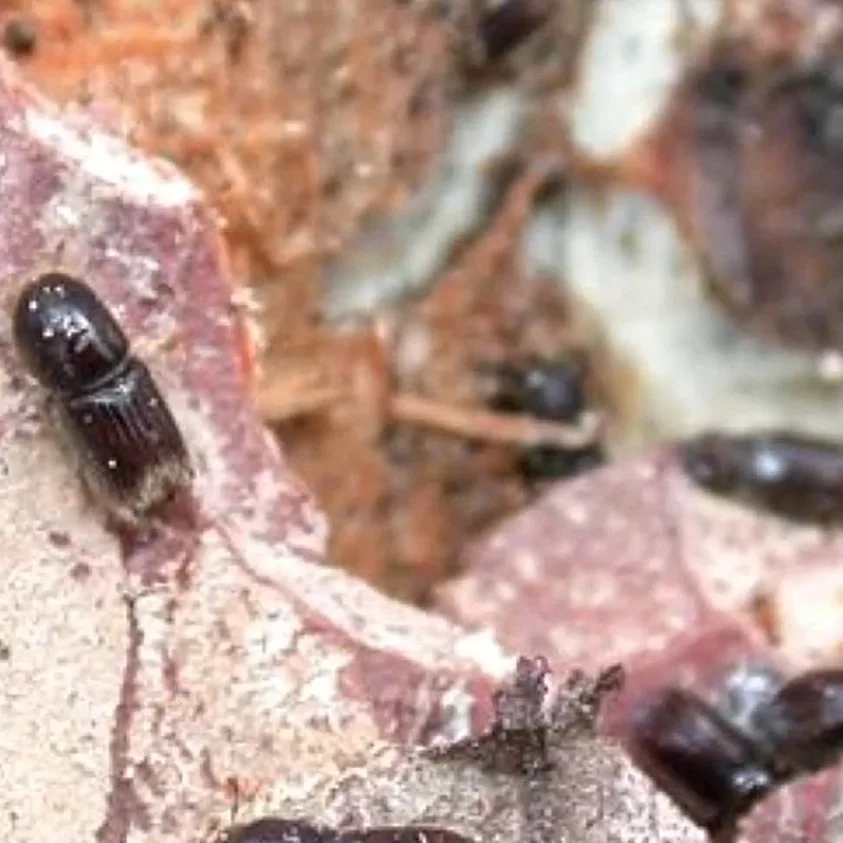
Concerns are growing statewide over a bark beetle infestation.
Trees, especially pines, are vital to Louisiana’s economy. Here in Southwest Louisiana, Vernon, Beauregard and Allen parishes contain miles and miles of pine tree forests and farms important to their economy.
Read More
Louisiana to Address Beetle Infestation Threatening Timber Industry
In the coming days, the state’s House Emergency Beetle Subcommittee of the House Committee on Agriculture is scheduled to host its first meeting at the state capitol. The panel is set to convene on July 9, and will address the devastation of Louisiana’s forest industry due to an infestation of beetles.
In 2023, the LSU Agriculture Center reported that 50,000 acres of forests in the state were burned due to wildfires last summer, costing $71.4 million.
Read More
Evangeline Parish Man Faces Charges for Sinker Cypress Theft
On June 18, Leonard Laborde of St. Landry was arrested on two counts of timber theft, two counts of criminal trespass, and one count of simple criminal damage to property.
Read More
Almond Brothers Lumber, LaSalle Lumber tops in safety
Almond Brothers Lumber Co. and LaSalle Lumber were recently awarded the 2023 John Edgar Rhodes Sawmill Safety Exellence Award by the Southern Forest Products Association (SFPA).
Almond Brothers Lumber of Coushatta was one of three mills in Division I (producing 50 million board feet or less) and LaSalle Lumber of Urania was the only mill in Division III (producing more than 150 million board feet annually) receiving the award for having zero reported incidents in 2023.
Read More
Emergency Forest Restoration Program
The Emergency Forest Restoration Program (EFRP) helps the owners of non-industrial private forests restore forest health damaged by natural disasters.
The local FSA County Committee implements EFRP for all disasters with the exceptions of drought and insect infestations. In the case of drought or an insect infestation, the national FSA office authorizes EFRP implementation.
Read More
Forest Service Scientists Develop New Tools to Expedite Decision-making after Extreme Drought
Extreme drought and pine beetle outbreaks are of increasing concern for forests in the south to the extent that USDA approved financial and technical assistance to help owners restore forests on non-industrial private forestlands in Mississippi and Louisiana. Behind much of the information about the drought and the trees adversely affected are Forest Service scientists who have developed tools that allow users to see real-time effects of the drought.
Read More
USDA Moves To Gain Better Understanding Of Forests & Grazing Conservation Practices
This summer, the Conservation Practice Adoption Motivations Survey (CPAMS), a joint project between USDA’s National Agricultural Statistics Service (NASS) and Natural Resources Conservation Service (NRCS), will be mailed to 43,000 forest and grazing landowners and managers across the nation. The CPAMS gathers information to understand why people choose to use different conservation practices, and whether they continue to use practices over time. The data will help improve voluntary conservation programs. NASS will mail an invitation to respond early online at agcounts.usda.gov starting June 24. NASS will mail questionnaires on July 8 with the option for survey recipients to respond online, by mail, or fax. If NASS does not receive completed questionnaires by July 28, they may reach out to schedule interviews. A data highlights publication is scheduled for October 2024 and will be published at nass.usda.gov.
Read More