Louisiana Crops Newsletter--Volume 16, Issue 4 - June 2026
One of the most common observations during the early growing season is uneven crop growth within the same field. While some areas emerge quickly and develop vigorous canopies, others appear delayed or less uniform. These differences can be frustrating for producers, especially when planting conditions seemed favorable and management practices were applied uniformly across the field.
Read More
The Evolving Southern Crop Problem
Southern crop agriculture occupies a prominent position in the history of the U.S. crop safety net (Coppess). Thus, understanding its role in U.S. crop agriculture is important.
Over the last 100 years, harvested crop acres have declined more in the South than the rest of the U.S. Cotton accounted for most of the decline during the first 50 years.
Read More
Market Update for Corn, Soybeans, Rice, and Cotton: June 2026
The 2026/27 U.S. corn outlook remains virtually unchanged relative to last month. June’s WASDE report calls for fractionally higher beginning and ending stocks for 2026/27, reflective of mostly offsetting trade and domestic use changes for 2025/26 with adjustments to imports, corn used for ethanol, and exports based on data to date. The 2026/27 season-average farm price received by producers is unchanged at $4.40 per bushel.
Read More
Cotton Jassid Factsheet
The cotton jassid or two-spot cotton leafhopper, Amrasca biguttula, is an invasive leafhopper species threatening Louisiana. First detected in 2023, it was reported in Florida during 2025 and spread across multiple southeastern states later the same year
Read More
Cleveland: Cotton Market Struggled To Regain Momentum
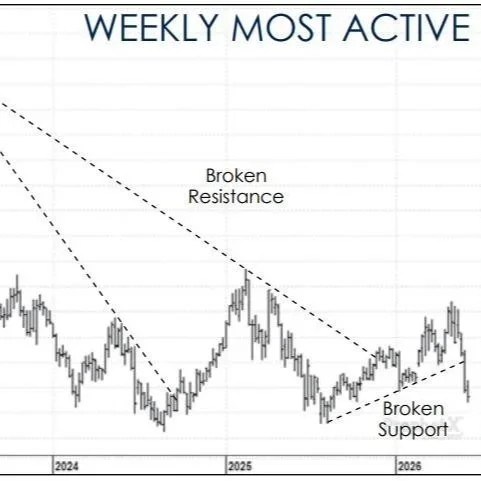
The cotton market trudged through the week, looking for even a sliver of the bullish momentum it had enjoyed the prior two-plus months. Yet it finds itself stuck in the high 70s and unable to break above the 80-cent barrier, which has now become a rather stiff price resistance level. The only fundamental of consequence at work in the market is Mother Nature.
Read More
USDA Announces Cotton Plan to Bolster Demand
The Agriculture Department announced a new Great American Cotton Plan on Thursday, saying it aims to strengthen cotton farm income, expand trade and increase demand for U.S.-grown cotton.
Read More
Under Armour Addition Is A Feather In The Cap For Cotton Trust Protocol
It’s hard to believe now, but “Cotton Is the Enemy” has actually been gone for longer than it existed. Under Armour CEO Kevin Plank founded the brand in 1996, and immediately implemented the marketing campaign, which he hoped would promote his synthetic line of athletic apparel.
Read More
Cleveland: Cotton Market Continues Its Retreat
Even the low 80’s proved to be too much for Icarus’s melted wings to power through the market this week as both the old crop July and new crop December succumbed to last week’s flight to 88 cents last week.
Read More
Cleveland: Cotton Climbs Higher On Drought Concerns
Cotton continues establishing new price highs again and again. That was last week’s first sentence, and it still applies. After posting a minor selloff at mid-week, prices charged higher at week’s end as both the old crop July futures contract and the new crop December contract settled the week near the weekly highs, and near the life of contract high for the December contract.
Read More
Cleveland: Cotton Prices Soaring Too Close to the Sun?
Cotton continues to establish new price highs again and again. The 85-cent objective has been hit, for all practical purposes. The old crop spot month July settled the week at 84.19 after reaching a weekly high of 84.27. Not to be outdone, the new crop December futures contract climbed the ladder to 84.61 and settled at 84.56.
Read More
Shurley: It’s No Runaway Train, But 80 Cents Gets Your Attention
Cotton prices (Dec futures), range-bound between 66-67 and 70 cents for a long time, have broken that barrier and now stand at over 80 cents. Price has improved roughly 12 ½ cents (or 18%) over the past seven to eight weeks or so.
Read More
USDA Announces 2026 Cotton Loan Rate Differentials
The U.S. Department of Agriculture’s (USDA) Commodity Credit Corporation today announced the 2026-crop loan rate differentials for upland and extra-long staple cotton.
Read More
Boll Weevil Eradication Still Pays Dividends For Producers
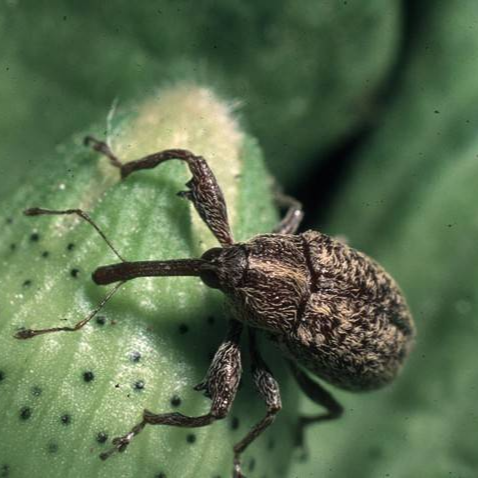
Established officially in 1978, the Boll Weevil Eradication Program worked so effectively that most producers today have never laid eyes on one of the pests. Even seasoned cotton producers say they don’t remember a time when the boll weevil was an issue.
Read More
Southern Soybean and Cotton Acres Expected to Increase in 2026
USDA released the 2026 Prospective Plantings Report on March 31. Nationally, producers intend to plant fewer corn acres and more soybeans and cotton. Corn acreage is projected at 95.3 million acres, down 3.5% from the 2025 actual planted acreage, while soybean acreage is expected to increase 4.3% to 84.7 million acres.
Read More
Cleveland: Cotton’s Month Of Recovery Continues
Cotton’s month-long rally continues to give. The trend calls for higher prices as the world market feels pressure from the potential for adequate supplies for the 2026-27 marketing year.
Read More