Under Armour Addition Is A Feather In The Cap For Cotton Trust Protocol
It’s hard to believe now, but “Cotton Is the Enemy” has actually been gone for longer than it existed. Under Armour CEO Kevin Plank founded the brand in 1996, and immediately implemented the marketing campaign, which he hoped would promote his synthetic line of athletic apparel.
Read More
Cleveland: Cotton Market Continues Its Retreat
Even the low 80’s proved to be too much for Icarus’s melted wings to power through the market this week as both the old crop July and new crop December succumbed to last week’s flight to 88 cents last week.
Read More
Cleveland: Cotton Climbs Higher On Drought Concerns
Cotton continues establishing new price highs again and again. That was last week’s first sentence, and it still applies. After posting a minor selloff at mid-week, prices charged higher at week’s end as both the old crop July futures contract and the new crop December contract settled the week near the weekly highs, and near the life of contract high for the December contract.
Read More
Cleveland: Cotton Prices Soaring Too Close to the Sun?
Cotton continues to establish new price highs again and again. The 85-cent objective has been hit, for all practical purposes. The old crop spot month July settled the week at 84.19 after reaching a weekly high of 84.27. Not to be outdone, the new crop December futures contract climbed the ladder to 84.61 and settled at 84.56.
Read More
Shurley: It’s No Runaway Train, But 80 Cents Gets Your Attention
Cotton prices (Dec futures), range-bound between 66-67 and 70 cents for a long time, have broken that barrier and now stand at over 80 cents. Price has improved roughly 12 ½ cents (or 18%) over the past seven to eight weeks or so.
Read More
USDA Announces 2026 Cotton Loan Rate Differentials
The U.S. Department of Agriculture’s (USDA) Commodity Credit Corporation today announced the 2026-crop loan rate differentials for upland and extra-long staple cotton.
Read More
Boll Weevil Eradication Still Pays Dividends For Producers
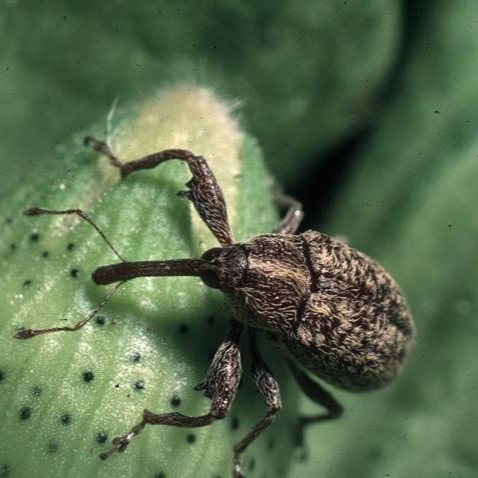
Established officially in 1978, the Boll Weevil Eradication Program worked so effectively that most producers today have never laid eyes on one of the pests. Even seasoned cotton producers say they don’t remember a time when the boll weevil was an issue.
Read More
Southern Soybean and Cotton Acres Expected to Increase in 2026
USDA released the 2026 Prospective Plantings Report on March 31. Nationally, producers intend to plant fewer corn acres and more soybeans and cotton. Corn acreage is projected at 95.3 million acres, down 3.5% from the 2025 actual planted acreage, while soybean acreage is expected to increase 4.3% to 84.7 million acres.
Read More
Cleveland: Cotton’s Month Of Recovery Continues
Cotton’s month-long rally continues to give. The trend calls for higher prices as the world market feels pressure from the potential for adequate supplies for the 2026-27 marketing year.
Read More
Cleveland: Cotton’s Bulls Pause For A Rest
Cotton’s three-week rally gave us the 68 cents suggested last week, and then some. Yet, the market has now posted three consecutive down days. That should not be viewed as evidence that the rally is over. To the contrary, the same factors that sent prices higher are still in the market
Read More
Cleveland: Positive Price Movement Can Hardly Be Believed
Is this real? In two of the past three weeks, cotton commitments have established record high marketing year weekly export sales. Additionally, the weekly On-Call report first favored stable prices, and now, three weeks later, reflects a definite, albeit modest increase in prices.
Read More
Louisiana Crops Newsletter
The bacteria that is responsible for nitrogen fixation in soybean is Bradyrhizobium japonicum. If a field has never been planted to soybean, it is likely the seed will need to be inoculated. The bacteria can survive many years until the next soybean crop, but the common recommendation is to inoculate seed if soybean has not been planted for 3 to 5 years. However, research has indicated that an increase in yield is possible if seed is inoculated in a regular soybean rotation.
Read More
U.S. Cotton Trust Protocol Opens Grower Enrollment for 2026 Crop Year
New this year, in addition to full program benefits growers can evidence regenerative farming practices through the Field Partner Program, expanding opportunities for those demonstrating responsible production with measurable data.
Read More
U.S. Cotton Trust Protocol Opens Grower Enrollment for 2026 Crop Year
The U.S. Cotton Trust Protocol has announced enrollment is open for the 2026 crop year. New this year, in addition to full program benefits growers can evidence regenerative farming practices through the Field Partner Program, expanding opportunities for those demonstrating responsible production with measurable data.
Read More
NCC To Press For Buying American Cotton Act In 2026
The new farm bill, which the House Agriculture Committee has said it will mark up next week, should help U.S. cotton farmers who have struggled with three years of prices below production costs.
Read More