
Mirlitons Are Part of Louisiana’s Heritage — and They’re Easy to Grow at Home
LSU AgCenter
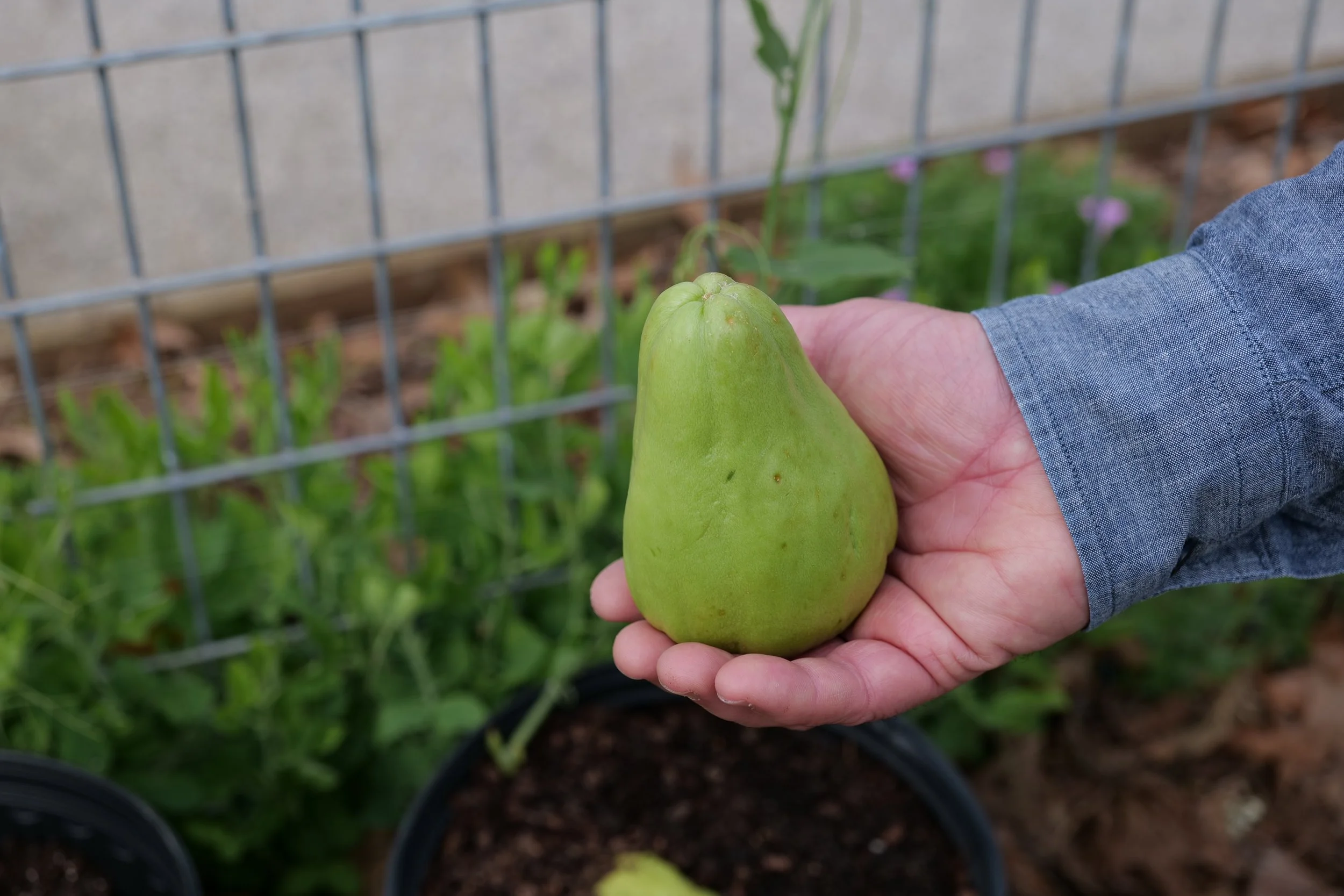
Like a lot of people who grew up in Louisiana, LSU AgCenter horticulturist Jason Stagg has fond memories of eating casseroles and other dishes his mother prepared using mirlitons — a unique squash that has been grown in the state for generations.
Mirlitons (Sicyos edulis or Sechium edule) — also known as vegetable pears and alligator pears — are a pear-shaped squash with a mild flavor. They’re usually green but sometimes are white. Known as chayote in their native Mexico and Central America, some sources indicate they arrived in Louisiana by way of Haiti in the 19th century.
It’s easy to grow your own mirlitons. Traditionally, mirlitons are planted outdoors in the spring. But if you have some space indoors or in another warm, protected area, you can plant them in containers while it’s still winter and get an early start on your vine, Stagg said.
Now, mirlitons don’t grow from small, dried seeds like tomatoes or many other crops. Each mirliton contains one embryo, and the entire fruit essentially is a seed. That means you’ll need to plant the whole thing to grow a mirliton vine.
Something else to know about mirlitons is that they are self-pollinated.
“You do not need two different plants to pollinate because the male flowers and the female flowers grow on one plant,” Stagg said. “However, having a couple of different plants does improve your chance for pollination.”
So, the first step is to get your hands on a mirliton — or a few!
“It’s important to research your sources for these because finding true Louisiana heritage mirliton varieties will give you the best results,” Stagg said.
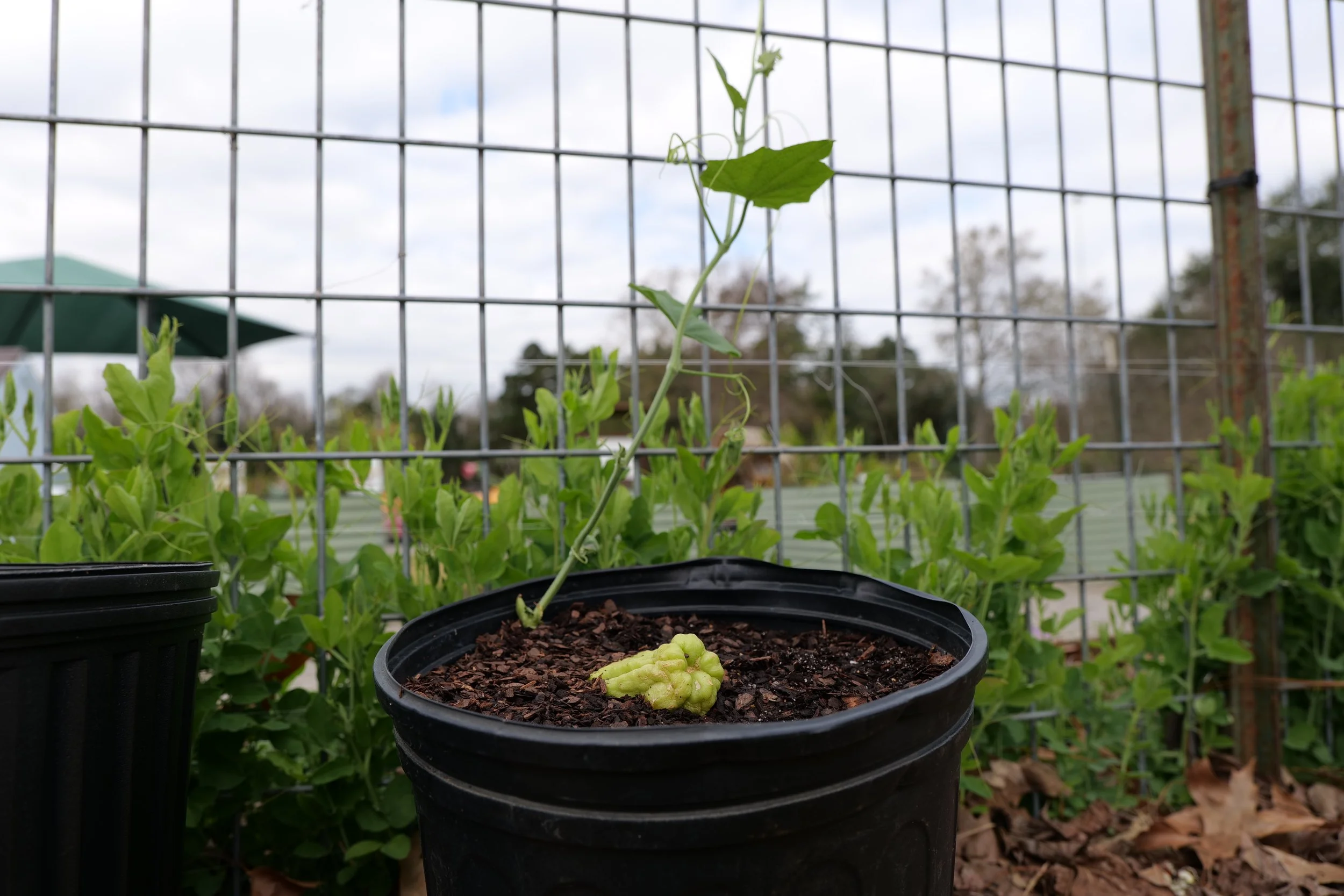
Leave the mirliton in a warm place indoors until a sprout emerges from the larger end of the fruit.
Next, place the mirliton in a 3-gallon container filled with potting mix. Position the mirliton at a 45-degree angle with the larger, sprouted end pointing downward. Bury about two-thirds of the mirliton with potting mix so that the smaller end is sticking out above the surface.
The vine will begin to grow larger soon. Keep the container moist but take care not to overwater.
“They do not like wet feet, especially when establishing,” Stagg said.
Once spring arrives and the threat of frost has passed, you can move your container to a sunny spot outdoors or transplant the mirliton into a raised bed. Planting directly into the ground isn’t recommended if your garden stays wet, as good drainage is important for mirlitons.
Warmer weather will encourage your mirliton to grow into a vigorous plant rather quickly, and it will continue to do so throughout the summer. Some people find that installing shade cloth above their rapidly growing mirlitons during this time helps keep the plants from wilting in the hot afternoon sun.
“Once established, these plants will grow to be quite large, so you’ll need to make sure you have plenty of space and a good, sturdy structure like a trellis to support the weight,” Stagg said.
Patience is key when growing mirliton, as flowers won’t appear until late summer, producing a fall crop that will last all the way to the first frost. Each vine can produce dozens of fruits!
Mirlitons are technically perennials. Their vines will die back once cold temperatures set in — but as long as their roots are insulated with a thick layer of mulch, they often can survive Louisiana winters and regrow each spring for years to come, Stagg said.
However, as a safeguard against unusually cold weather, save some of your crop to plant next year! Storing mirlitons in a cool, dark, dry place for the winter will help ensure longevity.