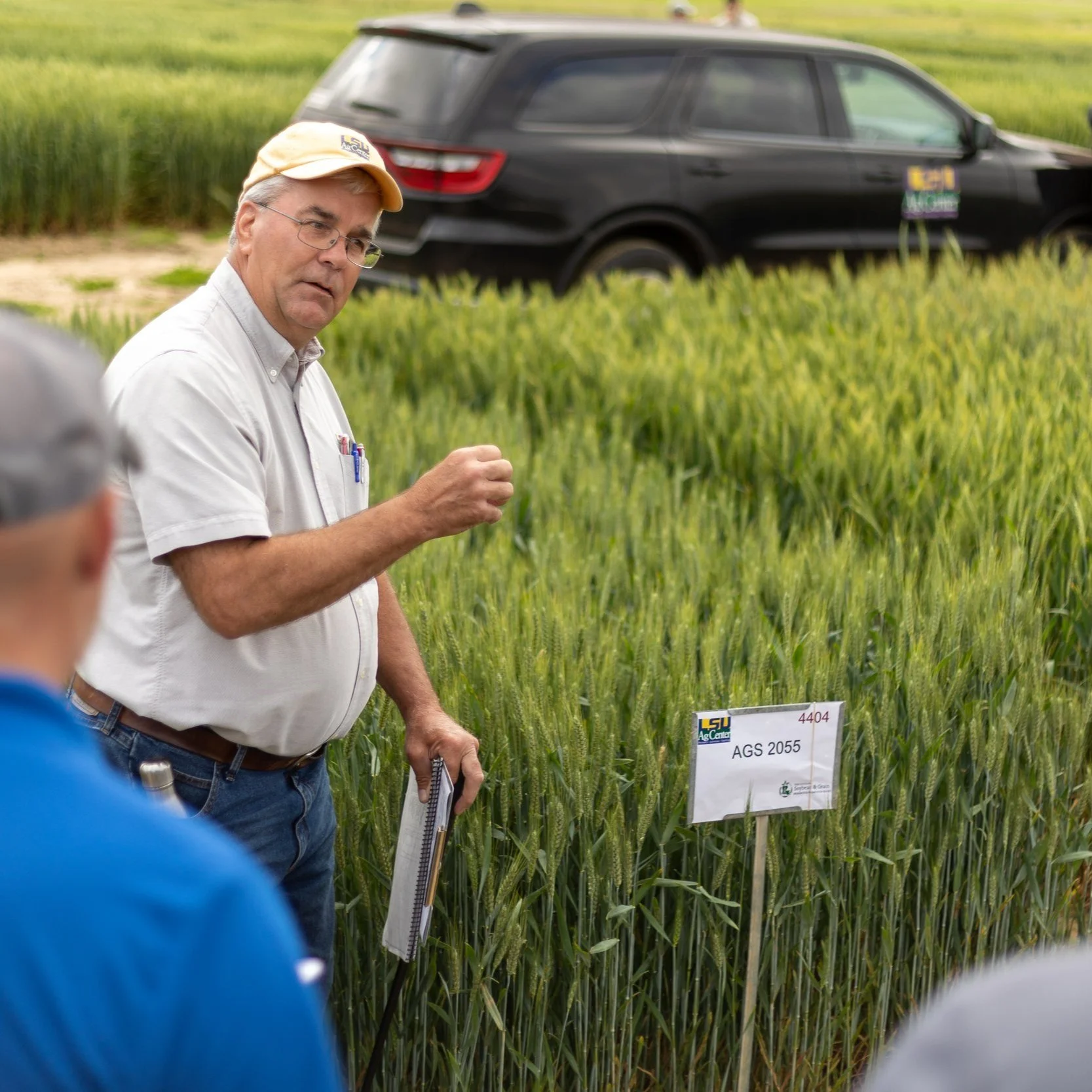
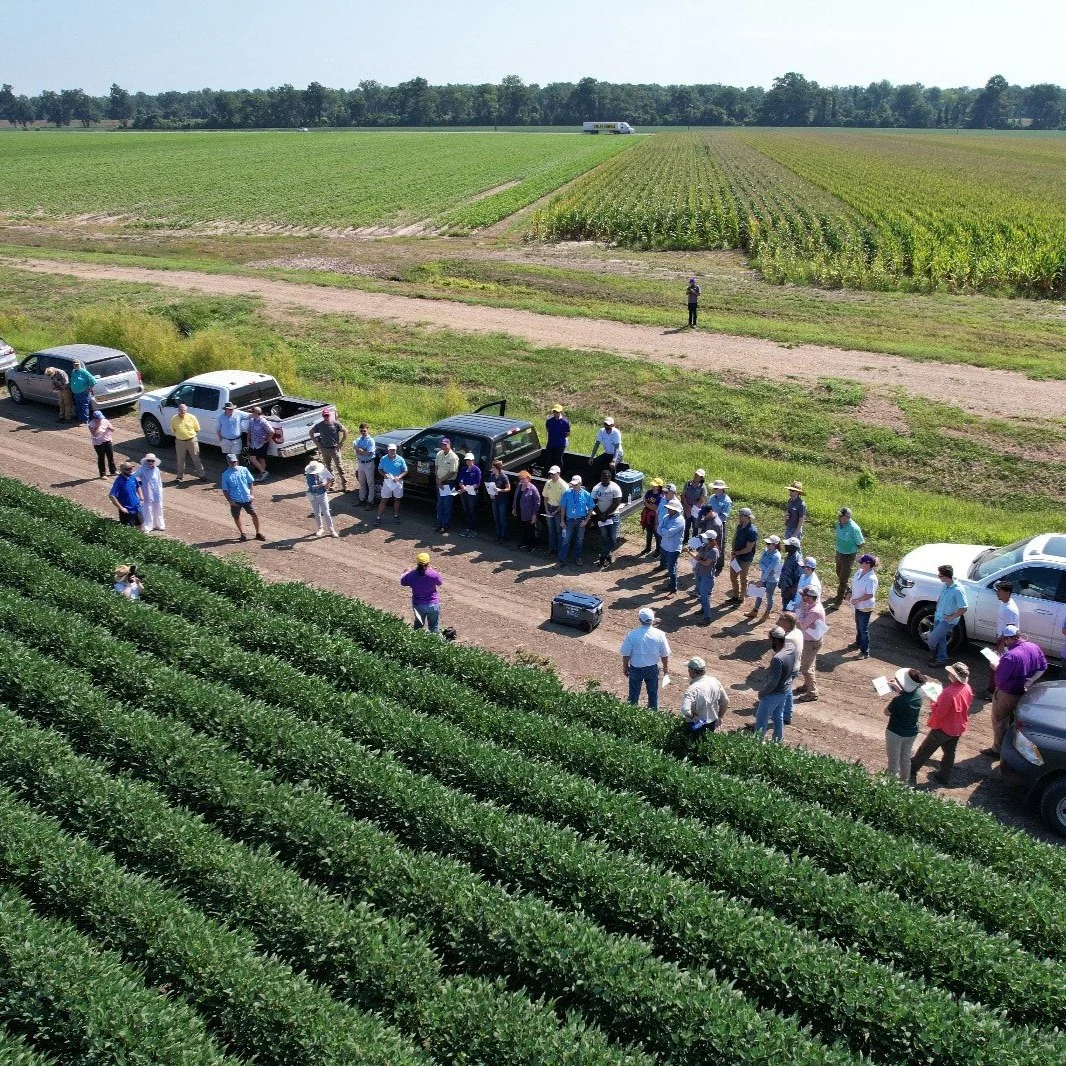
The skies, though gloomy, did not deter a large crowd of beef cattle and hay producers from attending the LSU AgCenter’s beef and forage field day on April 27.
Read More
The skies, though gloomy, did not deter a large crowd of beef cattle and hay producers from attending the LSU AgCenter’s beef and forage field day on April 27.
Read MoreLSU AgCenter agronomist Syam Dodla has received a U.S. Department of Agriculture grant of more than $1 million to look at climate-smart ways to produce sugarcane and rice.
Dodla, who works at the AgCenter Red River Research Station in Bossier City, said there are many climate-smart conservation practices that have not been widely adopted in the southern region of the United States.
Read MoreSusan Lindrew, a senior majoring in textiles, apparel and merchandising, has been working on a research project on experimental patternmaking to use the typically discarded portions of alligator hides in fashion.
Read MoreOn an overcast and windy day in Franklin Parish, a group of grain producers gathered to hear the latest updates on crops and witness a drone presentation.
The annual wheat and oat field day, held April 20 at the LSU AgCenter Macon Ridge Research Station in Winnsboro, kicked off with a discussion of Fusarium head blight, also known as scab, from AgCenter plant pathologists Trey Price and Boyd Padgett.
Read MoreAntavion “Tay” Moore is going to need to clear out some shelf space as he continues to pile up accolades during his career at LSU. The latest honor for the junior from Ringgold, Louisiana, is being named a 2023 Truman Scholar.
Moore, this year’s sole recipient from Louisiana, is one of only 62 students selected out of 705 candidates nationwide.
Read MoreLSU is moving into controlled field trials of a patent-pending bait to address wild, invasive pigs that are causing millions in damage to Louisiana farms.
With $50,000 in recent support from the Louisiana legislature and $120,000 from the Louisiana Department of Wildlife and Fisheries, LSU researchers are testing the new bait using “pig brigs,” which are large nets that pigs can push under but become trapped inside when they try to get out. The bait makes the hogs fall asleep.
Read MoreThe skies, though gloomy, did not deter a large crowd of beef cattle and hay producers from attending the LSU AgCenter’s beef and forage field day on April 27.
From market updates to drones for weed control to laboratory-grown beef, participants received a wealth of information about the current state of the beef industry.
Read MoreInsect scouting schools will be held on May 25 in Winnsboro and June 2 in Alexandria.
These training sessions will cover a range of topics, including insect pest identification, general IPM principles, plant growth and development, and worker protection standard (WPS) training. The program is designed for scouts at all levels of experience. Extension agents, producers, and consultants are welcome to take part in the event.
Read MoreLSU AgCenter plant pathologist Sara Thomas-Sharma has been awarded a U.S. Department of Agriculture National Institute of Food and Agriculture grant to study a common disease of soybeans.
Cercospora leaf blight is a disease that continues to be a problem for soybean farmers in the mid-South, with cost to the industry at more than $250 million over the past five years
Read MoreThe LSU AgCenter Northeast Research Station will host a wildlife forum and field day May 12 featuring information on chronic wasting disease, feral hogs, habitat management and more.
Read MoreThree outstanding students from LSU's College of Agriculture have been chosen to represent the LSU Tiger Twelve Class of 2023: Avery Hebert, Jackson Martingayle and Zachary Mayfield.
The Tiger Twelve is an esteemed program that celebrates a group of exceptional undergraduate seniors who have made significant contributions to campus life at LSU and have had a positive impact on the Baton Rouge community.
Read MoreLouisiana’s Cooperative Extension Service offers a number of programs aimed at educating clientele about improving management skills, increasing profitability and, ultimately, becoming more sustainable. These “master” programs educate home gardeners, agronomic producers and cattlemen about best management practices that help improve water quality, soil health and overall conservation efforts for long-term sustainability through the Master Gardener, Master Farmer and Master Cattleman programs.
Read MoreSustainability means producing sugarcane in a manner that is economically profitable while being a good neighbor to both the local community and environment. The benefit to society is feeding the world without exploiting natural and human resources.
The Louisiana sugar industry is accomplishing this today.
Read MoreIn Louisiana, the many twists and turns of the state’s coast add up to more than 7,700 miles of shoreline, which meet the waters of the 600,000 square-mile Gulf of Mexico. Formed more than 300 million years ago, the Gulf of Mexico is home to 15,420 species of sea-dwelling creatures.
Read MoreLouisiana rests alongside the Gulf of Mexico and provides an outlet for the nation’s most important river, the Mississippi, and some of its tributaries. To reduce agricultural runoff into these water bodies and improve soil-water quality around farms, Louisiana farmers have been implementing a wide range of environment-friendly and sustainable farm practices often called best management practices.
Read More