Youths Earn Gerry Lane Premier Exhibitor Awards At AgCenter Livestock Show
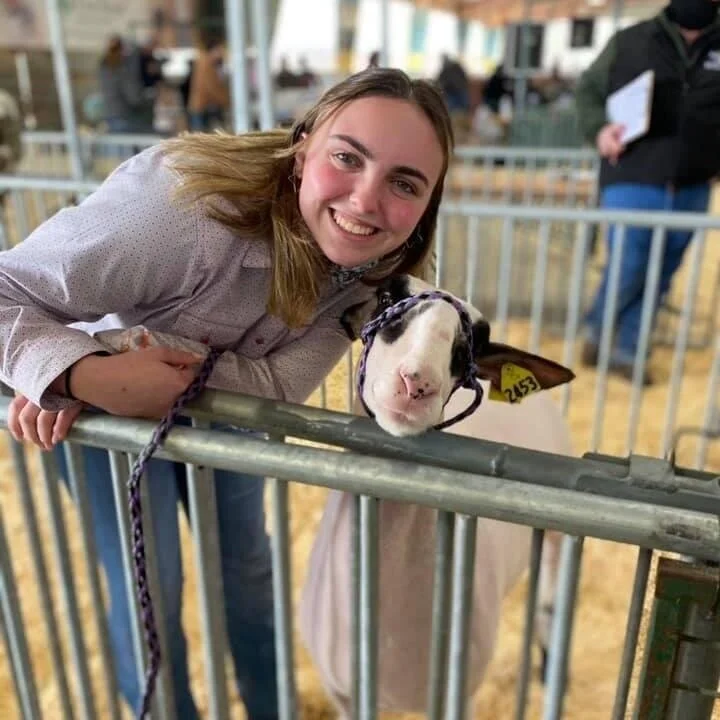
Six Louisiana youths were recognized for their knowledge, skills and communication abilities as they were named winners of the Gerry Lane Premier Exhibitor Award at the 86th Annual LSU AgCenter Livestock Show at the Lamar-Dixon Expo Center.
For the past 23 years, the premier exhibitor program has recognized 4-H and FFA members who may not have champion animals, but who have a thorough understanding of animal science.
The awards are based on performance in tests of each youth’s knowledge of the livestock industry, practical exercises demonstrating skills and the ability to communicate effectively.
Read More
State Livestock Show Award Winners Announced
Even though normal was not a word used much during the 86th annual LSU AgCenter Livestock Show held recently at the Lamar-Dixon Expo Center in Gonzales, Louisiana 4-H and FFA members were still rewarded for their hard work.
Read More
LSU AgCenter, Czech University Hold Virtual Food Symposium
The LSU AgCenter recently partnered with Mendel University in the Czech Republic to host a weeklong virtual symposium where experts from both institutions discussed topics including food waste, safety, production, technology and nutrition.
The event, held March 15 to 19, also served as the kickoff of an online class co-taught by LSU AgCenter and Mendel professors and available to students at both universities.
About 450 people took part in the event, including faculty, staff, students and alumni of the two universities; participants from Southern University and LSU’s Pennington Biomedical Research Center; and business partners.
Read More
Effect Of Cover Crop & Seed Treatment On Stand Establishment In Corn, Cotton, Beans
Cover crops can provide producers a variety of benefits including nutrient cycling , soil cover, nitrogen fixation and pollinator food sources. These cover crops come in many types, including grasses, legumes (mostly clovers) and brassicas (generally tillage radish and rapeseed). However, cover crops represent a “green bridge” throughout the fall and early spring that may facilitate the movement of insect pests and plant pathogens into above- and below-ground plant structures. Furthermore, cover crops may increase soil moisture and lower soil temperature compared with tilled fields at planting, resulting in more favorable conditions for seedling disease development.
Read More
Retired LSU AgCenter Official Makes Donation To Louisiana 4-H Wetlands Program
Paul Coreil has fond memories of working in Louisiana’s wetlands as an extension specialist and teaching young people about the importance of protecting these areas. His passion for the outdoors and education guided him throughout his decades-long career with the LSU AgCenter, from which he retired in 2013 as vice chancellor for extension.
Read More
LSU AgCenter provides UP with services and programs
The Louisiana State University Agricultural Center, known as the LSU AgCenter, is one of nine institutions within the Louisiana State University System. The LSU AgCenter’s mission is to provide the people of Louisiana with research-based educational information that will improve their lives and economic well being.
Read More
4-H’ers Gather for Junior Leadership Conference, Mark One Year of COVID-19 Restrictions
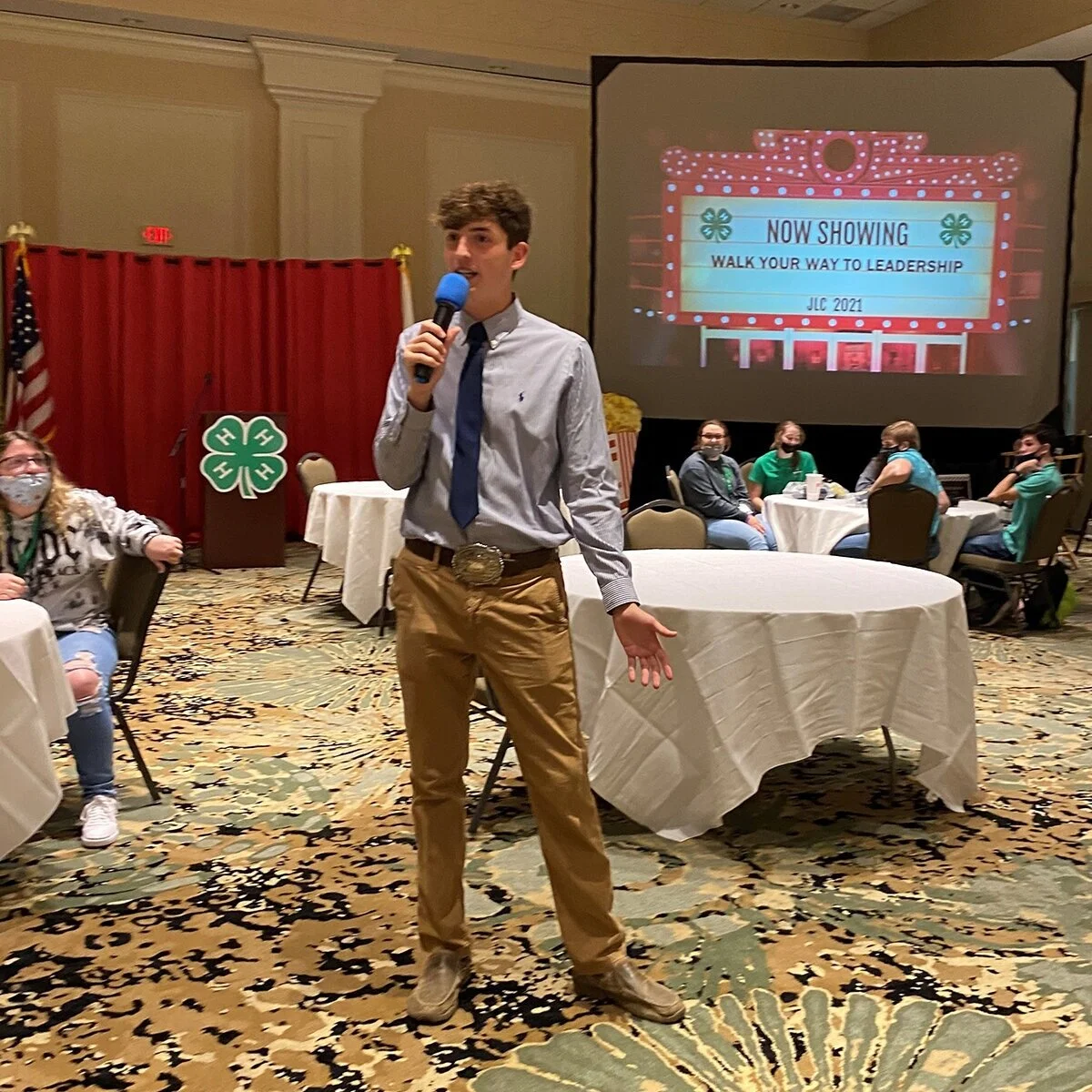
Exactly one year after COVID-19 shut down much of the state, Louisiana 4-H’ers gathered for one of three Junior Leadership Conferences. For many participants, it was their first face-to-face 4-H event in a year.
“This was a big deal because this is the first time I got to go outside of my parish and socialize and meet new people,” said Cameron Fuselier, a sophomore from Acadia Parish, adding that the conference “has as exceeded my expectations because even with COVID restrictions, they have found ways to make it engaging.”
Read More
LSU Student Identifies, Names New Fungus Species
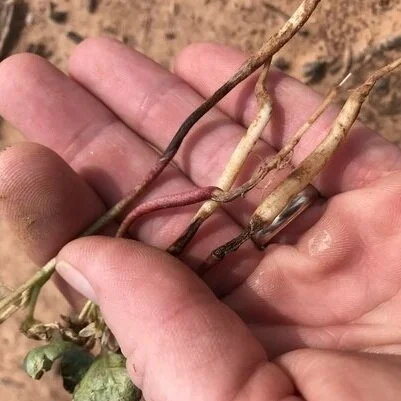
An LSU graduate student has identified and named a new species of fungus that causes a devastating soybean disease, and the finding has been published in a scientific journal.
Read More
Crop Market Update -- March, 2021
As was anticipated, the March supply and demand report from USDA held few surprises for the commodity markets. Markets demonstrated bearish behavior but quickly rallied to minimize losses for the day. The attached March Crop Market Update provides detail into the immediate market reaction and some factors to watch in the coming weeks.
Read More
February 2021 Livestock Price & Production Summary
The February 2021 Price & Production Summary gives prices for cattle, poultry, hogs and dairy.
Read More
LSUA Student Receives Early Entry to LSU Veterinary School
From an early age on her family’s cattle ranch in Hessmer, Avia Laborde dreamed of becoming a veterinarian.
Her experiences taking care of and showing cattle from the Oak Alley Angus Ranch and participating in 4-H through the LSU AgCenter, confirmed the notion that being a large animal vet was her ultimate goal.
Read More
Weed Management Is Still Weed Management
LSU AgCenter weed scientist Dr. Donnie Miller says his research with Dual Magnum, Warrant and Outlook Residual herbicides has shown no real difference in weed management.
“Nor did we see a difference in our timing of applications,” says Miller. “We tried to limit our applications to two, where we put the materials down pre-emergence and we followed up later post-emergence with just RoundUp Plus, Xtend A Max or Enlist Duo an Enlist soybeans over the top.”
Read More
Can Sugarcane Production Be Improved With Cover Crops?
Louisiana farmers grow many of the annual staple crops found across the United States, including corn, soybean, cotton and grain sorghum. However, Louisiana’s No. 1 valued row crop is sugarcane, a perennial that is only grown in two other states, Florida and Texas. Sugarcane was grown on 500,000 acres in 2020, adding more than $3 billion to the state’s economy.
Read More
March – April 2021 Pasture to Market e-Newsletter
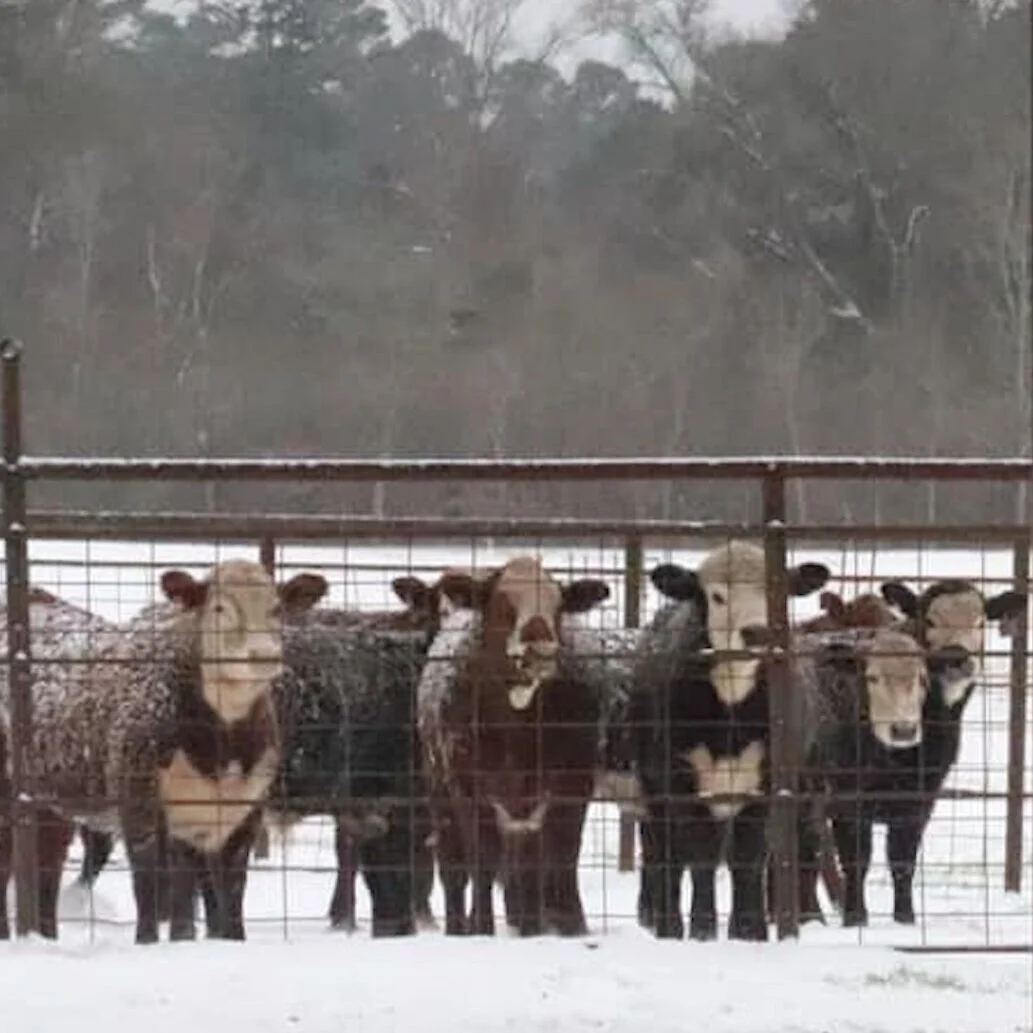
The recent one-two punch of winter storms Uri and Viola had many producers with winter annual grasses worried they may have major losses. In recent field visits, it appears that much of the damage was overshadowed by rapid growth once temperatures rebounded into the 60’s and 70’s. Especially for those producers who recently made nitrogen applications.
Read More
Cover Cropping Enriches Soil: Many Factors Cause Nutrient Contributions To Vary
Soil nutrient enrichment is among the known benefits of using cover crops as a management tool. Winter cover crops are grown in fall through winter. During this period, cover crops absorb nutrients from organic matter decomposition or from underutilized fertilizer applied to the previous main crop, which otherwise would have been left in the soil and subjected to loss through surface runoff, erosion and leaching. When the cover crop is terminated early spring, the decaying biomass releases a full range of nutrients in plant-usable forms. In addition, the cascading positive effects of cover crops on the soil microbial community and water-holding capacity can also increase available nutrients for plants.
Read More