
House Speaker Mike Johnson’s Living-Room Roundtable with Louisiana Farmers
By Josh Meeks
Louisiana Farm Bureau News
OIL CITY, La. — While Congress is in its August recess, U.S. House Speaker Mike Johnson spent part of his time back home listening to the people who help feed the country.
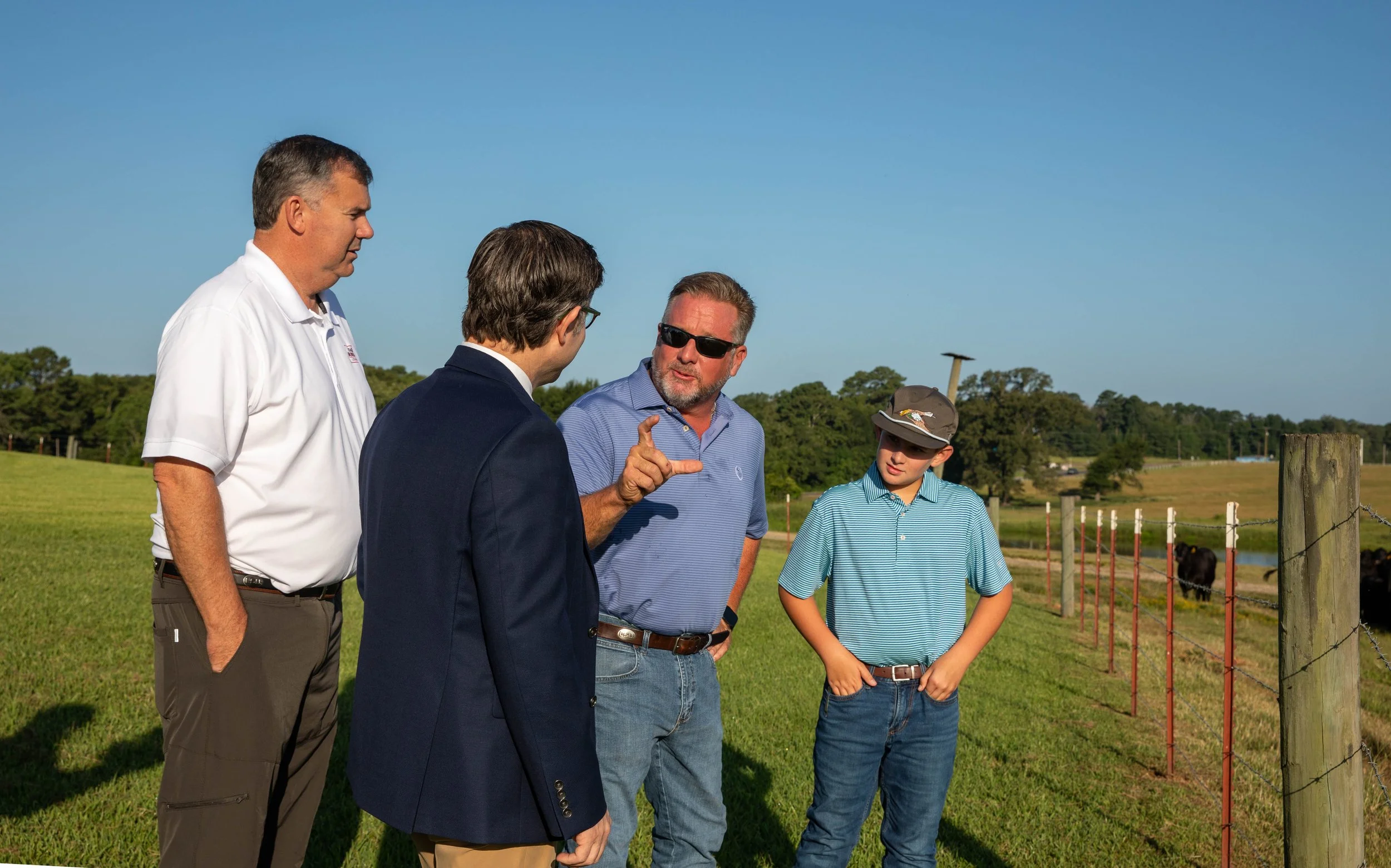
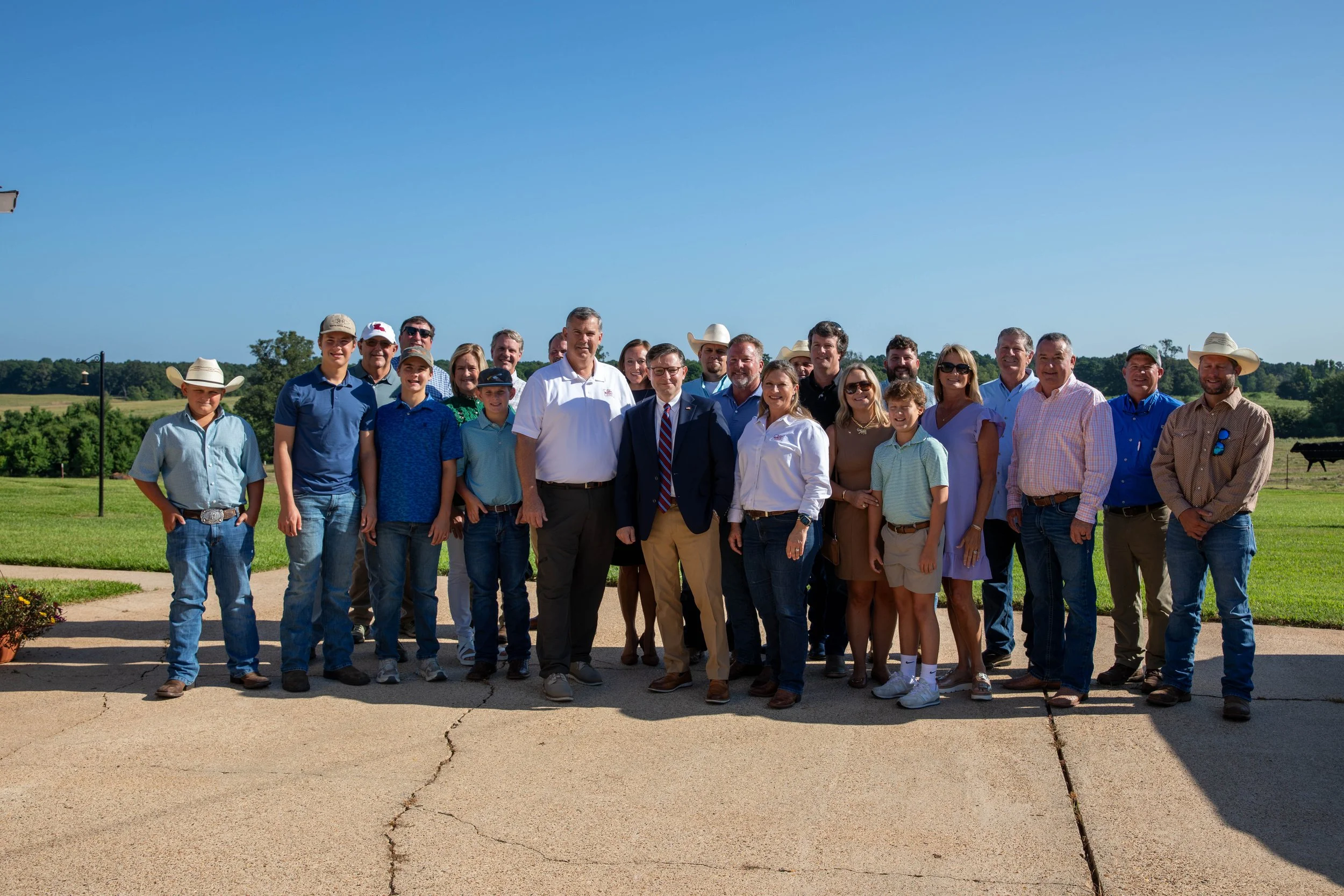
Johnson met with farmers and ranchers from across Louisiana at the ranch of Louisiana Farm Bureau First Vice-President Marty Wooldridge at his ranch here, where producers representing cattle, rice, sugarcane, timber and other commodities shared the challenges they said are threatening the future of agriculture.
The discussion centered on rising production costs, labor shortages, trade issues and the need for updated farm policy.
“We had a great gathering here,” Johnson said. “Our farmers and ranchers had a lot of different crops and commodities represented here from all across the state. We talked a lot about certainty — the challenges they’re facing right now in terms of labor with our visa programs, commodity prices and some of the things happening with international markets.”
Johnson said Congress has been working to provide relief through tax legislation and by passing a new Farm Bill through the House.
“We’re working every day with USDA and USTR, making sure trade agreements are not barriers to entry for our exports and making sure we’re not being exploited by other countries sending their commodities here,” Johnson said. “The objective is to bring certainty for our producers, stability and transparency. I think that’s going to make a big difference going forward.”
For Wooldridge, a fourth-generation cattle producer, hosting the Speaker was another example of Johnson maintaining close ties with the people he represents despite holding one of the nation’s highest offices.
“He’s the Speaker of the House,” Wooldridge said. “He’s the third most powerful person in the United States government, but he’s still Mike Johnson.”
Wooldridge said farmers from across Louisiana traveled to northwest Louisiana to discuss issues affecting every commodity. While cattle prices remain historically strong, he warned that profitability alone doesn’t tell the full story.
“We’re hearing about fuel costs and all the other input costs,” Wooldridge said. “We’re hearing how rice is suffering from the global dumping of other governments’ rice into our markets. What I’m really hearing, whether it’s rice, cotton or cattle, is we’re right on the edge of losing the infrastructure these industries depend upon.”
He pointed to the loss of feedlots, meat packing facilities, rice dryers and cotton gins as signs of a larger problem.
“When those things disappear, they don’t come back,” Wooldridge said. “Then we lose the community. The cafe doesn’t stay open, the store doesn’t stay open, the gas station doesn’t stay open.”
Richard Fontenot, president of the Louisiana Farm Bureau Federation and a rice farmer, said agriculture is battling many of the same inflationary pressures consumers experience, only on a much larger scale.
“Some of the biggest challenges facing Louisiana agriculture today are our fuel, our inputs and our fertilizer costs,” Fontenot said. “The problem is we have a lot of unfair trade practices being used against us.”
As a rice producer, Fontenot said imported rice continues to undercut American-grown products.
“I can grow rice and I can put rice on shelves in Louisiana,” he said. “But unfortunately, I’ve got unfair trade partners coming in and dumping rice in those same markets. So, I’m getting an inferior price for my products with the extremely high cost to produce them. At the end of the day, agriculture is hurting.”
Those concerns echo issues Louisiana farmers have raised in recent years as higher fuel, fertilizer, and other input costs have squeezed already-thin margins. At the same time, Louisiana’s commercial fishermen and crawfish producers have repeatedly voiced concerns over imported seafood they say is produced under standards that don’t match those required of U.S. producers.
Fontenot said having the Speaker of the House represent one of the country’s largest ag-producing districts gives Louisiana agriculture an important voice in Washington.
“Everything Speaker Johnson does--whether it be trade, the Farm Bill or various congressional activities--he keeps Louisiana producers at the heart of everything he does,” Fontenot said. “He hasn’t forgotten where he came from.”
This roundtable was not a one-off. Fontenot says this is just one of the many connections that Louisiana Farm Bureau has with Washington, D.C. He says the only difference is that these meetings are usually held in conference rooms and not living rooms.
“Each year, we travel to Washington and sit in their offices to advocate for agriculture,” Fontenot said. “The Speaker is doing that with us today. We sat down in a living room with agriculture leaders from all different commodities and had the same kind of conversation we have in Washington.”
Johnson said those conversations are critical as Congress continues shaping agricultural policy.
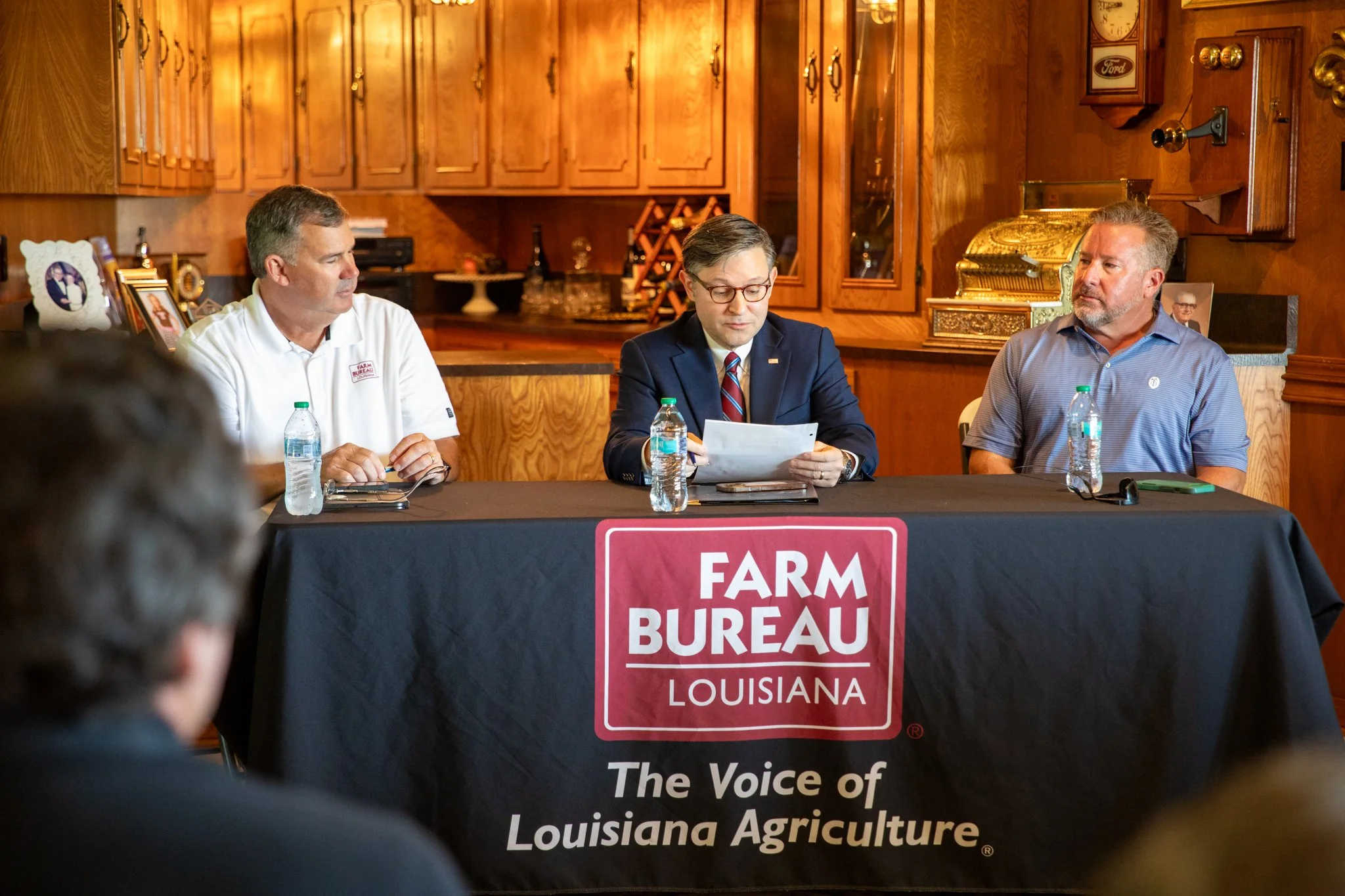
“I rely heavily on Farm Bureau for the information and insights members of Congress need when they’re making these important policies,” Johnson said. “I took two pages full of notes from this meeting to take back to Washington.”
The House passed its version of the Farm Bill earlier this summer, but the legislation remains stalled in the Senate. Farm leaders say passing an updated bill remains one of their top priorities as producers continue facing rising costs and uncertain markets.